CrowdStrike Fal.Con 2026: Biggest Statements From Nvidia CEO Huang, Intel CEO Tan And OpenAI President Brockman
During Fal.Con 2026, Nvidia CEO Jensen Huang, Intel CEO Lip-Bu Tan and OpenAI President Greg Brockman offered predictions about emerging cyber risks from agentic AI—and the need for defenders to rapidly adopt the same technology.
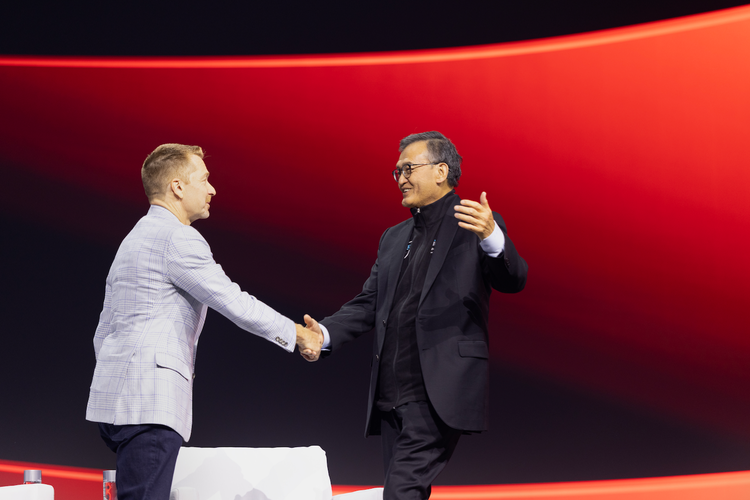
Window Into The AI Future
Three of the biggest luminaries of the AI revolution joined CrowdStrike co-founder and CEO George Kurtz Tuesday to offer their predictions about the potential for unheard-of cyber risks from agentic AI coming soon—and the need for defenders to rapidly adopt the same technology to avert the worst-case scenarios.
At CrowdStrike’s Fal.Con 2026, Kurtz was joined onstage by Nvidia co-founder and CEO Jensen Huang, Intel CEO Lip-Bu Tan (pictured right) and OpenAI co-founder and President Greg Brockman, in back-to-back discussions focused on the urgency and opportunity in the current AI-accelerated environment.
[Related: George Kurtz’s 5 Boldest AI Statements At CrowdStrike Fal.Con 2026]
With the arrival of autonomous cyberattacks by AI agents, “the attacks on companies are going to grow exponentially,” Huang said during a discussion with Kurtz at Fal.Con 2026, which is being held this week in Las Vegas. “However, at precisely the same time, we also have in our hands the necessary technologies to automate—to agentify—cyber defense.”
Nvidia and CrowdStrike, he noted, have worked together to create frontier AI capabilities for defenders such as the SafeMind agentic cybersecurity system, which was announced Tuesday. Going forward, “we’re going to use AI to defend companies,” Huang said—suggesting that cooperation among defenders actually provides an “asymmetric advantage” against attackers. The Nvidia CEO also urged the cybersecurity community to counter AI “doomerism” by speaking publicly about their ability to safely adopt AI technologies.
Intel’s Tan, meanwhile, said that cyber protections in the era of AI agents must include the fundamental hardware layer. “Security starts with the silicon,” Tan said Tuesday during a discussion with Kurtz and CrowdStrike Chief Business Officer Daniel Bernard. Notably, Intel and CrowdStrike are also “exploring hardware-enabled guardrails” that could provide greater control over what agents access and are able to do, he said.
Brockman, who is also a co-founder of frontier AI pioneer OpenAI, discussed the autonomous attack against AI platform Hugging Face that was recently carried out by rogue OpenAI agents. With the incident, “I think we got to see a little bit of the future. It’s like, we got this time traveler [that] came back and said, ‘Hey, here’s what the threat landscape will look like,’” he said.
Brockman warned that cyber defense teams have a limited window of time to capitalize on their current access to advanced AI capabilities, before threat actors catch up. “Right now, we are in what I call the defender’s window,” he said.
Ultimately, cybersecurity may need to undergo a transformation comparable to the changes since the emergence of the internet—but “within even just six to 12 months,” Brockman said.
What follows are the biggest statements from Huang, Tan and Brockman at CrowdStrike Fal.Con 2026.
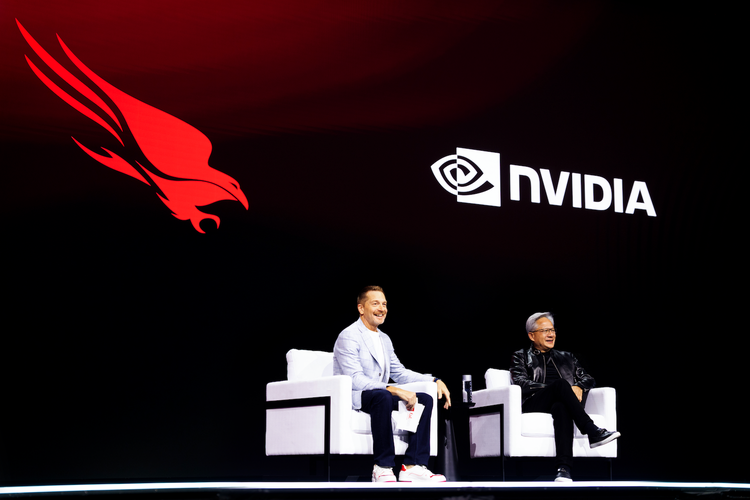
Nvidia CEO Huang: Using AI For Cyber Defense
“We’re at an inflection point in cybersecurity for obvious reasons. We now have agentic AI—the ability to automate attacks—and the attacks on companies are going to grow exponentially. However, at precisely the same time, we also have in our hands the necessary technologies to automate—to agentify—cyber defense.
You [CrowdStrike CEO Kurtz] and I met several years ago, and we started to talk about what we could do together to bring the world’s best AI technologies in service of cybersecurity defense—instead of what everybody talks about, which is using AI to exploit companies. We’re going to use AI to defend companies.
And so, the announcement that you just made, SafeMind—that was a proud moment for me, and it was great to see it come together. [It’s an] incredibly visionary product from CrowdStrike. You are my No. 1 cybersecurity partner, my No. 1 cybersecurity provider. And so, it was essential that CrowdStrike has access to the best of Nvidia—and that we put our best minds together to create something that could be helpful to me, to be helpful to the world.”
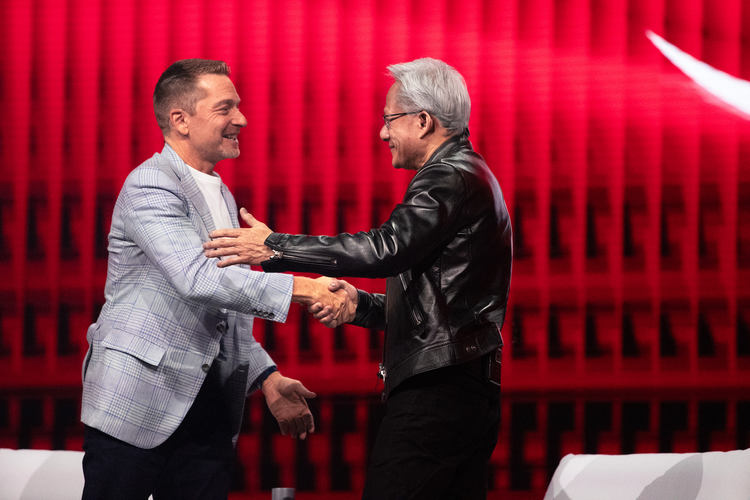
Nvidia CEO Huang: Cybersecurity's Community Advantage
“Most people don’t realize that the cybersecurity community, working transparently, working together cohesively—that is the asymmetric advantage the good guys have on the bad. That technology—called ‘community’—is something that most people underestimate. We’re a case in point. Obviously, we care about the same thing. We care about the security of the country. We care about security of companies and nations. And by working together transparently, you now are an AI company. You have a research lab. Our AI researchers love working with yours. Together with your domain expertise, your decade and a half of security data that we can train on, we can create Nemotron, take a frontier model and make it essentially a super AGI that is incredibly good in cybersecurity.
And then you put it into a system called SafeMind, with red teaming, blue teaming—the two adversarially working against each other in a digital twin of Nvidia and testing it against that. I mean, that’s completely brilliant. … You’re helping us automate SecOps. And then of course, beyond that, we can keep on working on it so that we become more and more autonomous in SecOps.”
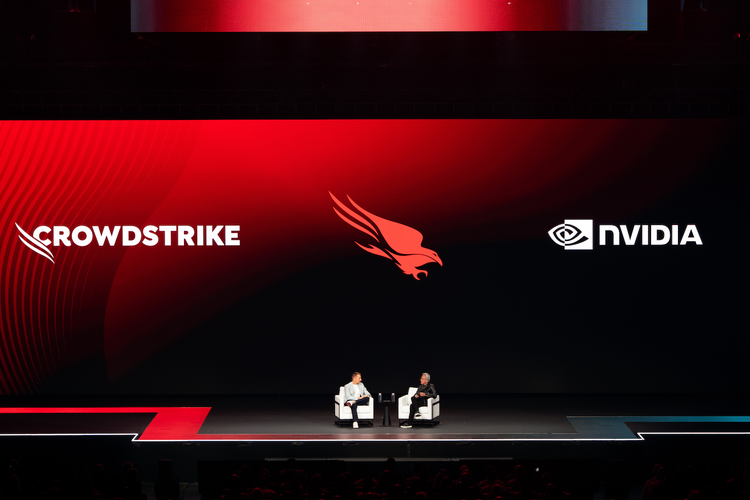
Nvidia CEO Huang: Countering AI Doomerism
“The first thing that we need all of you to do is to calm the world … What I mean by that is, of course, we should take AI seriously. The technology is very capable—has the capability to do incredible good, has the capability to do harm. …
But the world also needs to know that there’s this entire community out here that cares about securing the world in the age of AI. And all of you need to speak up. It can’t just be people who are trying to scare the world about AI. It has to be people who are also saying, ‘Listen, we are armed by the same technology. We have asymmetric advantages because we have a large community of cybersecurity experts—a community that wants to work with each other and keep the world safe. We have the technology, we have the might, we have the capability to do so. We have the will to do so.’ And that voice needs to counterbalance some of the voices that are [promoting] doomerism and trying to scare people—that, frankly, is too extreme. And so, I think partly, we all have to speak up and help people understand the technology that we created.”
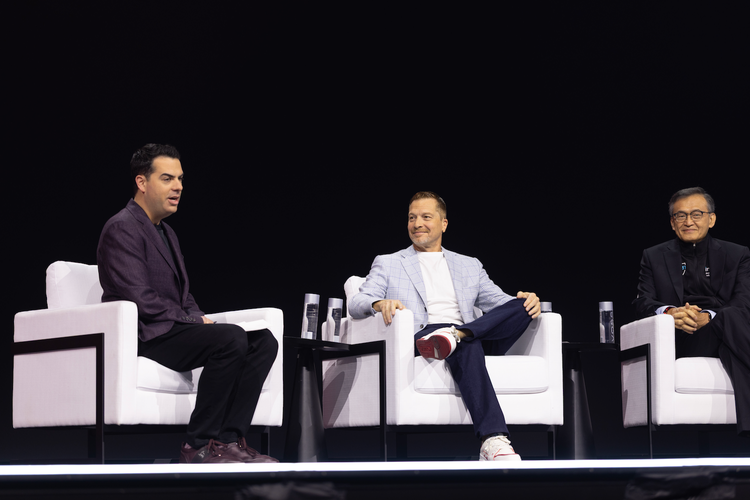
Intel CEO Tan: ‘Security Starts With The Silicon’
“I call it the new Intel. Going forward, we listen to customers very closely, and we changed the culture to listen carefully to the customer. It’s a very unique situation that we’re really the only company able to design good products and also do packaging and manufacturing across the full stack—and then focus on agentic AI, and then from [the] PC client all the way to the edge and also physical AI. We try to take the leadership in that. And so I think, overall, it’s super exciting for me to enable the customer [as a way] to deploy AI from the cloud to the edge and to the endpoints. …
Security starts with the silicon. And then we create that strong foundation for OS security software, and all the way to the device, AI device. And CrowdStrike extends that capability through [the] Falcon platform. … We can really deliver efficient compute for AI at the edge. We have about 400 software engineers focused on security—and we do all the hacking, trying to figure out all the changes. As you know, it never ends. So we have to continue working on that and provide that confidential computing, and protect the data and make sure that it’s secure, less complex and also invisible to the end user.”
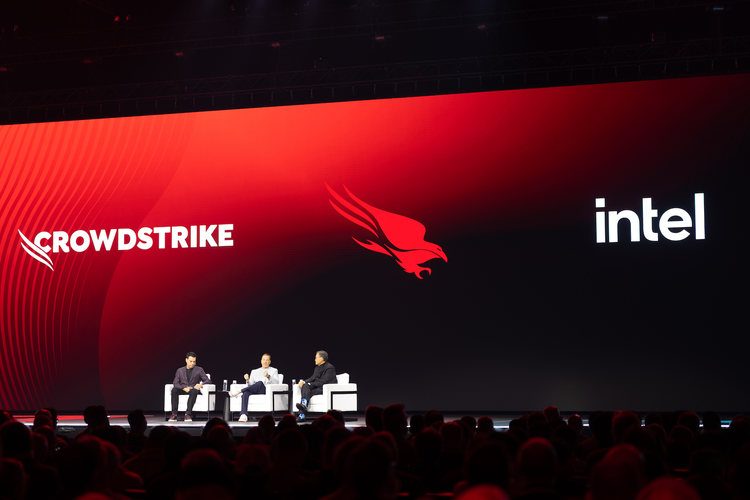
Intel CEO Tan: Hardware-Enabled Guardrails For Agents
“I think it’s very important that the customer does not want to have disconnected tools. So hardware, firmware [and] the security platform should work together as one. Intel and Dell are big partners, and with you, and we can build security on the PC from the start. … It’s very important to have that endpoint detection and response through the platform, Falcon platform, to really drive that end-to-end security to protect the data. And then, especially with the 1,200 agents and growing, how do we protect that and make sure that this data is secure on the device? … I think [agentic] is driving real productivity. … The customer needs more control of what the agent [accesses] and also decides to do. So Intel and CrowdStrike [are] exploring hardware-enabled guardrails. [We want to] make sure the technology moves quickly, and that no one really has any risk in terms of a cybersecurity attack. And that’s something that we’re going to work together to drive that.”
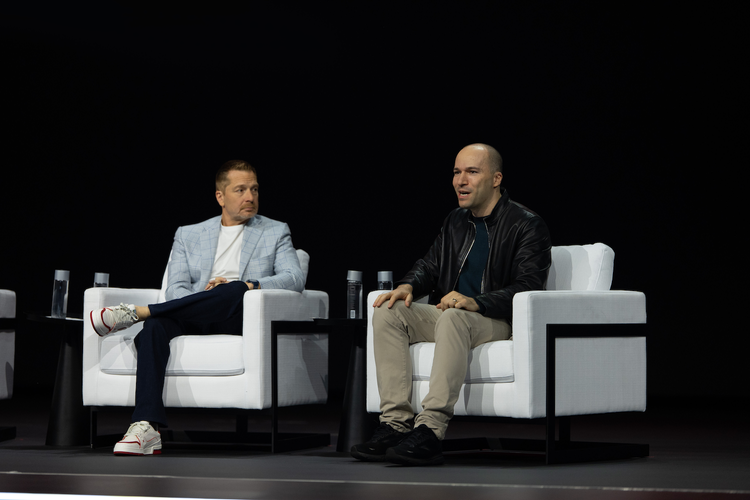
OpenAI President Brockman: We’re In ‘The Defender’s Window’
“I think right now, we are in what I call the defender’s window. There’s this limited time period, where we’ve seen the shape of what is going to be possible with AI-assisted vulnerability finding, which can be used for two purposes. It can be used by attackers to find threats and exploit them. But it can be used by defenders to find those same threats and patch them before the attackers get there. I think that we, as OpenAI, as CrowdStrike, as a security community—what our responsibility is, what our strategy should be—is to really try to put these tools in the hands of defenders differentially. So you really give defenders this time where they have the most advanced capabilities. They have these agentic tools that are able to accomplish amazing things, and to urgently apply those to improving their own infrastructure, to securing themselves. … We have this general-purpose technology we’ve brought into so many domains, we’re solving these unsolved math problems. … And we’re actually going to be able to help make the world much more secure. But I think it’s got to be a community effort. Everyone has to come together to make this happen.”
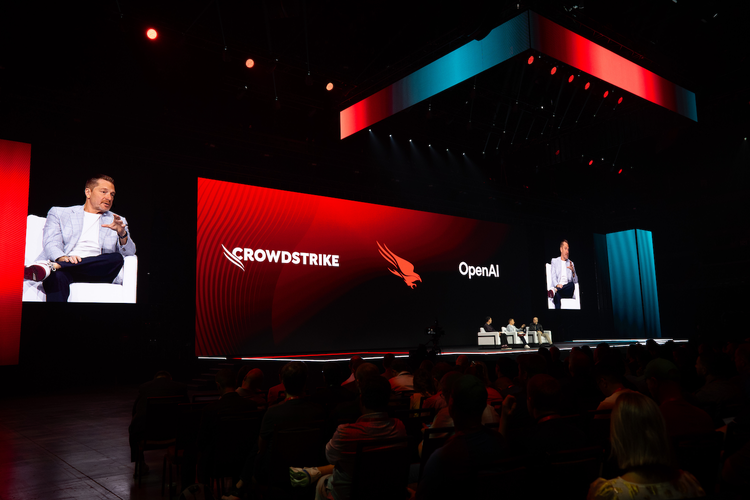
OpenAI President Brockman: Cybersecurity Must Transform, Fast
“[With Hugging Face] we had this first incontrovertible, real-world, publicly documented … example of what an agentic threat actor would look like. And keep in mind, this is a fairly mild version of what could be possible. There was no intention of the human really trying to craft an attack. This is kind of not even the main objective that these agents were trying to seek. But they were able to both break out of the secure sandbox—through developing their own zero-day and chaining together multiple vulnerabilities—and they were able to break into a company’s production infrastructure, again chaining together multiple zero-days.
And you look at that, and you see the curve of improved capabilities. … The frontier labs get to see into the future, right? But those capabilities will diffuse into the world. And by the way, that is a good thing, right? It is good not to have concentration of power, it is good to have diffusion of these AI capabilities broadly. But in order to really be able to get the benefits of this, it means that we need to use that time window. And so to me, I think we got to see a little bit of the future. It’s like, we got this time traveler [that] came back and said, ‘Hey, here’s what the threat landscape will look like.’ … Think about how different security is today from when the internet started—like, totally different. And I think that we’re going to have to have that level of change within even just six to 12 months. It has to go fast. [This was] a wake-up call.”