Guardz CEO: MSPs Need A ‘Unified Data Fabric’ To Fight AI-Era Threats
‘If you’re not able to connect the dots, you’re not able to see the full picture. You’re not able to stop the threats. That’s the bottom line,’ says Dor Eisner, Guardz co-founder and CEO.
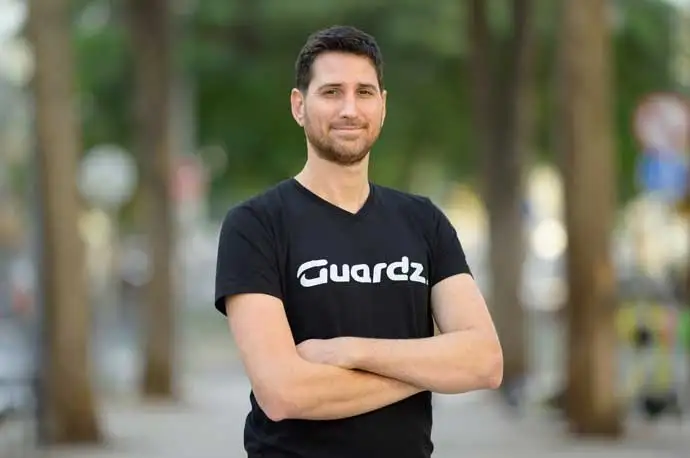
As AI reshapes the cybersecurity landscape, Guardz co-founder and CEO Dor Eisner believes MSPs have an opportunity to rethink how they deliver security to SMBs, starting with the way they collect, correlate and act on security data.
“If you have an identity solution here, an email solution there, an endpoint solution from another vendor, data protection from somewhere else and security awareness from another part, you’re losing context in the age of AI,” Eisner told CRN.
The CEO of the Miami-based vendor is pushing further into what he described as a unified data fabric approach to cybersecurity, designed for MSPs that are struggling with fragmented tools, alert fatigue and the burden of managing multiple security consoles.
The company, which has more than 1,000 partners and plans to double that in a year, is betting that AI—and agentic AI—will make that fragmentation harder to sustain. Rather than asking technicians to jump between email, identity, endpoint, MDR and ticketing systems, Guardz wants to connect those signals and automate detection and response across them.
And as AI rapidly transforms MSP security, the CEO said the company is positioning its Agent Sec Ops platform around unified data, identity-centric security and agentic detection and response.
“If you’re not able to connect the dots, you’re not able to see the full picture,” he said. “You’re not able to stop the threats. That’s the bottom line.”
But he said winning in the AI-driven security market will require more than technology as MSPs must show customers what threats were stopped, what risks were reduced and how their security posture is improving over time.
“You need to show the value, you need to prove the value, and you need to maintain the value over time,” he said.
CRN spoke further with Eisner about Guardz’s strategy, challenges MSPs are facing, the rise of AI agents and why he believes the future of MSP security comes down to the ability to “connect the dots.”
There are so many cybersecurity tools on the market. What makes Guardz stand out in the MSP community?
I think that all the cybersecurity tools that are out there, they’re all fragmented tools built like a decade ago. They didn’t build for AI, they didn’t build for the unified data fabric, and they didn’t build to fight threats that are popping up today.
If you think about the cybersecurity market in general, we’ve seen this transformation in the last 20 years from the network devices, the firewalls … and then a decade ago it moved to the endpoint. Companies developed EDR, MDR and those kinds of platforms. Then three to five years ago, it moved into identity. And now we’re moving into the unified data fabric because if you want to fight threats that are targeting businesses today, you need to correlate signals across all the different attack vectors.
You can’t really build your SOC [Security Operations Center] on siloed detections because the bad guys are not siloing their attack methods. So why, if the bad guys are not siloing their attack methods, do you have a siloed defense platform?
If you have an identity solution here, an email solution there, an endpoint solution from another vendor, data protection from somewhere else and security awareness from another part, you’re losing context in the age of AI. So what Guardz built into this market is, from the ground up, a unified data fabric connecting the dots across all the different security controls. We’re taking these best-of-breed security controls and connecting everything into a unified data fabric with agentic detection and response. We call it Agent Sec Ops.
This is the future of how you deliver security operations and how you streamline security operations. It’s aligned perfectly with the workspace security category that Gartner is defining these days. This is the transformation of XDR, EDR and all the other components that came before we started the company less than four years ago.
We are an AI-native company by design, and we’re a perfect fit into this AI transformation that is [taking over] the market these days.
When you’re talking to partners, what is their biggest challenge and how is Guardz solving for that?
It’s mainly alert fatigue. Some of the tools are built for MSPs, but some of the tools are built for the enterprise where they’re customized with just a few different things for the MSP.
So we’re seeing a lot of technician overload, and the ability to scale the business is becoming based on adding accounts. We’re coming to this market with, ‘You don’t need to scale your business by scaling your head count or scaling your tools or adding more tools to the stack. You need to build a very lean team and scale your actual bottom line and profit.’
This is the big thing that we’re trying to talk about with MSPs. If you have a fragmented tool stack, if you have a lot of head count trying to manage all of these tools in cybersecurity, you’re losing context. And context is becoming the king of the AI transformation.
With the role of the MSP evolving, and more managed intelligence providers emerging because of AI, how should MSPs rethink their future cybersecurity offerings?
I think it comes down to three things: You need to show the value, you need to prove the value, and you need to maintain the value over time.
Value is leading with all three points. But if you don’t show the value in your first meeting or in your quarterly business review meeting, you will lose the business because someone else will come and show the value. If you don’t prove the value, that you actually stopped the attack, remediated a threat with speed and velocity that other MDR or MSP providers are not doing today, that’s the proof.
And maintaining the value is keeping the customer aligned with your transformation. It’s saying, ‘Hey, this is the risk. This is the compliance framework that’s coming next. This is the posture of your business.’
So what are your most successful partners doing differently? How are they using Guardz?
It’s about taking the data out of Guardz and pushing the data into the customers proactively. Showing the customers, ‘Hey, we stopped this breach. This is the framework. This is the exposure of your business. This is the business value that I’m bringing you.’
They are proactively showing the value and proving the value to the clients. In this AI transformation world, there is a lot of noise, and customers need to deal with this noise. But if you come to them in a constructive way and tell them, ‘Listen, this is what I did for you in the last week, in the last month, in the last quarter. This is what I did for you last night when I stopped this breach,’ this is where the value comes in.
And this is why MSPs have amazing potential to capitalize on their transformation and show the value of cybersecurity. Because it’s becoming a commodity.
What security threat do you believe is still being underestimated today?
I think the biggest threat is shadow AI in terms of the data. This is something that we’re exploring these days. We’re not protecting this attack vector still, but it’s something that we’re exploring heavily these days. And that’s, I think, the only significant exposure of AI implementation around how you secure your data in the AI tools.
What is Guardz investing in this year?
Mainly R&D … the opportunity is huge. We are reinventing the data fabric, the unified data fabric built for the agentic era and built for MSPs by design, and we’re going to keep going.
What’s one action MSPs can take today to improve their security posture and their business growth?
Connecting the dots. Because if the threats of today are multilayer threats, they’re coming from the email, landing on the identity, deploying something on the device, getting into the user activity, sitting there for some time and then starting to operate. If you’re not able to connect the dots, you’re not able to see the full picture and you’re not able to stop the threats. That’s the bottom line.
It’s very simple, but very complicated to execute. So my recommendation to MSPs is either you go and build your own context layer, your connecting-the-dots layer, your unified data fabric …or you partner with someone that is already doing it at scale.