How Dropzone AI Is Bringing A ‘Software-Only’ Approach To Agentic SOC: CEO
The startup is delivering improved security outcomes entirely through AI—without human analysts—which is finding strong appeal with MSSPs and VARs, according to Dropzone CEO Edward Wu.
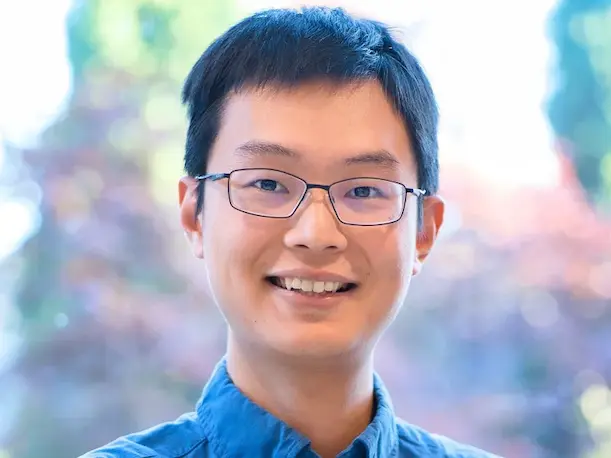
Dropzone AI is finding strong traction with MSSPs and VARs for its technology that brings a fully AI-powered approach to dealing with alert overload in the SOC (Security Operations Center), according to Dropzone founder and CEO Edward Wu.
The startup is delivering improved security outcomes entirely through AI—without human analysts—which sets it apart from many offerings that tout AI capabilities but still rely on people behind the scenes, Wu (pictured) told CRN.
[Related: 10 Cool Agentic Security Startups In 2026]
This is important for many solution and service providers, since they want to be the ones to deliver the human expertise to their customers, he said.
“With a lot of other AI SOC or AI MDR startups, if you peel back the curtain, they are leveraging a combination of software and humans,” Wu said. “But most MSSPs don’t want to have another layer of humans [at a vendor] because their core value proposition is already the human labor and expertise.”
Wu founded Dropzone AI in 2023 after spending eight years at ExtraHop, a major network detection and response (NDR) vendor, ultimately serving as its senior principal scientist. The experience revealed that generating large volumes of security alerts without resolving the issues was a massive problem for customers, he said.
Dropzone’s biggest differentiator is providing a “software-only” approach to addressing alerts with its AI SOC Analyst platform, according to Wu. This offers substantially improved consistency, scalability and transparency compared with human‑dependent methods, he said.
In terms of transparency, it can sometimes be very hard for customers and partners to figure out how much of the work is actually being done by software versus human labor, Wu said.
Consistency is another big benefit, since the AI-powered system won’t give short shrift to certain alerts because, for instance, “they want to wrap things up before they head home,” he said.
Alerts are handled by Dropzone’s AI capabilities with human-level reasoning, providing a substantial offloading of alert volume with high accuracy, Wu said.
Dropzone AI has seen adoption so far by more than 300 enterprises, and has focused heavily on channel partnerships, including with MSSPs and VARs, according to Head of Channel Shashi Nair.
Partner Perspective
At one Dropzone partner, BlackLake Security, being able to automate much of the routine threat triaging and investigation with the startup’s technology is an absolute game-changer, according to BlackLake’s Kurt Wagner.
As a result, BlackLake has been bringing Dropzone to many of its large clients, which “have been struggling with this SOC issue for a long time,” said Wagner, director of sales at Austin, Texas-based BlackLake, No. 311 on CRN’s Solution Provider 500 for 2025. “It’s really transformative.”
The fact that Dropzone is AI-native is a huge differentiator, as is the startup’s software-only approach to alleviating alert fatigue, he said.
Ultimately, even while providing better security outcomes, the cost model with Dropzone “is far more advantageous than some of the services that are out there because you’re removing the human element,” Wagner said.
Scalability
Crucially, Dropzone does have an internal team of human experts focused on quality control, Wu noted. The team is focused on spot-checking the investigations that the Dropzone system has performed and then producing identifying potential issues and providing feedback to the startup’s engineering team, he said.
Still, “we do not leverage any human labor for the actual product capability delivery,” Wu said.
Dropzone has 50 employees and is backed by a $37 million Series B funding round, which was raised in July 2025 and led by Theory Ventures. Compared with other venture-backed startups in the AI SOC space, however, Dropzone expects to have an easier time scaling up, Wu said.
“The vendors that are leveraging human labor behind the technology are going to struggle as they scale,” he said. “The quality is going to go down. The consistency will go down.”
Dropzone, on the other hand, can offer MSSPs and other partners a streamlined way to grow their own business thanks to the startup’s scalability advantage, Nair said.
“You are now able to do what you really have always wanted to do as an MSSP—which is to add more clients without having to scale head count, while ensuring that you have consistency in the output,” he said. “You do not have the issue with human scaling.”