Microsoft Hires Ex-Google Cloud President Hayete Gallot As New Security Chief
Gallot, who recently left Google Cloud after spending less than a year as its president of customer experience, is replacing Charlie Bell as executive vice president for security at Microsoft.
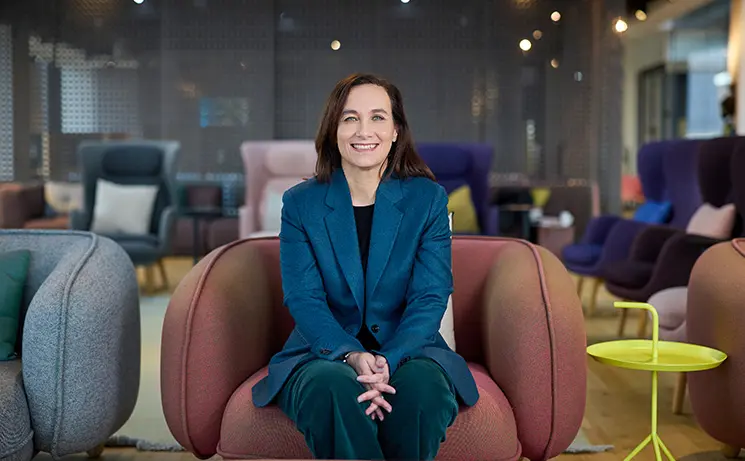
Microsoft confirmed Wednesday that it has hired former Google Cloud executive Hayete Gallot to head its security division, replacing Charlie Bell.
Gallot departed Google Cloud after spending less than a year as its president of customer experience, Google confirmed to CRN last week. Before starting with Google Cloud in April 2025, she had spent nearly 16 years at Microsoft, most recently as corporate vice president for commercial solution areas.
[Related: Google Cloud Confirms President’s Exit After Short Tenure]
The hire of Gallot to replace Bell as Microsoft’s executive vice president for security was first reported Wednesday by Bloomberg.
Microsoft Chairman and CEO Satya Nadella disclosed the hire of Gallot in a memo to employees, which the company posted online.
While at Microsoft previously, Gallot had held “multiple critical roles in building two of our biggest franchises—Windows and Office, leading our commercial solution areas’ go-to-market efforts,” Nadella wrote.
Notably, Gallot was also “instrumental in the design and implementation of our Security Solution Area,” the Microsoft CEO wrote in the memo.
In a LinkedIn post Wednesday, Gallot wrote that her focus as Microsoft security chief will be on enabling “the next wave of innovation in Security to help customers in this AI era.”
Looking ahead, achieving the “astonishing potential of AI will only succeed if we can secure AI solutions and make them safe,” she wrote.
In an email statement Wednesday, a Microsoft spokesperson said the company is “excited for Hayete Gallot to lead the next phase of growth in Microsoft Security as AI takes center stage.”
Meanwhile, “Charlie Bell will transition into a new role focused on engineering excellence, building on the strong foundation he established across our security business,” the spokesperson said in the statement.
Bell’s New Role
In the memo to Microsoft employees, Nadella wrote that he “asked Charlie Bell to take on a new role focused on engineering quality, reporting to me.” The plans for the transition had been in the works “for some time,” Nadella wrote.
Bell, formerly a longtime Amazon Web Services executive, had joined Microsoft in September 2021 to head its security division. He is remaining as an executive vice president at Microsoft in his new engineering-focused role, according to his LinkedIn profile.
Major responsibilities for Bell as security chief had included overseeing Microsoft’s Secure Future Initiative, an effort by the tech giant to improve its internal security as well as that of its widely used platforms.
The initiative was launched after an Exchange Online breach was discovered in June 2023, which saw the compromise of email accounts belonging to multiple U.S. government agencies. The Homeland Security-appointed Cyber Safety Review Board released findings in April 2024 that pinned the China-attributed breach on “avoidable errors” by Microsoft.
In November 2023, Microsoft rolled out an array of major changes to its software engineering process aimed at improving the security of its platforms. Bell’s blog post at the time referenced Bill Gates’ famous 2002 memo on “Trustworthy Computing,” in which Gates committed Microsoft to bringing a stronger focus on the security of its products.
Bell wrote in the post that the notion that security needed to come first for Microsoft “still holds true over two decades later.”
In September 2024, a top Microsoft executive told CRN that the Secure Future Initiative had been producing strong results.
“We feel we’re not only strengthening [Microsoft’s internal] security — but also we’re sharing a lot of these learnings with our customers, in terms of what they [can] do for their applications, what are the best practices,” said Joy Chik, president of identity and network access at Microsoft, in an interview at the time.