Okta COO: Partners Helping To Drive Identity Security Surge Amid Agentic Shift
Partners played a role in each of the vendor’s 20 largest deals during its latest quarter—underscoring the massive channel opportunity across both core identity security and emerging areas such as securing AI agents, Okta President and COO Eric Kelleher tells CRN.
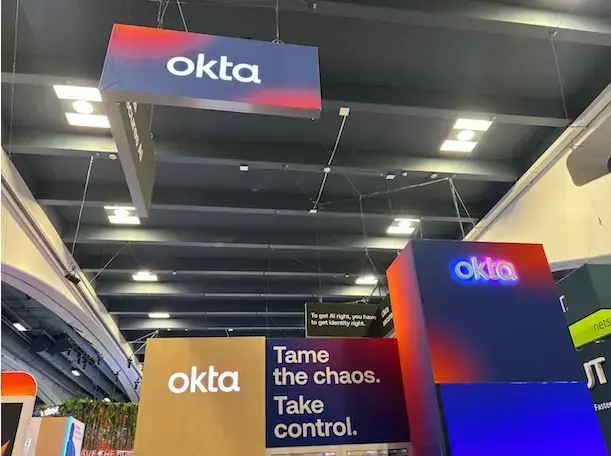
Okta partners played a role in each of the vendor’s 20 largest deals during its latest quarter—underscoring the massive opportunity for solution and service providers across both core identity security and emerging areas such as securing AI agents, according to Okta President and COO Eric Kelleher.
In an interview with CRN Wednesday, Kelleher said the partner-engaged deals—which helped to drive expectations-beating results for the second quarter of Okta’s fiscal 2027, ended July 31—included a major implementation of multiple technologies including AI agent security for a large enterprise customer.
[Related: Okta To Acquire Permiso Security For Identity Threat Detection Expansion]
The quarter’s “great success with partners” was bolstered by the fact that Okta is “seeing the AI pipeline begin to convert as well,” he said.
“What’s helping with that is, customers have urgency on this problem,” Kelleher said. “They have agents that are deployed—and they know they’re exposed.”
The company’s key offering in the space is Okta for AI Agents, which became generally available in April and aims to provide streamlined integration of agentic identities into an organization’s broader identity system.
Partner Perspective
For Houston-based Alchemy Technology Group, a six-time winner of Okta Partner of the Year awards, the arrival of AI agents only reinforces how critical identity security is for protecting organizations, according to Lucas Marquardt, senior vice president of sales at Alchemy Technology Group.
When it comes to enabling a zero-trust security posture for customers, “identity is the core foundation,” Marquardt said. “It all comes back to identity. I can’t do the rest of [zero trust] without knowing ‘who’ they are. And that is just as important when it comes to an agent, or agentic overall.”
As AI agents increasingly are tasked with communicating and autonomously carrying out actions with other agents, the potential for cyber risk is enormous if identity is not kept under control, he said.
“When I start having agents talking to other agents—if I don’t know who they are and the risk level of those agents, I’m going to have a real problem going forward,” Marquardt said. “[Identity] has to be what everything else is built off of.”
At Alchemy, No. 142 on CRN’s Solution Provider 500 for 2026, the heightened focus on identity security spurred by the agentic shift is a natural extension of the solution provider’s deep existing capabilities, he noted.
“We understand identity in and out,” Marquardt said. “That is a core pillar to who we are.”
‘Check All The Boxes’
Notably, Okta is gaining traction with expansion moves beyond its core to now provide identity governance, privileged access and AI agent security, he said. “They kind of check all the boxes when it comes to identity,” Marquardt said.
Another key advantage for Okta is that it continues to be positioned as an independent identity platform, in contrast to competitors that are providing both software applications as well as the underlying identity platforms used with the applications, he added.
“As you take that down to the agentic layer, it’s going to be more important,” Marquardt said. “I think just the independence that they have is another checkbox for them—that’s definitely helpful.”
Okta has also doubled down on working with partners in recent years, with many clear indicators that the company is “reinvesting in the channel,” he said.
For Okta, the abundant opportunities for partners are around both improving identity security for humans as well as providing protection for use of agents, according to Kelleher.
The arrival of agents—which often get their privileges ported over from their human user—is also revealing the need for bolstering core identity security for humans, he said.
“As [companies] are understanding the exposure with agentic, it’s bringing more emphasis to identity in the aggregate,” Kelleher said.
Revenue for Okta’s fiscal second quarter climbed to $805 million, up 11 percent year over year, above the analyst consensus estimate of $793.03 million. Okta’s quarterly earnings also beat expectations, with the vendor reporting that non-GAAP diluted net income per share came in at $1.05 for the quarter, 9 cents higher than the Wall Street estimate.