The 10 Hottest AI Security Tools Of 2026
Top industry vendors and startups unveiled an array of new tools for securing AI and agents throughout the year—with a focus on improving visibility into AI usage, controlling agent access and enabling intervention when agents go astray.

AI Security Tools To Know
The acceleration of the AI revolution in 2026—with a particular focus on the advancement of agents—saw a massive response from around the cybersecurity industry as partners and customers have sought better capabilities to rein in AI. A major focus was on countering the potential for unwanted AI behavior, such as seen in the spate of disclosures about “rogue” AI agents this year.
[Related: AI Could Give Defenders The ‘Permanent Advantage’ Within 18 Months: Kai CEO Galina Antova]
But many businesses continued to struggle with more routine issues such as lacking visibility—and thus, lacking control—around the usage of AI by employees, presenting a major and growing source of cyber risk.
All in all, top industry vendors and startups unveiled an array of new tools for securing AI and agents throughout the year—with key themes being delivering improved visibility into AI usage, controlling agent access and enabling intervention when agents go astray.
As part of CRN’s 2026 year-in-review coverage, we’ve selected 10 AI security tools that have been on our radar this year thanks to their combination of technical advancements and opportunities for channel partners. To better understand the products, CRN has spoken with CEOs, CTOs and other key executives at top industry vendors including Cisco, CrowdStrike, Palo Alto Networks and Zscaler—as well as at up-and-coming startups in the space such as JetStream Security and Noma Security.
What follows are the details on 10 of the hottest AI security tools of 2026.
1Password Unified Access
1Password announced the debut of its new unified access platform that aims to provide improved discovery, security and audit access for all identities. The new 1Password Unified Access offering covers human, machine and AI agent identities, providing a “clear operating model” for access security in the AI era, the vendor said. Discovery capabilities for AI tools and agent activity, as well as security capabilities for exposed secrets, are both available now, the company said. Without a doubt, a massive partner opportunity centers around helping customers to control what AI agents can access, while also preventing credentials from becoming a means for attackers or agents that have strayed beyond their intended activities, 1Password CEO David Faugno told CRN. “Right now there’s a ticking time bomb of risk that our partners can really help a wide variety of customers to get ahead of,” Faugno said. “The time to act is now.”
Cisco Zero Trust Access For AI Agents
Cisco Systems is aiming to provide a massive boost to the adoption of AI agents in the workforce with zero trust functionality for agentic that represents a “big step forward” for the industry, Cisco CTO Tom Gillis told CRN. Zero Trust Access for AI agents provides task-based permissions for agentic activities—enabling organizations to move from providing long-lived credentials, such as those often granted to humans, to providing tightly controlled permissions linked to specific workflows for agents, according to Cisco. Ultimately, when it comes to securing AI agents, “we believe that has to evolve from access control to action control,” Gillis said. “It needs to be more fine-grained, and it needs to be more intelligent—where it can allow selective access for certain tasks, but not general and broad [access].”
CrowdStrike Falcon Guardian
CrowdStrike unveiled Falcon Guardian in September to provide expanded visibility and protection for AI agents, building on its Falcon AIDR (AI Detection and Response) offering. The tool connects agents’ instructions with their activity on endpoints, helping security teams determine what prompted an agent to launch a process, execute a command or access a resource, according to CrowdStrike. Integrations with AI coding tools enable inspection of prompts and enforcement of security policies within supported agents, the company said. In November, CrowdStrike added an AI kill switch aimed at enabling intervention into AI agent behavior that is highly targeted—as well as enabling a broader shutdown of an agent when necessary, Chief Product Officer AJ Shipley said during a media roundtable. “It’s not a blunt-force instrument where we’re just cutting off all AI—although that is possible if necessary,” Shipley said.

JetStream Security
Amid the surging demand for businesses to deploy AI agents for boosting workplace productivity, AI security startup JetStream Security is looking to build up an enduring platform with the help of channel partners, JetStream founders told CRN. The startup sees a massive opportunity to bring together capabilities that many businesses have been attempting to assemble themselves from various tools and open-source components, JetStream co-founder and CEO Raj Rajamani (pictured second from right) told CRN. JetStream’s platform ultimately combines AI security with governance and financial controls—and puts a key emphasis on helping organizations understand how their AI systems are operating, he said. Crucially, JetStream also enables intervention within AI systems when necessary, according to Rajamani.
Netskope One AI Security
Netskope debuted a suite of new AI security products within its Netskope One platform. The Netskope One AI Security portfolio includes capabilities such as the Netskope One Agentic Broker, which offers “visibility and control over all MCP transactions whether sanctioned or unsanctioned,” the vendor said in a news release. Other new products include prevention for AI-specific threats (Netskope One AI Guardrails), inspection and enforcement of security policies related to private AI applications and LLMs (Netskope One AI Gateway) and simulation for adversarial attacks (Netskope One AI Red Teaming), the company said. In the current environment, the first step for partners and customers is to identify which tools are being used that are unsanctioned or risky, followed by introducing controls that can intervene when necessary with agents, Netskope co-founder and CEO Sanjay Beri told CRN. “You implement your own visibility, your own controls, your own governance,” Beri said. “It has to be real time. It has to be in milliseconds.”
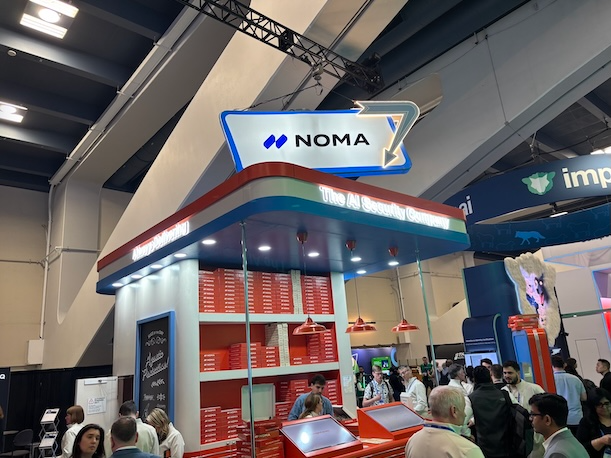
Noma Security: Endpoint Agent Security
Noma Security offers what it calls a “unified” AI agent security platform, with capabilities for continuous discovery, governance and protection of AI and agents. The platform provides a full AI inventory through automatically discovering where AI applications and agents are being built, as well as determining which data and systems they can access, according to the company. In September, the startup introduced an expansion of the endpoint agent security capabilities available across its platform. Noma Security has also brought a major focus on driving its growth with the help of channel partners, according to Niv Braun, co-founder and CEO at Noma Security. “When we speak about building a big company, [the channel] is the only way truly to scale big and scale fast,” Braun told CRN.
Okta For AI Agents
With the launch of Okta For AI Agents, the vendor is seeking to provide a streamlined integration of agentic identities into an organization’s broader identity system. “There’s this huge exposure in the industry right now—where companies have agents deployed in production and they’re very often over-permissioned, with standing permissions and [improper] data access,” Okta President and COO Eric Kelleher told CRN. “They need tools and technologies to capture the identity of those agents and govern them effectively.” In September, the company announced additional capabilities including discovery of unsanctioned agents on endpoints and visual configuration of agent connections.
Palo Alto Networks: Prisma AIRS 3.0
Palo Alto Networks unveiled the next generation of its AI security platform with the debut of Prisma AIRS 3.0. The offering features a number of new capabilities for discovery and assessment of AI agent activities, according to Lee Klarich, chief product and technology officer at Palo Alto Networks. Many of the enhancements in Prisma AIRS 3.0 are “oriented toward AI becoming more agentic in nature,” Klarich told CRN. Palo Alto Networks also previewed a forthcoming Prisma AIRS capability, AI Agent Gateway, “which will allow us to actually sit in the flow of agent-to-agent communication and secure that traffic,” he said.
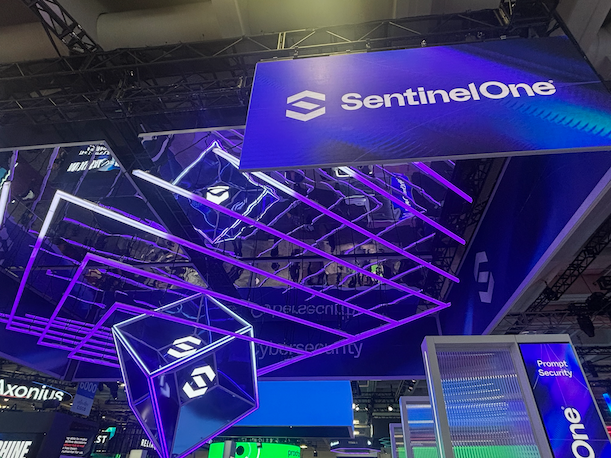
SentinelOne: Singularity Agentic Detection And Response
SentinelOne unveiled Singularity Agentic Detection and Response in October to provide enhanced monitoring and protection for AI agent activity. The offering combines technology from the vendor’s Prompt Security acquisition with its endpoint security capabilities—enabling security teams to connect an initial prompt with the actions an agent subsequently takes, SentinelOne Chief Product Officer Chris Corde told CRN. The visibility aims to help defenders identify malicious activity as well as situations in which an agent deviates from a user’s intentions, according to SentinelOne. Even routine uses of AI agents can trigger activity that requires security oversight, Corde noted. “If you’re not monitoring that from a security perspective, you’re flying blind,” he said.
Zscaler AI Access Graph
Zscaler launched AI Access Graph, a new offering that provides a way to see the connections across identities and applications, as well as other data sources throughout an organization—in order to ultimately provide improved enforcement of security policies and reduce risk. The offering leverages Zscaler’s acquisition of Symmetry Systems and will be pivotal for securing communications between AI agents, according to the company. “We know that when so many agents [are deployed], they’ll spawn further agents,” Zscaler founder and CEO Jay Chaudhry told CRN. “Who is talking to who? The access graph is the best way to figure that out.”