Zscaler CEO Jay Chaudhry: Boldest Statements From Zenith Live 2026
When it comes to the push for enabling secure usage of AI and agents, ‘this is the kind of moment Zscaler was built for,’ Chaudhry said during the company’s conference.
AI And Zero Trust
As the AI era continues to ramp up, many of the traditional assumptions of business—whether it’s around cybersecurity or around how to enable employee productivity—are quickly going out the window, Zscaler founder and CEO Jay Chaudhry said Tuesday.
During his keynote at Zscaler’s Zenith Live 2026 conference in Las Vegas, Chaudhry said that while users have long been considered the biggest risk in security, AI agents are rapidly becoming the “weakest link.”
[Related: Zscaler CEO On Vulnerability Surge From AI: ‘We All Need To Be Paranoid’]
Ultimately, Zscaler believes that its zero trust security platform is ideally positioned to address the huge needs organizations are facing in this fast-changing AI environment, he said. When it comes to the push for enabling secure usage of AI and agents, “this is the kind of moment Zscaler was built for,” Chaudhry said.
At the same time, Zscaler is aggressively expanding its platform to meet evolving demands, he said, including with the unveiling Tuesday of new products for AI broker, endpoint AI security and AI access graph.
The Zscaler CEO also recognized partners Tuesday for the key role they are playing in making it possible to “drive transformation” in the way required by emerging AI capabilities.
“Our partners have been a very important part of this journey,” Chaudhry said. “They have been working together with Zscaler to help [customers] transform your applications, transform your network, transform your security.”
What follows are Chaudhry’s five boldest statements from Zenith Live 2026.
AI Is An Unprecedented Revolution
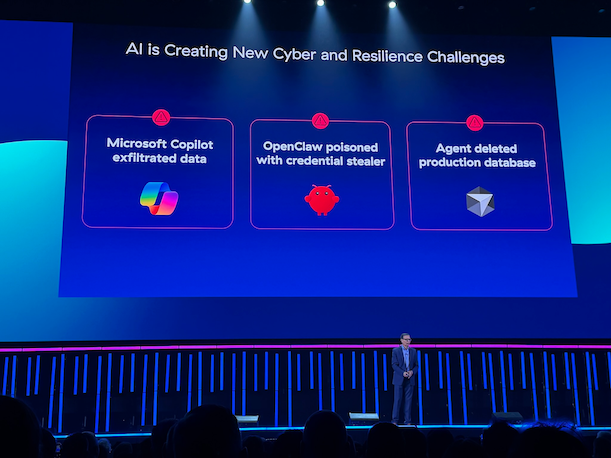
This AI revolution that’s coming—it’s different than most others. That’s why I like to call it a “gigawave.” It’s no longer a mega-wave. It’s probably as big as the Industrial Revolution. But the Industrial Revolution happened over a few hundred years. This is happening at a very, very fast pace. In the internet-cloud wave, we were working with human beings accessing web pages. Then cloud came, where you could access applications sitting no matter where you are. That was easy. But in the AI world, the tools are the workforce. It’s no longer that technology is the tool. That makes it very interesting and very challenging.
AI agents aren’t just helping employees. They’re operating independently, they’re making decisions, they’re taking actions, they’re communicating with other agents. And that requires a different set of solutions, a different way of looking at how you solve it. You can’t just incrementally solve it.
In today’s world, when we talk about cybersecurity issues, we think about users being the weakest link. If nothing else, they fall for social engineering. And we could control them, we could put policies in place, we had proper governance—we have put zero trust and all this stuff in place. And now, with the new workers, agents, I believe, will become the weakest link.
Patching Is Not Enough To Combat AI-Era Risk
These are powerful models. They are not to be discounted. They are very powerful in identifying software vulnerabilities. But the challenge is the following: we all have thousands of software vulnerabilities, already, that are unremediated, because we don’t have enough time and resources. These models are going to discover 5X more. Fixing bugs is not simply going to solve the problem. … We need to look at things differently. I believe with all these models catching up, they’ll all be available. Once you build technology, it’s very hard to keep it in a bottle.
Zero Trust Architecture Is The Key
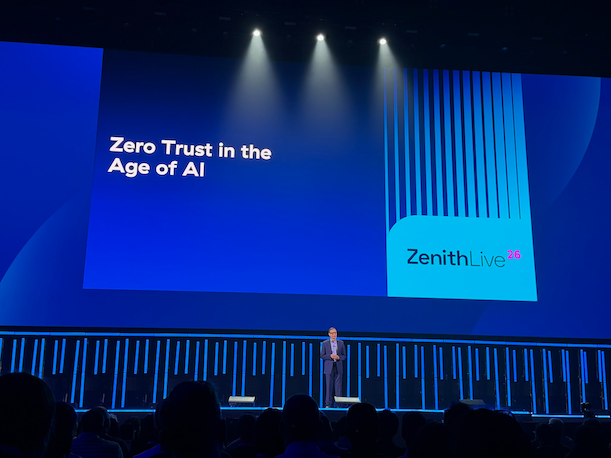
The question is, if you can’t fix all the bugs, what else can you do? We have to think out of the box and say, breaches will happen—more breaches will happen. What can we do besides patching to prevent breaches. And what can you do to minimize the impact of the breach if a breach happens? That’s how we are thinking and working with our customers. One of the key areas we focus on is, hiding your applications. If they can’t find your application, they can’t reach them [and] they can’t breach them. That’s one of the fundamental things we had when we built Zscaler, when we built our Zero Trust Exchange. … This is the kind of moment Zscaler was built for.
Boosting AI Visibility And Access
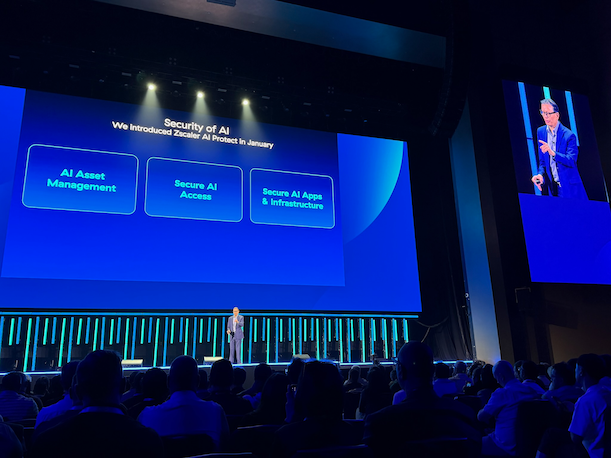
Let me give you a high-level view of some of the AI innovations we are driving [at Zscaler]. And you can see [with] the pace that these things are coming, we do need to build at a faster pace. What have we done while we are building some of these products, like secure access to GenAI applications, for over three years. Our customers wanted to bring all these things together, integrated. So we launched the AI Protect solution in January, which comprises three key areas: AI asset management, giving you full visibility of all AI assets—endpoint, external, internal, even encrypted SaaS traffic; secure AI access—access to applications, securely, through policy; and securing AI applications and infrastructure. … We literally set up AI security as a startup within Zscaler so they could move at a much faster pace. Literally they could be updating and upgrading functionality every week.
Zero Trust For Agents
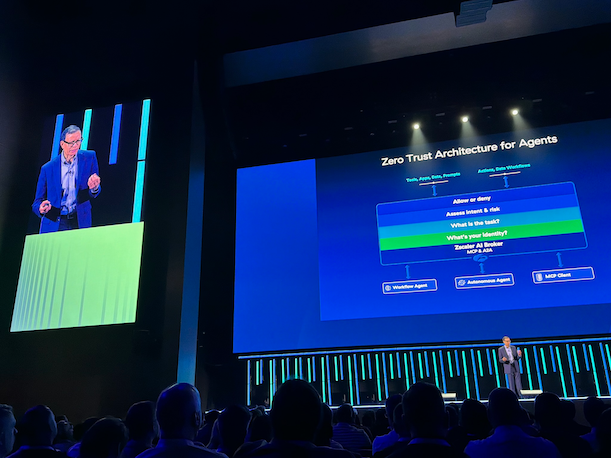
The most challenging and exciting project for us is extending our Zero Trust Exchange for agents. We have done it for users, we’ve done it for branches, we’ve done it for workloads. So in many ways, a lot of pieces that are needed for having a Zero Trust Exchange for agents were already in place. We had to build a number of pieces: building the MCP or A2A brokers, figuring out the intent, figuring out the skills and tools available for these agents—and understanding intent, being able to analyze prompts, being able to analyze responses for data loss, for cyber. All that stuff had to be built. So literally, I would say, 70 percent of the pieces needed were already there, and [we had] to bring together 30 percent of the pieces. …
This is an exciting project, and it created a whole range of other issues. Look at the volume of traffic, the communication. This is an interesting problem. When you launch agents in your company, how do you figure out who is talking to who? An agent is spawning multiple sub-agents. All that stuff is happening. So we know we have to solve the problems of, which entity is talking to which entity, which data source? That was very hard to figure out. And to solve this very hard problem, we came across this company called Symmetry Systems that we recently acquired. This company was built by a bunch of PhDs who took this challenge of connecting the dots. All those things are important to create the access graph. … What the graph provides us can be used for agentic policy—creating a policy for AI agents through Zero Trust Exchange. That’s very exciting technology that’s getting integrated into our agentic technology.