Centroid CRO: ‘We’re Not Looking To Sell A Product. We’re Looking To Solve The Problem.’
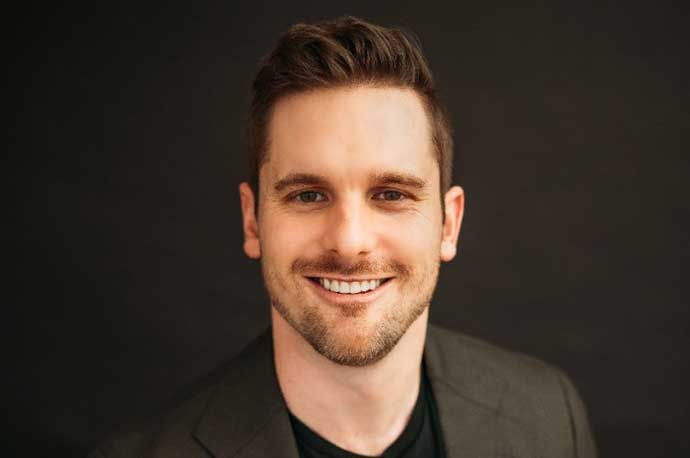
‘Unless you’re actually running the workloads and keeping them up and maintaining and keeping the lights on, I don’t think that you really understand how to craft a solution that matters,’ says Scott Whitley, CRO of Oracle partner Centroid Systems.
Oracle’s recent reveal that it has around $500 billion in backlog and expects to hit $144 billion in four years was less of a surprise to partners like Centroid Systems that are all in on the company and have seen growing consumption of Oracle’s cloud and artificial intelligence offerings.
“They just became cool again overnight,” Scott Whitley, CRO of Troy, Mich.-based Centroid, told CRN in an interview. “You’re seeing it now. Stock price is recognizing it. People are understanding why.”
Whitley said that Centroid’s work with customers has involved determining the best place to run enterprise workloads, exploring new AI use cases and unifying data for better AI results. Centroid has also worked with partners on scaling and securing AI tools.
[RELATED: Oracle Q1 Takeaways For The Channel]
Oracle Partner Centroid
Centroid is also expanding into Latin America and India, Whitley said.
The CRO said he wants to see more services partners in the Oracle ecosystem, which is not as large as that of cloud rivals including Microsoft and Amazon Web Services.
“We’re all on a mission to make this technology well known and how great it is well known,” he said. “We can’t do that alone.”
Meanwhile, Oracle’s stock has come down since surging about 40 percent from its latest quarterly earnings report Sept. 9, but as of Tuesday evening it was still up about 30 percent, trading at about $310 a share.
Read on for more of what Whitley told CRN about Centroid’s work as an Oracle partner plus its newly established partnership with cybersecurity vendor Stellar Cyber.
Of course, I have to get your thoughts on Oracle’s stock shooting up with it reporting nearly $500 billion in pipeline coming out of its latest fiscal quarter—what does that tell you?
They just became cool again overnight.
Our current business is really focused on helping customers figure out where their enterprise workloads should run.
We work in every single cloud provider that’s out there because Oracle runs wherever.
We have customers that are [with Microsoft] Azure, GCP [Google Cloud Platform], AWS [Amazon Web Services].
OCI [Oracle Cloud Infrastructure], we have a really unique relationship with and deep history with. … I always tell customers, it’s not [necessarily] because we wanted to do that. It’s because the market and what they [Oracle] built [were] leading us.
You’re seeing it now. Stock price is recognizing it. People are understanding why.
What’s keeping you busy as an Oracle partner?
We help customers [figure out where] the enterprise workload [should] run—now there’s a lot of hybrid cloud, transformation of this cloud to that cloud. Are you moving to [Oracle Software-as-a-Service application suite] Fusion? Are you staying? What’s the app business?
We do managed services, consulting, technology innovation around where do those things go?
And then we can help anybody from the database layer to the application layer all the way up to the customer experience and DevOps from the front end as well. With that comes a lot of AI and all the fun things that are happening now.
I would say our practice is pretty developed. We know that ecosystem pretty well. We’re in the top spot from a regional perspective. And we plan to stay there.

How’s the customer appetite for AI?
It’s burning on everybody’s minds.
We spend a lot of time around the tooling and the front end and the customizations that you do with AI and building RAG [retrieval-augmented generation] models or whatever you want.
But a large majority of what we’re doing is actually helping customers build scalable, cost-effective infrastructure and a data platform strategy.
A lot of our customers think about it from the front end of the business. They say, ‘We want to do this really cool thing that this AI company does.’ And they don't think about the back end, the scalability and security of it.
They spend a ton of money, and they don’t get the ROI on it. We hear that time and time again. And so our conversations are really now geared toward how do we run a cost-effective environment that can scale with us? What are the fun things that can happen? [Clients] can focus on the business and the infrastructure can be taken care of, the data can be taken care of.
It’s a lot about redoing what was done 10 years ago. ‘I moved to Snowflake. I moved to Postgres. I scattered my data everywhere.’
Every customer that we talk to, we talk about AI. But there’s still a lot of legacy stuff just happening. We are doing a lot of cleanup for customers before they can even spell AI.

How has Oracle’s channel partner program evolved in this AI era for Centroid?
I can only speak from my experience with them.
[Those] of us that are in there and really seeing some massive success are the ones that got involved early and really understood [Oracle’s capabilities]. And now everybody else is playing catch-up.
The partner ecosystem is developing, is changing. You see massive acquisition sprees that are happening, too.
It’s an interesting space, and I don’t see that changing with what’s happening.
Is Oracle’s news around the $500 billion backlog reflecting increased business for its partners?
Business is great. What I can tell you is the team has expanded greatly. So we’re actually now global right as well. We’ve got sales operations down in Latin America as well. Looking at potentially doing some stuff in India at some point, too.
There is no lightness of consumption. When you talk about backlog, you have just got to know that that’s around GPUs. And those conversations are ‘What do I have today and what’s available and where is it available?’
From our perspective, it’s tailwinds and how much can we grab and help customers.
I’ve been working with Oracle for the past decade. And I have just never seen something like this. And I know that’s the craze of GPUs, but even older versions are just getting gobbled up. It’s a really fun time to be around it. It’s challenging because it changes every day. But I think that’s everybody’s company right now.
How is Centroid differentiating itself for the AI era?
We have a simple model—simplify the cloud. What that means to us internally is actually that we provide scalable, cost-effective, secure platforms for you to run your business. And then we operate the back-end side so you can focus on the business and growing the revenue.
That’s a really easy answer for a very complicated solution. Everybody’s customer DNA is totally different. And especially now because you’re talking about multiple integrations that you’re pulling in and trying to enable. But that is really our business value.
The big portion of our business is actually what do your workloads look like so we can actually figure out where that runs [in] the most cost-effective way to then allow you to focus on the business and also invest back into AI.
I feel like—I don’t want to say like a ‘therapist’—but [customers say], ‘I have all of this capital that I need to deploy, but I also need to cut OpEx.
And so our business value really does come down to: We simplify the cloud. My favorite thing to hear is, ‘The cloud’s expensive.’ And then it’s like, ‘Why?’ And so we jump into that and help customers navigate the waters.
Do you want to see more partners in the Oracle ecosystem?
The fun thing about the Oracle space right now is that there’s enough business to go around. It’s not competitive.
There’s a fun competitive nature. But we’re all friends, and we all know each other. But I would like to see it [grow].
With all this expansive growth, they [Oracle] need help. They know that they need that. The more Oracle business for all of us, the better.
We’re all on a mission to make this technology well known and how great it is well known. And we can’t do that alone.
The competition helps us drive to be better, too. We don’t get stagnant.
If you look at Oracle's technology, it's the best data platform in the world.
[Some say] it is expensive, but if you actually look at the value that you can exploit out of it, it’s really not. It’s if you run it correctly, it’s really not.

Do your customers want to consolidate vendors?
We’re seeing the consolidation of vendors. But we also have to adapt, too.
We do other database technologies outside of Oracle. Our primary business is with Oracle. We manage everything from SQL Server to Postgres, Mongo[DB], whatever.
As a managed service provider, we have to, because customers don’t want multiple hands.
They’re having to deal with multiple vendors with Azure and GCP and OCI and AWS.
They [customers] are basically like, ‘We need somebody that’s going to ride or die with us and are in the trenches and who understands their business and who can help all of these providers understand what we need to do.’
We’re not looking to sell a product. We’re looking to solve the problem.
Unless you’re actually running the workloads and keeping them up and maintaining and keeping the lights on, I don’t think that you really understand how to craft a solution that matters.
[Customers also say] we need partners that can grow and contract with us as well. That’s a big industry trend that I'm seeing—’If we explode, I need you to come with me. And if we scale back I also need you to be cost-sensitive to that, and we have got to go another way.’ Which is a challenging thing, but it’s part of the business that we’ve been able to figure out,
What should your customers know about your Stellar Cyber partnership?
Our relationship with Oracle is driving the business that way. And our customers are, too.
This has kind of been a couple years in the making. Oddly enough, Oracle was the one that brought them to us multiple times.
Stellar [Cyber] is built for OCI. Everything in there is really easy to turn and go.
We’re hosting a ton of customer data. It’s our responsibility to make sure that that’s secure. And so from security protocols, we have our own and then we also adopt what our customers need.
We see a gap in the market. We’re excited about the partnership. We’re excited to see what it drives. Oracle has been champing at the bit to get this thing together because they also want somebody who understands OCI and somebody who understands the platform on the security side. And that magic pairing was just great.

Do you see Centroid adding more vendor partnerships?
Technology is changing rapidly. One of the founding principles for us is integrity. And if we say we’re going to do something, we want to do it right.
We can be the master of a lot, but we cannot be the master of all things. And so there are some areas where we absolutely want to partner, and it makes sense for us to do so. Also, if our customers keep asking us to check things out, then we’re going to go after it as well.
We have some other partnerships as well that are going really well. But this is also a collaboration in the Oracle ecosystem that we haven’t seen yet.
How soon will your customers see the benefits of the Stellar Cyber partnership?
With any partnership, we want to make sure it’s successful.
We are very focused on delivering what we say we’re going to deliver. And so before we even announced this, there was tons of back-end effort [where] we were talking about go-to-market.
We’re ready to go. When we work with Oracle and we’re finding direct customers to go after, there’s nothing holding us back at this point. We did all that legwork prior.