10 New Products For AI Edge Solutions
A wave of new edge computing products is helping solution providers bring AI closer to customers’ data. Here are 10 recent offerings spanning compute, networking, virtualization and security that are opening new revenue opportunities to design, deploy and manage customers’ AI-ready, distributed infrastructure.

AI is giving edge computing a fresh sense of urgency and driving growth opportunities for solution providers.
As customers look to use data from connected machines, cameras and sensors to make faster decisions, market trends such as the expansion of 5G networks, industrial automation and demand for data localization to meet security requirements are all playing a role in expected market growth. Added to that is the AI-driven need to put more intelligence at the edge, according to Research and Markets, which last month projected that the edge computing market will reach $273.73 billion by 2030, growing at a CAGR of 43.2 percent.
This market momentum reflects the need of modern businesses to process information closer to where it is generated. Low-latency applications, industrial automation and real-time analytics are helping drive demand for distributed infrastructure, according to the research firm. AI inference adds another reason to bring compute to the edge, where models can help interpret local data without sending every workload back to a centralized environment.
To deliver that level of intelligence at the edge, solution providers are incorporating products that deliver reliable connectivity, management capabilities and security into their solutions.
Here’s a look at some of the recent edge computing offerings that are putting compact compute and AI acceleration together with networking, virtualization and protection for cyber-physical systems, giving solution providers a bevy of new tools to deliver AI-focused edge computing solutions.
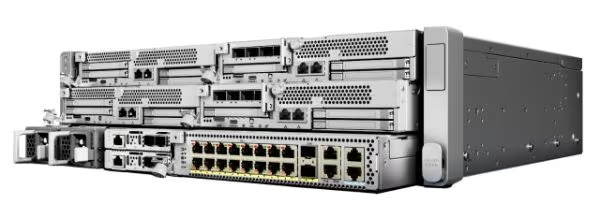
Cisco Unified Edge
Cisco Unified Edge brings compute, storage, networking and security together in a modular, edge-optimized platform managed through Cisco Intersight. The XE150c M8 compute node family adds Intel Xeon 6 processing and support for NVIDIA RTX Pro 4500/6000 Blackwell Server Edition GPUs, enabling virtualization, containers and AI/ML at distributed sites, according to the company. For solution providers, it opens opportunities to design, deploy and manage AI-ready edge infrastructure across customers’ distributed operations.
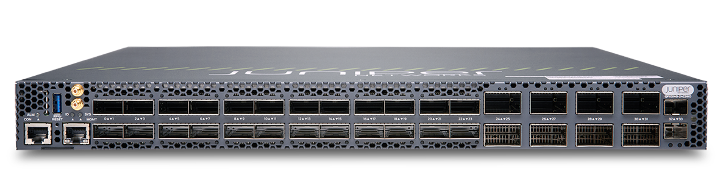
HPE Juniper Networking QFX5140
“Purpose-built for the next wave of AI infrastructure with a special focus on inferencing clusters at the edge,” according to HPE, the 1RU 16-Terabit-per-second QFX5140 switch is based on the Trident 5 ASIC from Broadcom. It includes AI load balancing, congestion control and supports from 25 Gigabit-per-second to 800-Gigabit-per-second performance. The switch was launched as part of HPE AI Factory, debuting in June as the company said it was seeing “explosive growth and demand” for AI inferencing.
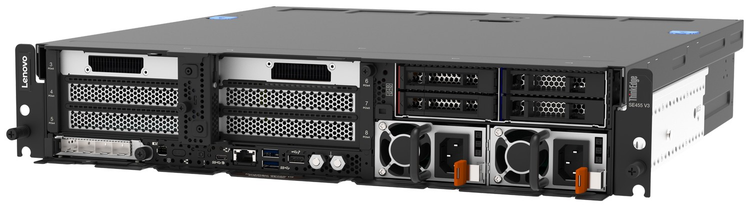
Lenovo ThinkEdge SE455i
Purpose-built for edge AI inferencing, the Lenovo ThinkEdge SE455i is described as super compact and built for vertical markets like retail, telco and industrial environments where processing data locally can deliver real-time insights. Launched in January at CES, it combines AMD EPYC 8004 processors with NVIDIA L4 GPUs, up to 576 GB of DDR5 memory and NVMe storage in a short-depth, ruggedized form factor that opens the door to opportunities where customers need workload consolidation and distributed infrastructure
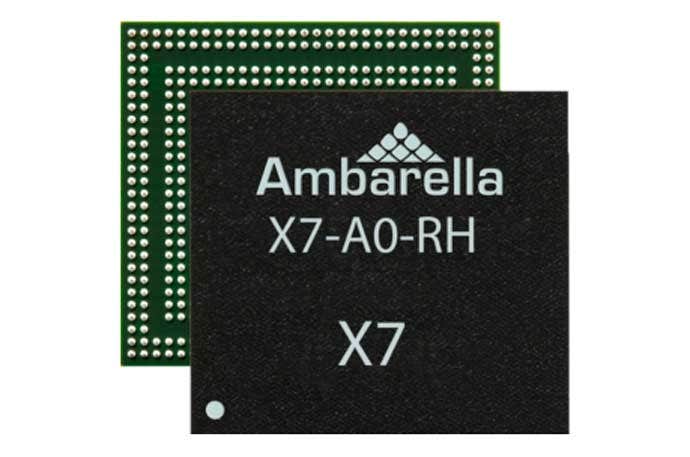
Ambarella X7
Edge AI semiconductor company Ambarella in September introduced the X7, its first dedicated CVflow AI accelerator, designed to add AI processing to existing Arm- or x86-based systems without redesigning the underlying platform. Operating within a 2- to 5-watt power envelope in current customer designs, X7 supports vision and multimodal models. The X7’s retrofit approach creates opportunities for solution providers to add physical-AI capabilities to installed cameras, industrial controllers and gateways that still have useful operating life.
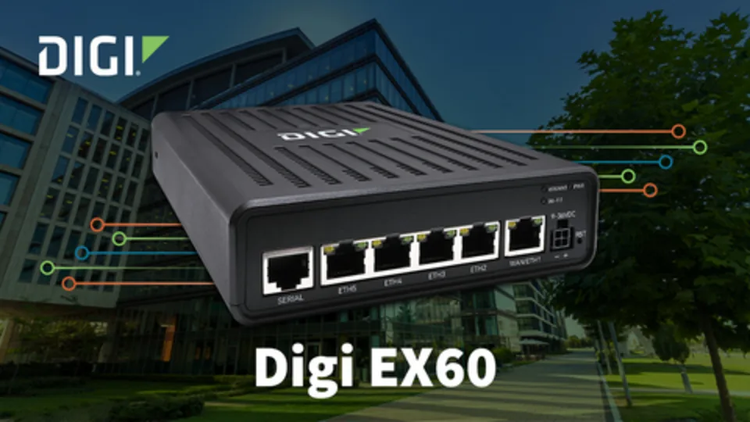
Digi EX60
Digi International in October introduced the Digi EX60, an indoor enterprise 5G router targeted at branch offices, retail locations and distributed enterprises. It combines 5G, Wi-Fi 7, 2.5-GbE connectivity and centralized fleet management. The company says the EX60 is built for the transition carriers are making in shifting investment toward 5G and can deliver 5G either as the primary connection at a site or an automatic failover for an existing wired link. Digi EX60 supported AT&T, Verizon and T-Mobile networks as of launch. Paired with centralized management through Digi Remote Manager and its included Model Context Protocol server, IT teams can connect the AI assistant of their choice for fleet-wide monitoring and automation, the company said.
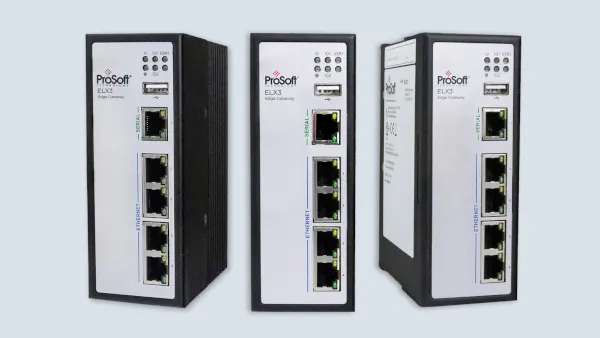
Belden ProSoft Technology ELX3 ProLinx Edge Gateway
Belden’s ProSoft Technology ELX3 ProLinx Edge Gateway, released in July, combines OT protocol conversion with Docker-based edge application hosting on rugged industrial hardware. The company says it can run custom applications for machine learning, predictive maintenance and near-real-time analytics alongside EtherNet/IP-to-Modbus TCP/IP functions. For integrators, that creates opportunities to modernize customers’ legacy OT environments while adding local analytics, digital-twin connectivity and lightweight AI functionality at the machine level.
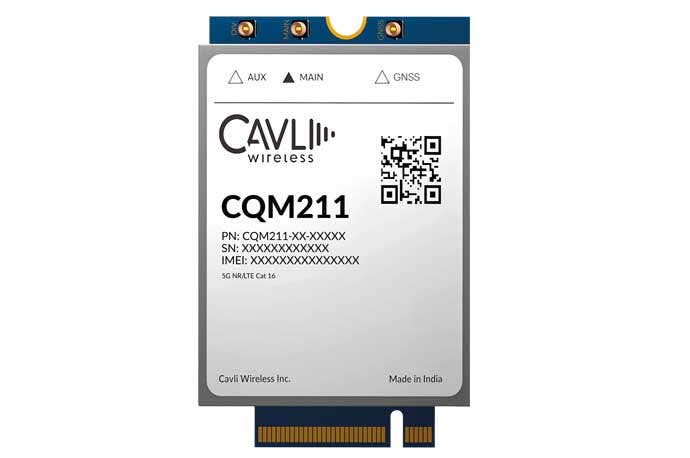
Cavli Wireless CQM211
The Cavli Wireless CQM211 is a 5G NR Advanced Sub-6-GHz module for industrial IoT, gateways and other high-bandwidth edge applications, supporting 5G SA and NSA connectivity, LTE Cat 16 fallback and Linux/OpenWrt. The company says its onboard Arm processor and SDK support allow applications to run directly on the module. It is available in LGA and M.2 formats. For solution providers and system builders, it enables development of 5G-connected industrial, surveillance, logistics and infrastructure solutions without necessarily requiring a separate host processor.
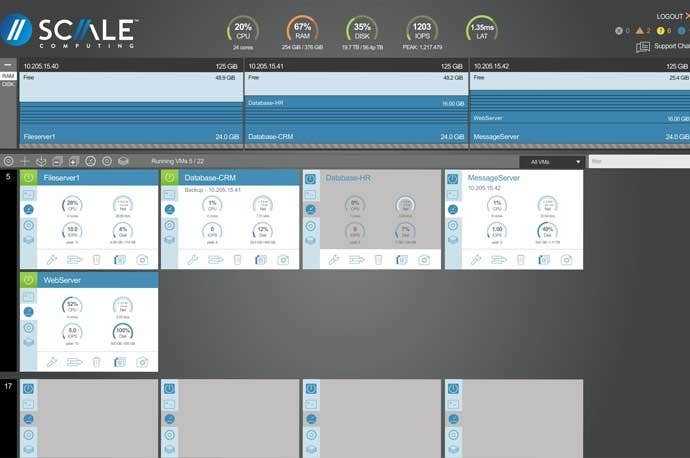
SC//HyperCore Virtualization Suite with AMD Support
Scale Computing in July announced plans to add support for AMD EPYC and AMD Ryzen processors to its SC//HyperCore Virtualization Suite. The expanded support addresses a long-requested need for broader infrastructure and platform choice as organizations modernize infrastructure at the edge, in the data center and across distributed enterprise environments, according to Scale. Early technical evaluation shows potential for opportunities around consistent high-I/O thread handling, improved power efficiency for known workloads, EPYC memory throughput, and the potential to leverage embedded GPU capabilities in AMD Ryzen AI platforms, the company said.

Claroty Claire
Launched in May, Claroty Claire is an AI security agent purpose-built for cyber-physical systems, using a CPS-focused language model built on Claroty’s industrial, health care, commercial and public-sector security data. Claire provides asset visibility and contextual security insights while supporting agentic actions designed around operational integrity, according to the company. It adds an AI-driven security layer for solutions aimed at protecting increasingly connected industrial and critical-infrastructure environments where uptime and operational continuity are critical.
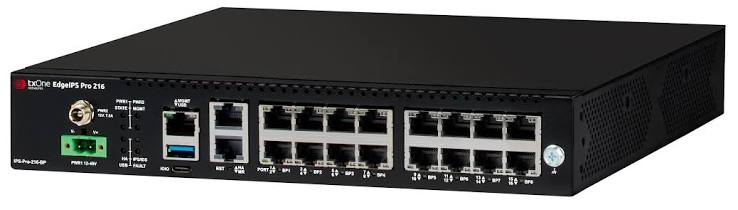
TXOne Networks vEdgeIPS Pro
Introduced in September, TXOne Networks vEdgeIPS Pro extends the company’s inline OT protection into virtualized industrial infrastructure with its first virtual appliance line. The offering is part of the company’s next-generation Edge Networking Solution portfolio, and the addition of vEdgeIPS Pro brings the inline protection it previously offered to physical environments to virtualized environments for the first time.