IBM’s Hybrid Cloud And AI Push Powers Major Q4 2025 Growth Across Software And Infrastructure
‘As we laid out on our investor day in February 2025, we are executing on our strategy to advance IBM as a software-led hybrid cloud and AI platform company. We entered 2025 intently focused on investing in innovation and productivity initiatives to accelerate our shift towards durable, higher-growth end markets in software with expanding margins and strong free cash flow,’ says IBM chairman, president, and CEO Arvind Krishna.
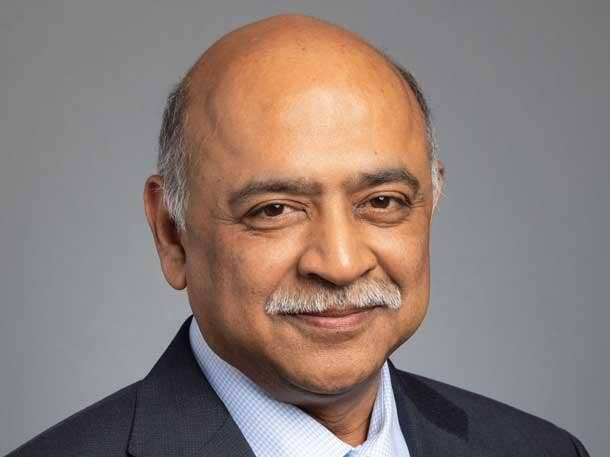
IBM has transformed itself into a software and AI company and in the process enjoyed a strong fiscal fourth quarter 2025.
Arvind Krishna, IBM chairman, president, and CEO, Wednesday told investors that the company’s 6 percent revenue growth for fiscal 2025 and 12 percent growth for the fourth fiscal quarter shows how well IBM has executed on its growth strategy.
“As we laid out on our investor day in February 2025, we are executing on our strategy to advance IBM as a software-led hybrid cloud and AI platform company,” Krishna said during his prepared remarks on the company’s fiscal fourth quarter 2025 conference call. “We entered 2025 intently focused on investing in innovation and productivity initiatives to accelerate our shift towards durable, higher-growth end markets in software with expanding margins and strong free cash flow.”
[Related: IBM: $9.5-Billion AI Book Of Business Drives Q3 Growth Across Software, Hardware And Consulting]
The numbers tell the story.
Software today represents about 45 percent of IBM’s business, up from about 25 percent in 2018, Krishna said.
“Software grew 9 percent, our highest annual growth rate in history, with three of our four software sub-segments delivering double-digit growth rates,” he said. “Innovation value can also be seen in our IBM z performance, up 48 percent this year, achieving the highest annual revenue for z in about 20 years. I am proud of our achievements in 2025 as we exceeded all of our target metrics for revenue growth, profitability and free cash flow that we laid out at our investor day.”
Customers appear to be investing in their IT infrastructures despite macroeconomic conditions, Krishna said.
“We continue to operate in a dynamic environment, but one where client demand remains resilient,” he said. “In the categories that matter most to IBM, enterprises are prioritizing technology investments that drive productivity, resilience, and flexibility, particularly in hybrid cloud, AI, and mission critical infrastructure. These technologies are no longer viewed as incremental tools, but as platforms that fundamentally change how businesses scale, compete and operate as clients modernize core systems, redesign workflows, and seek to extract more value from growing volumes of data.”
The 11 percent growth in fourth fiscal quarter software revenue exceeded IBM’s overall revenue growth of 9 percent, which was the company’s highest growth in over three years, Krishna said.
“Software growth [was] driven by the strength of our diversified portfolio,” he said. “Both data and automation are gaining strong momentum, with clients growing 19 percent and 14 percent respectively in the quarter, as AI adoption accelerates.”
Enterprises are increasingly focused keeping operations running smoothly in increasingly complex and hybrid environments fueled by a surge of new applications, Krishna said.
“Our end-to-end portfolio of leading automation and data solutions help clients manage and optimize operations, automate infrastructure and workflows, build resiliency, secure and govern data, and drive cost efficiency,” he said. “Consulting continued to grow, up 1 percent, reflecting increased demand for AI services as clients need help designing, deploying, and governing AI at scale.”
IBM also saw infrastructure growth in the quarter, with revenue up 17 percent thanks to robust sales of the company’s new Z17 mainframes, which is outpacing its Z16 performance, Krishna said.
“A key contributor to this momentum is the innovation value we are delivering with Z17, processing 50 percent more AI inferencing operations per day than Z16 and bringing real-time inferencing capabilities inside IBM z,” he said.
The breadth of IBM’s AI offerings is another key differentiator, with its innovative technology stack combined with consulting at scale leading to a cumulative GenAI book of business of over $12.5 billion, of which software is more than $2 billion and consulting is more than $10.5 billion, Krishna said.
“As we look at the evolution of AI, our opportunity is to make it easy for clients to build AI that is specific to their data, their processes, and their competitive needs, including the effective use of smaller, more efficient models where they make sense,” he said. “That is why IBM's approach spans consulting, Watsonx, our agentic platform Orchestrate, and Red Hat AI,” he said. “Our announced acquisition of Confluent is another pillar in this strategy, helping unify our hybrid cloud and automation solutions through a small data platform.”
IBM’s hybrid approach to models helps clients take advantage of the best option for each use case, including IBM's Granite models, third-party models, or open models from Hugging Face, Meta, and Mistral, Krishna side. AI has also become a powerful productivity driver for IBM, he said.
“In 2023, we set out on a goal to achieve $2 billion of productivity savings exiting 2024, and today we are well ahead of that, exiting 2025 with $4.5 billion of annual run rate savings,” he said. “We have been accelerating our productivity initiatives to enable investment in innovation and highly strategic acquisitions like HashiCorp and Confluent, while continuing to deliver strong margin expansion and free cash flow growth
Accelerating organic innovation is a core focus for IBM, Krishna said. As an example, he cited Project Bob, the company’s next-generation AI-based software development system aimed at transforming developer productivity.
“Bob introduces intelligent orchestration between industry leading frontier models such as Anthropic Claude and Mistral, small language models including IBM Granite, and custom models, all optimized for cost and performance,” he said. “We have more than 20,000 IBMers that are using Project Bob reporting productivity gains, averaging 45 percent, a powerful client zero use case.”
IBM also unveiled new or deepened strategic partnerships through the year with AMD, Anthropic, AWS, Microsoft, OpenAI, and Oracle, Krishna said.
“Recently, we announced a partnership between Red Hat and Nvidia that aligns our hybrid AI solutions and Nvidia's AI stack,” he said. “This collaboration allows enterprises to deploy AI-accelerated applications across any environment from the data center to the public cloud using a unified, automated infrastructure. It represents a significant step forward in making high-performance AI more accessible and scalable for the hybrid enterprise. Innovation, combined with our strategic partnerships across consulting with key hyperscaler and ISP relationships and software with key data providers, drives a multiplier effect that fuels our flywheel for growth.”
IBM is also making steady progress in quantum computing, Krishna said. The past quarter saw IBM advance its development roadmap, improve error correction capabilities, and expanded ecosystem partnerships.
“Our collaboration with organizations such as Cisco and participation in government initiatives like the US Department of Energy's Genesis mission and DARPA’s Quantum benchmarking initiative reflect growing confidence in IBM's approach to building scalable, fault-tolerant quantum systems. Quantum advantage will require high performing hardware, and in December, we deployed our first 120-qubit IBM Quantum Nighthawk-based system for use by our clients.”
IBM By The Numbers
For its fourth fiscal quarter 2025, which ended December 31, IBM reported total revenue of $19.67 billion, up 12.8 percent from the $17.55 billion the company reported for its fourth fiscal quarter 2024.
This included software revenue of $9.03 billion, up 14.0 percent; consulting revenue of $5.35 billion, up 3.4 percent; infrastructure revenue of $5.13 billion, up 20.6 percent; and financing revenue of $179 million, up 5.3 percent.
Total revenue beat analyst expectations by $480 million, according to Seeking Alpha.
IBM also reported GAAP net income of $5.6 billion or $5.88 per share, up from last year’s $2.92 billion or $3.09 per share. On a non-GAAP basis, IBM reported net income of $4.52 per share, up from last year’s $3.92 per share.
Non-GAAP earnings beat analyst expectations by 23 cents per share, according to Seeking Alpha.
For all of fiscal 2025, IBM reported revenue of $67.54 billion, up from last year’s $62.75 billion.
This included software revenue of $29.96 billion, up 10.6 percent; consulting revenue of $21.16 billion, up 1.8 percent; infrastructure revenue of $15.72 billion, up 12.1 percent; and financing revenue of $737 million, up 3.3 percent.
IBM also reported full fiscal year GAAP net income of $10.59 billion or $11.17 per share, up significantly from last year’s $6.02 billion or $6.43 per share.
Looking ahead, IBM expects full fiscal year 2026 revenue growth of over 5 percent, the company said.
IBM stock soared in after-hours trading Wednesday, up nearly 8 percent.