The 10 Coolest Big Data Tools Of 2026 (So Far)
Here’s a look at 10 new, expanded and improved big data platforms and tools that solution and service providers should be aware of.

It’s not about you anymore. It’s all about the agents.
Data infrastructure and tools used to manage data have traditionally focused on preparing and managing data for data analytics and business intelligence activities for people.
But now AI applications—and AI agents in particular—are surpassing people as the primary consumers of data and knowledge, notes a recent blog post by Ash Ashutosh and Edo Liberty, CEO and chief scientist, respectively, at vector database developer Pinecone. And that means agents are becoming the primary users of the tools and infrastructure that support those data processes.
Managing, moving, transforming and governing data for business applications and data analytics purposes has always been an important part of big data IT operations. Those chores have taken on an even higher priority as the surge of AI application and agent development pushes demands for data—lots of data—to new levels.
Data issues are a major reason why many AI initiatives fail.
Data remains fragmented across IT estate: clouds, data warehouse, data lakes, software-as-a-service applications, on-premises systems, and more. Collecting, managing and preparing data for analytical and AI tasks is a challenge.
And low-quality data, the result of poor data management, preparation and governance practices, raises the costs of AI initiatives and erodes confidence in AI outputs.
What follows is a look at 10 cool big data tools, introduced or newly available this year, that are designed to help customers more effectively carry out big data chores. Not surprisingly, the majority of the tools in this year’s list revolve around the tasks of collecting, preparing and managing data for AI and effectively getting it to AI applications and agents with the proper context.
Alation AI Governance
Alation develops an enterprise data intelligence and data cataloging platform that organizations use to identify, understand and govern their data assets.
In May, the company launched Alation AI Governance, a new tool the company said provides a system of record for AI assets including AI models, agents and tools.
According to Alation, businesses and organizations are deploying AI models, agents and tools faster than they can govern them. That can cause problems when company boards of directors and government regulators ask about compliance with company policies and government regulations.
Alation, for example, cites the need to comply with European Union AI Act documentary requirements for high-risk AI systems, while the NIST (U.S. National Institute of Standards and Technology) AI Risk Management Framework is becoming a U.S. “procurement baseline.”
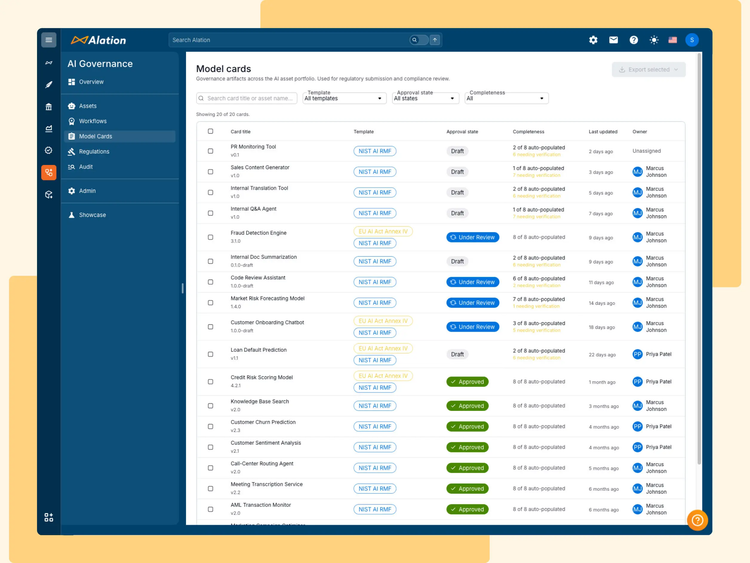
Alation AI Governance registers every AI model, agent and tool into a single inventory, maps each to applicable regulations, generates evidence-backed model cards, routes approvals through regulation-aware workflows, and produces a live compliance posture for executive teams when needed.
Alation AI Governance’s capabilities include an AI asset registry, AI-native model cards (generated from asset metadata, data dependencies and applicable regulatory requirements), agentic governance workflows, a regulation registry and an executive dashboard.
Databricks Zerobus Ingest
The ability to rapidly process streaming data is becoming increasingly critical as the accelerating wave of artificial intelligence applications and agents being deployed is increasing the demand for near-real-time data ingestion.
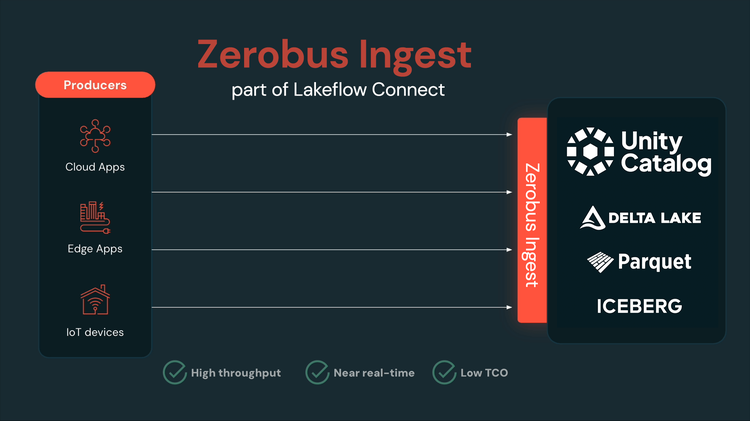
In February data and AI platform powerhouse Databricks announced the general availability of Zerobus Ingest, a fully managed, serverless service that streams data directly from data sources, such as operational manufacturing systems, financial trading applications, or telemetry from cybersecurity tools and IoT devices, into a data lakehouse.
Databricks is marketing Zerobus Ingest, part of the Lakeflow Connect capabilities within the Databricks Data Intelligence Platform, as an alternative to such technologies as the Apache Kafka data event streaming platform.
Zerobus Ingest can achieve sub-five-second latency while supporting thousands of concurrent clients, delivering data up to 100 MB/second per connection for more than 10 GB/second of aggregate throughput into a single Delta table within a data lakehouse, according to Databricks. (Delta tables are the data table format for Delta Lake, the open-source data storage framework for data lakehouse systems developed by Databricks.)
In addition to offering higher data processing performance and lower latency, Databricks says Zerobus Ingest reduces cost and complexity by eliminating the need for messaging buses like Kafka and improves data security by reducing or eliminating the amount of time data in transit sits outside of centralized data governance systems.
Zerobus Ingest was designed to benefit from the data governance capabilities of Databricks’ Unity Catalog, which provides unified data governance across the Databricks platform.
DataHub Cloud v1
DataHub develops what it calls a data “context platform” that can ingest, structure, improve and serve up trusted data context to analytical agents, increasing agents’ accuracy and reliability in production.
To provide accurate results, AI agents need more than data, they need to know what the data means—such as the definition of a metric—where it came from, how fresh it is and how an organization actually uses data.
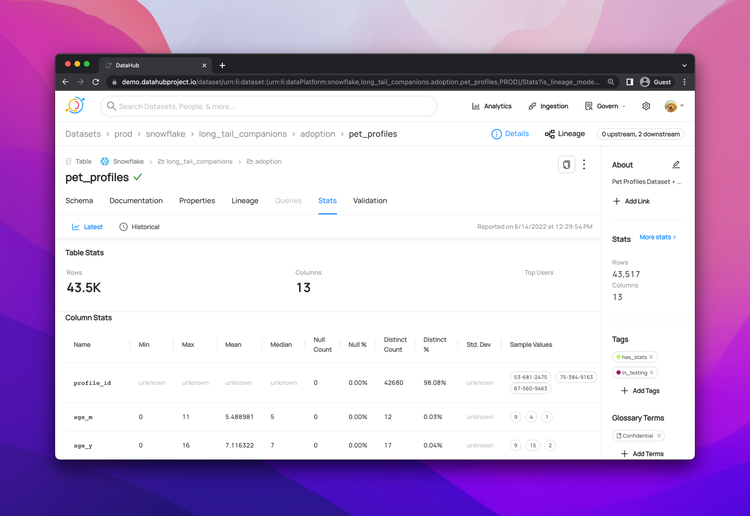
DataHub Cloud v1, introduced in May, serves as a context layer that sits between enterprise data from data stores, data warehouses and data lakes, and analytics agents such as Databricks Genie and Snowflake CoWork (previously Snowflake Intelligence).
The DataHub technology develops the data context using unified metadata automatically ingested from more than 100 sources, semantic meaning continuously extracted from an organization’s query history, real-time operational signals, and expert-validated, curated data definitions.
Google Cloud Agentic Data Cloud
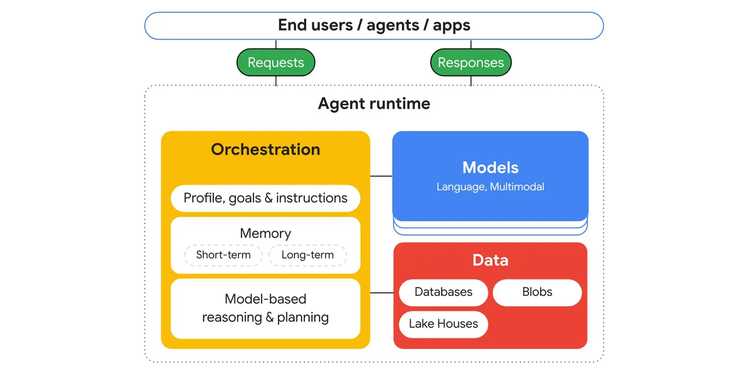
In April at its annual Google Cloud Next ’26 conference Google Cloud debuted its Agentic Data Cloud, a new platform that the company said transforms legacy data platforms from static repositories into dynamic reasoning engines and “systems of action” that allow autonomous AI agents to act on data, perceive its business context, reason through tasks and proactively execute workflows in real-time.
Google cloud said the new platform marked a milestone in three major shifts in how data is used to power AI: From human scale to agentic scale, from reactive intelligence to proactive action, and from data to knowledge.
Agentic Data Cloud is built on three technology pillars that the company said are designed to prevent hallucinations and eliminate data silos: A universal context engine that evolves traditional metadata into a semantic knowledge catalog; an AI-native, cross-cloud lakehouse with a federated architecture, based on open standards like Apache Iceberg, for connecting an entire data estate; and agentic developer tooling including a suite of built-in plugins, extensions and a kit for deploying purpose-built agents.
Immuta Agentic Data Access
AI agents need data to do their work, just as human workers do. But providing those agents with access to data with the right safeguards can be a challenge.
Decisions about what data can be accessed by which employees have traditionally been made by chief data officers, data stewards, data custodians, and other such managers—a process that can take hours or days.
“But agents are different. Agents break the old data governance models,” said Immuta CEO Matt Carroll in an interview with CRN. “They work in seconds and minutes and operate across all your data,” Carroll said. “Hours and days are unacceptable.”
Immuta develops a data governance and provisioning platform, with a data policy engine at its core, designed to streamline the process of providing business workers with access to the data they need for their jobs—but only the data they need.
The platform is used to establish purpose-based data governance policies and then orchestrate and automate all aspects of data provisioning, including monitoring data usage and enforcing access privileges, to reduce the risk of data misuse.
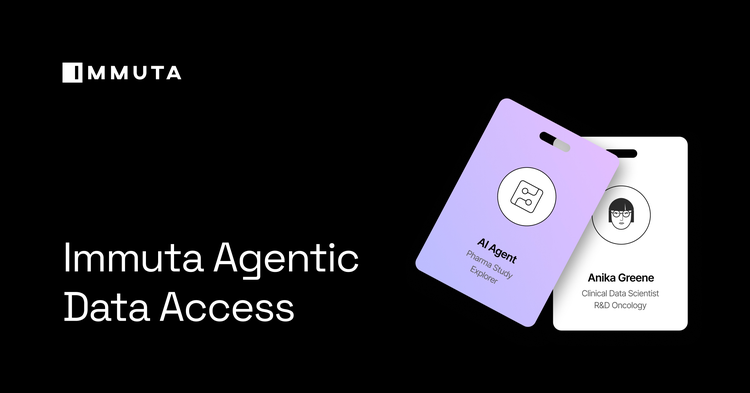
The addition of the Agentic Data Access module to the Immuta platform enables businesses and organizations to provision and govern AI agent access to enterprise data in real time. It addresses the issue by treating agents as what Carroll described as “first-class data users” like humans, while at the same time limiting their access to just the data they need for specific tasks, known as “least access privileges.”
Using the new Agentic Data Access capabilities, data managers can establish data access policies and entitlements for AI agents that are either acting independently or on behalf of a human worker.
Pinecone Nexus
Pinecone has been on a fast-growth track with its vector database that plays a critical role in storing and searching the data used by AI applications and agents.
In May the company launched Pinecone Nexus, what the company describes as a “knowledge engine” running on the Pinecone database that’s designed to handle data retrieval and assembly tasks for AI agents.
Traditional retrieval systems find data and pass it to large language models at inference time. But Pinecone says that approach introduces latency, burns AI tokens and risks hallucinations.
Nexus moves the data retrieval and compiling process upstream, structuring, composing and contextualizing data in ready-to-consume segments before agents need it. At runtime agents receive trusted knowledge in a context-specific format, rather than raw documents, and complete their task without being weighed down by data retrieval chores, according to the company.
The core components of Pinecone Nexus are the context compiler, which compiles raw data into task-optimized specialized context, and the composable retriever, which formats and serves up data that agents need to complete their tasks.
Starburst Enterprise Intelligence Platform
The Starburst flagship technology, built on the Trino distributed SQL query engine, provides organizations with secure, governed access to their distributed data, without the need for traditional data consolidation tools and operations.
In May Starburst introduced the Starburst Enterprise Intelligence Platform, a new offering that enables organizations to run AI tasks directly on governed data in place, wherever it resides, across distributed environments. The idea, according to the company, is to bring AI to the data, not the other way around.
The Starburst Enterprise Intelligence Platform eliminates the need to move or replatform data while providing consistent business context to queries, models and agents regardless of where data is stored or processed—across clouds, catalogs and enterprise systems.
The new platform incorporates AIDA, the company’s AI data assistant and conversational analytics tool, which brings AI-powered intelligence directly into the workflows, applications and agents used by business users.
Teradata Autonomous Knowledge Platform
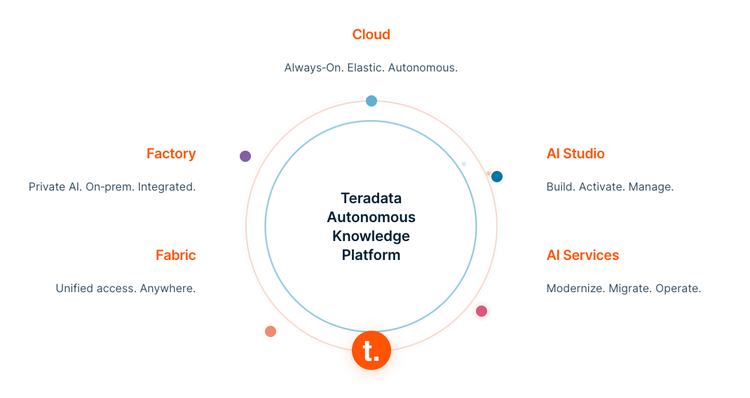
Teradata in May unveiled the Teradata Autonomous Knowledge Platform, a new flagship enterprise data and AI product that unifies structured and unstructured data, analytics and autonomous AI agents into a single integrated system across cloud, on-premises and hybrid environments.
Teradata said the platform is purpose-built to activate enterprise intelligence, turning data, operating models and experience into trusted, governed understanding that’s grounded in industry-specific data, semantics and lineage.
The Autonomous Knowledge Platform, available on Teradata Cloud, provides the business context for agentic AI to sense, decide and act reliably and repeatedly across systems and tools while learning and improving over time.
The platform includes Teradata AI Studio, for building, activating and governing AI outcomes using analytics, machine learning and agents; the AI-powered Tera autonomous workspace with a natural language interface for agent execution environments; and Tera Agents, pre-built platform agents that perform a range of tasks from managing infrastructure to driving operational efficiency and cost optimization.
Also in May, the company launched the Teradata Factory, a pre-integrated, on-premises extension for the Teradata Autonomous Knowledge Platform. Teradata Factory is built on Dell Technologies server and storage systems and incorporates Teradata’s analytics software.
ThoughtSpot Spotter For Industries
Accurate analytics often require industry-specific context and understanding of vertical industry lexicon, unique data and data models, regulations and workflows. Using incomplete data that fails to account for the unique issues, trends and regulations within a vertical industry leads to poor analytical results and—ultimately—business decision miscalculations.
This context gap, according to ThoughtSpot, has become a hurdle for businesses and organizations as they try to scale analytical AI systems in production environments.
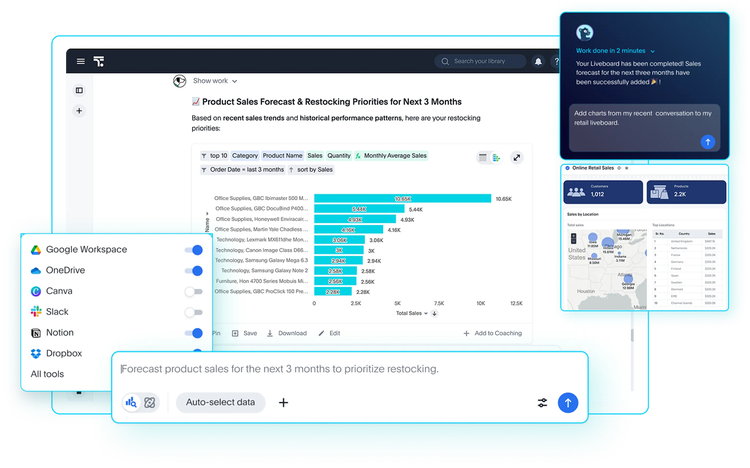
In March Analytics tech developer ThoughtSpot launched Spotter for Industries, an extension of the company’s Spotter agentic analytics platform that provides domain-specific analytic agents that the company says understand the languages, and other unique characteristics of vertical industries.
Spotter for industries is designed to address a shortcoming with AI that ThoughtSpot calls “the context gap.” First-generation AI agents, including those for analytics, were designed for more general-purpose use cases and can provide sub-par analytical results for specific industries, according to the company.
“We are not shipping technology, we’re shipping industry solutions,” ThoughtSpot CEO Ketan Karkhanis said in an interview with CRN. “Industry solutions don’t talk SQL, they talk industry language and industry vernacular. We’re giving our customers a faster path to going live with industry solutions.”
Spotter for Industries includes an agent that understands the specific logic, regulatory hurdles, and unique KPIs of highly complex vertical industries.
Spotter for Industries also addresses data security and sovereignty issues across specific verticals using what it calls an enterprise-grade AI trust framework that includes zero data retention policies, traceable and deterministic insights, compliance with global regulatory requirements, and “bring your own LLM” capabilities that allow organizations to connect Spotter to private, proprietary models.
Yugabyte Meko
Yugabyte is one of the industry’s leading next-generation database developers with its highly scalable, distributed YugabyteDB database that’s targeted for mission-critical, cloud-native applications where data integrity and continuous available are key.
In May Yugabyte expanded beyond its database roots with the launch of Meko, an agent-native data infrastructure for multi-agent AI systems and agentic applications that work and learn together.
As enterprises deploy AI agents to automate complex workflows, they run into the problem of how to give agents the persistent shared memory and knowledge they need to compound their learning over time.
Yugabyte co-founder and CEO Karthik Ranganathan, in an interview with CRN, used humans working together on a project as a metaphor for the problem. People share concepts, communications and an overall understanding as the project proceeds—if those fail a project can quickly go off the rails.
“Agents are no different,” Ranganathan said. “These agents never work in isolation. We have to keep course correcting our agents to improve what is called the context quality, the shared context among agents, just like the shared context among humans.”
The Meko technology introduces a new storage paradigm that Yugabyte says gives AI developers a shared layer for memory, knowledge, conversation history and observability, replacing what the company calls the “brittle stack” of relational databases, vector stores, documents stores, caches and object storage that underlie most AI systems today.
Yugabyte has been busy. The company recently launched YugabyteDB 2026.1, which the company said provides a Postgres platform for every AI workload with new capabilities that allow agents to operate the database, not just query it. And the company debuted YugabyteDB AMP (Agentic Multitenant PostgreSQL) that pairs enhanced colocation with serverless multitenancy that efficiently packs small agent workloads onto shared, distributed infrastructure, giving each agent its own PostgreSQL database.