Commvault Takes Data Resiliency Head-On With New Commvault Cloud Unity Platform
‘We called it Unity because it unifies resilience across security, identity, and recovery. It unifies resilience across all workloads, from today’s production workloads to tomorrow’s emerging AI workloads. And it unifies resilience across data wherever it lives: clouds, regions, data centers, edge locations. This is a generational leap to rearchitect resilience for the modern enterprise,’ says Commvault CEO Sanjay Mirchandani.
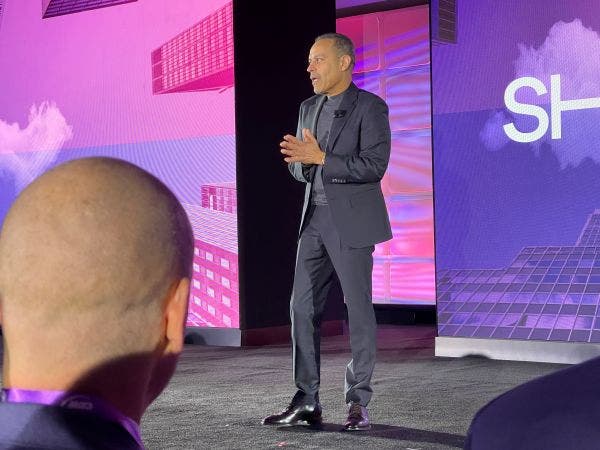
Data protection and resiliency technology developer Commvault Tuesday unveiled the Commvault Cloud Unity platform in a move the company said will unify data security, cyber resilience, and identity resilience across cloud, SaaS, on-premises, and hybrid environments.
The Tinton Falls, N.J.-based company also unveiled new technologies that expand end-to-end identity resilience, cloud-native data protection, and synthetic recovery that uses AI to automatically determine threats in backed-up data to remove them during the recovery process.
The technologies were introduced at the Commvault Shift conference, which is being held this week in New York.
[Related: Commvault Targets AI, Cyber Resilience Expansion With Planned Satori Cyber Acquisition]
The new technologies are being unveiled less than two weeks after Commvault introduced its new Data Rooms for providing a secure environment where enterprises can keep trusted backup data and make it available for use with their AI platforms or internal data lakes, as well as its new policy-based bridge between enterprise systems and GenAI systems using Model Context Protocol (MCP).
Commvault CEO Sanjay Mirchandani, in his opening keynote for Commvault Shift, called the Commvault Cloud Unity the most significant release in the company’s history.
“Unity’s cloud-native platform is built from the ground up to give you the scale, the performance, and the data security union,” Mirchandani said. “We debated the name, and we called it Unity because it unifies resilience across security, identity, and recovery. It unifies resilience across all workloads, from today’s production workloads to tomorrow’s emerging AI workloads. And it unifies resilience across data wherever it lives: clouds, regions, data centers, edge locations. This is a generational leap to rearchitect resilience for the modern enterprise.”
The Commvault Cloud Unity platform brings together three separate disciplines, three categories of tools, or three separate operational processes Commvault that thinks should be brought together, said Tim Zonca, Commvault’s vice president of portfolio marketing, solutions, and product marketing, during a pre-conference meeting with press and analysts.
The first is data security, Zonca said. “This is understanding what data is out there,” he said. “How sensitive is it? Am I governing it correctly? Who’s accessing it? What are these access patterns? And is that OK?”
The second is identity resilience, which looks to ensure the access patterns for data and the systems that govern those patterns are resilient, Zonca said.
The third is cyber recovery, which ensures that in the case of malicious activity on the data, customers can get the data back, he said.
These three are increasingly important as business environments become increasingly complicated, Zonca said. For instance, he said, it is really hard to detect change across directory services like Active Directory. Perhaps a user logs in from a location in the world they usually don’t log in from and accesses data they almost never touch, and the data starts changing in a strange way.
Existing systems in the market can provide alerts about changes in Active Directory, but they are separate from systems that show the data is changing, Zonca said.
“So the first thing we’re doing is we’re combining those and saying, ‘Do you see these unusual identity patterns? Can you map them to the unusual data patterns?’” he said.
The Commvault Cloud Unity platform gives users the power to do things like log a rogue user out and roll back the data changes to a point in time before the user had those escalated privileges, Zonca said.
“This now isn’t just the anomaly pattern matching with identity,” he said. “It’s not just doing the same with data. And it’s not just bringing trusted data and systems back into a known good state separately. It’s doing it all in concert, and it can do it in a matter of seconds or minutes. … [You’re] moving from a passive kind of notion of backups to an active resilience posture.”
The Commvault Cloud Unity platform also provides this unified protection across customers’ entire data infrastructure, including on-premises, cloud, and hybrid cloud environments.
Darren Thomson, vice president and chief technology officer for Commvault’s EMEA region, said during the press and analyst conference that he recently met with a global pharmaceutical firm that has traditionally relied on on-premises data centers. That firm about 18 months ago started experimenting with the cloud, Thomson said.
“They now have eight petabytes of data in their cloud ‘experiment,’” he said. “Wild west, completely ungoverned, a multitude of tools making half an attempt to back things up and protect data, etc., with no connection whatsoever to the framework already established with the applications that have been around a long time. [The Commvault Cloud Unity platform puts] everything under a single pane of glass, whether it be in my data centers or in one of my clouds. Data governance around those eight petabytes of data, are we in or out of compliance across those data sets? What should the backup regime be? How do we recover this data if we need to? So all of that happening, and a huge cost reduction to boot. You can see how that proposition might play out in an organization like that.”
Danielle Sheer, Commvault’s chief trust officer, said that the technologies her company is introducing are for the most part already available from a smattering of different vendors.
“And the point is, that’s incredibly expensive,” Sheer said. “It’s incredibly inefficient. There has to be a better way to do it. And so we have consolidated that on the Unity platform, under the single pane of glass. We are trying to make this drop dead simple for the people who need to live and work in this world.”
The Commvault Cloud Unity platform is currently available via Commvault channel partners. This includes consumption-based versions via the AWS and Azure marketplaces.
Dave Hiechel, president and CEO of Eagle Technologies, a Salina, Kansas-based solution provider and long-time Commvault partner who was at the Commvault Shift conference, told CRN that Commvault’s messaging around the Commvault Cloud Unity platform will resonate well with customers, but it will take a lot to get that messaging fine-tuned for them to understand it.
“I think even for our company to understand it is going to take some time,” Hiechel said. “Most of my notes were really around, how are we going to present it? Unity makes sense. I think Commvault is the right direction with the technology. But the challenge is going to be messaging.”
Eagle Technologies always had the philosophy that the lines between the different pillars within the data center are very blurred, Hiechel said.
“There’s no such thing as storage without some type of data resiliency involved,” he said. “There’s no such thing as backups not talking to the storage. Virtualization is a big part of that as well. So for us, Unity is just a continuation of that messaging. Now Commvault is packaging what we’ve been selling for a long time under their platform. We like the fact that they are not just a backup tool. Data resiliency is really where they’re at.”
Other vendors have centered their messaging around the unity that Commvault is now talking about, Hiechel said.
“But quite frankly, they failed at it,” he said. “I mean, they’re not getting that point across, or their platform isn’t ready for it. It seems like a lot more vaporware. They’re not anywhere near where Commvault is today. We’ve been looking at those other vendors, and getting our engineers trained on different platforms to decide if we want to offer them. But more importantly, we’re finding out that they’re falling short. We’re investing the time to understand the product as opposed to just listening to PDFs and marketing.”
Commvault has shown the ability to scale in the different environments, which is very complex, Hiechel said.
“Their end game is spot on,” he said. “They knew that the environment was going to change like this, as did we, and that’s why we picked them as our partner. It’s been a strong partnership. I’m really excited about where they are momentum-wise. They’re now hitting that billion-dollar revenue run rate, which is a big milestone, and it looks like they’re going to keep the momentum going. I’m excited about it.”