Quantum’s New CEO: ‘We Have To Reconnect With Some Of Our Partners And Rebuild The Relationships’
‘Partners want us to succeed. I think the business in the past eroded because, frankly, sometimes we just were not there, or we have the kinds of programs a super big company like HPE has, but we’re not an HPE,’ says Quantum CEO Hugues Meyrath.

Data storage and management company Quantum is going through a major restructuring as it looks to jettison old processes and programs more suited for a company that in fiscal 2014 reported revenue of $553.1 million and less suited for one that reported fiscal year 2024 revenue of $311.6 million.
Quantum also delayed reporting its fiscal 2025 report because of accounting issues, although it did release preliminary fiscal fourth quarter revenue of $65 million to $67 million, down from the prior year’s $105.3 million. All in all, it’s been a tough year for Quantum, which saw its stock price fall 77 percent so far in 2025.
A big part of that restructuring was a major overhaul of the company’s management team, starting at the top with longtime storage executive and Quantum board of directors member Hugues Meyrath in June taking over as CEO. The company this week also appointed Geoff Barrall as its new chief product officer.
[Related: The 50 Coolest Software-Defined Storage Vendors: The 2025 Storage 100]
Meyrath told CRN that much of the restructuring is done, giving the company an almost completely new executive team and a reduced headcount. However, he said, there is still work to be done to improve Quantum’s programs and processes.
“I think the business in the past eroded because, frankly, sometimes we just were not there, or we have the kinds of programs a super big company like HPE has, but we’re not an HPE,” he said. “We have to reconnect with some of our partners and rebuild the relationships. But I think we have very supportive partners out there. They want us to succeed, and that’s a really good starting point.”
Meyrath said he is focused on modernizing Quantum.
“When you have an old company that used to be really, really big, there’s a lot of complexity internally that customers don’t see,” he said. “The channel partners do see it, because it takes too long, for example, to generate a quote, and then you have to go back three or four times. We don’t have a modern portal, which is affecting our channel partners, and we have to take it seriously to generate business with our channel partners and make it easy for them.”
There’s a lot going on at Quantum. To understand the changes, read CRN’s complete conversation with Meyrath, which has been lightly edited for clarity.
How do you define Quantum?
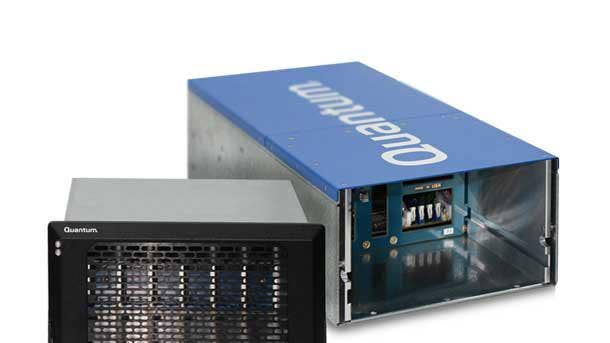
Well, the uniqueness of Quantum right now is we have the fastest file system for primary storage, the cheapest tape for cold storage, and everything else in between. We can ingest data at really super-fast speeds with massive, predictable throughput, and we can age the data from flash to disk to tape. Tape is not what it used to be. I think that’s something people don’t realize today. The way we manage tape is mainly through what we call ActiveScale cold storage, where metadata is on flash or disk, and we can index everything. Tape right now is not the tape of 30 years ago. Thirty years ago, we would open libraries and ship tapes somewhere else and have all these issues, and you might lose a tape and reduce your data. Quantum’s tape is fairly unique. We have data protection features, and that box can stay closed. You can have up to 20 petabytes in a rack. So it’s super-fast and super reliable.
Why did you join Quantum?
I have a couple of reasons. One is personal. When I started working in data storage in 1995, I was making heads for Quantum disk drives, and I was making heads for Quantum DLT drives. And back in the mid-’90s, IBM researchers said that we’ve reached the fundamental limits of recording on disk drives and that tapes were dead. And then people kept trying to kill tape. It’s gone on for 30 years, but I was there 30 years ago when everything was supposedly dead. We also had a huge business making heads for both when I was in Read-Write. Then I worked in investment banking research for a couple years, and we split Quantum into two different companies: the disk business that ended up being sold to Maxtor, and DLT, which became the tape automation division of Quantum in in Irvine, Calif. It was doing automation products and tape drives. Then I moved to Brocade, and then to EMC where I ran the product team for the backup and recovery division. … So I saw Quantum from being a supplier working there, being on the banking side, and competed with Quantum.
About three years ago, the CEO of Quantum, Jamie Lerner, called me, says he’d heard that I’ve done all this, and would we like to be on the board. I joined the board three years ago, and when we decided as a board to restructure the company, it became kind of like, ‘Yeah, why shouldn’t I do it?’ I knew the company. I knew the markets. I had a special interest in the company. And it’s kind of personal to me, frankly, to turn it around. I do care about the company, and I think the market’s coming back in our direction. I think the market’s going to come back to help us.
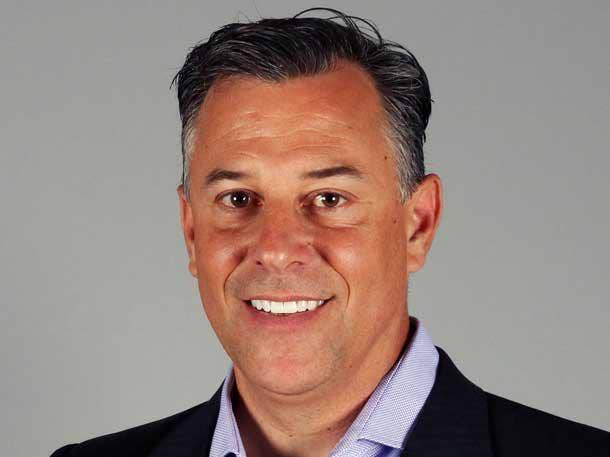
You said a couple of things. First, why did Jamie (pictured) leave as CEO?
You know, I think we’ve decided as a board to restructure the company. And for us, restructuring the company was a set of different things. We looked at the capital structure of the company. We had $104 million in debt, plus a $30-million line of credit. So we raised $83 million on the open market through SEPA (standby equity purchase agreement) where we sold shares. We extinguished a bunch of that debt and closed the line of credit. We’re in the process of converting $52 million from debt to equity. It’s going through shareholder votes. So one part of restructuring the company was changing the foundation. The second piece was, we had to right-size the company to make sure we could get cashflow-positive and EBITDA-positive. So we decided to make some changes across not only the management team, but also reduce headcount so we could be a profitable company going forward and not continue to incur more debt. Part of that restructuring affected a lot of people. Jamie was there eight years. Going through that after eight years is rough. So I think we kind of mutually decided that it’s better to change course and get someone else to do that. So we literally changed pretty much everybody in the management team, except one or two.
Is Quantum profitable or cashflow positive now?
Right now, we’re in our quiet period, because we just finished Q2. But I can tell you we’re taking all the measures to be there in a short matter. We’re not where we were six months ago. We’ve done a lot of restructuring. There are some write-offs that come with restructuring the company. But definitely we’re in the ballpark now, and we’re going to continue to improve that.

Is your restructuring done?
The restructuring is mostly done. We’re just gonna keep evolving the organization. From a total headcount perspective, I think we’re mostly done, but we have a lot of things to improve. From a process perspective, it’s an old company. There are areas of the business that are underfunded. There are places where we can simplify business processes, automate them, and redeploy resources. So I think there are going to be several quarters of tweaking what the organization looks like. But fundamentally I don’t expect to do a major restructuring. We have new leadership in place. I think we’ve right-sized the company for the most part. Now we just have to catch up on modernizing the company and the processes. When you have an old company that used to be really, really big, there’s a lot of complexity internally that customers don’t see. The channel partners do see it, because it takes too long, for example, to generate a quote, and then you have to go back three or four times. We don’t have a modern portal, which is affecting our channel partners, and we have to take it seriously to generate business with our channel partners and make it easy for them.
So you are saying there will be some changes as to how Quantum works with channel partners going forward?
Some of it is basically changing the way we do lead generation, because we’re generating all these leads that were basically becoming stale and not handed over correctly. My chief revenue officer, Tony Craythorne, has been a channel guy his entire life. When I met him 20 years ago, we’re working together at Brocade where he was the channel guy and I was the product guy. Quantum is 100-percent channel, so I wanted someone who was channel-friendly, and he worked for channel partners himself. [His thinking] is, we’re not just going to get leads to partners, we’re going to qualify the leads, qualify the opportunities, and hand qualified opportunities to the channel. That’s what he’s working on, making sure we get different leads from different parties that are more qualified, and making sure we have the team at Quantum that will qualify the leads before they are handed to channel partners. We’re also doing all the traditional things around SPIFs and MDFs and other promotions. We’re going to revise the program, making sure that our business is profitable and we get really good customer service to our channel partners as well. These are key tenants of rebuilding our relationship, of strengthening our relationship, with the channel.
Tony and I went on the road quite a bit in the last month. We touched most of our channel partners in person and talked to them quite a bit. There’s a tremendous amount of support for the Quantum brand. Partners want us to succeed. I think the business in the past eroded because, frankly, sometimes we just were not there, or we have the kinds of programs a super big company like HPE has, but we’re not an HPE. We have to reconnect with some of our partners and rebuild the relationships. But I think we have very supportive partners out there. They want us to succeed, and that’s a really good starting point.
How is the market now for the types of products that Quantum produces?
You can look at it a couple of different ways. We have a set of media and entertainment customers with great names. Most of the sports that you watch on TV are using Quantum technology, starting from the ingestion of the content. We have cameras in all the stadiums running on Quantum. And we also have a lot of archiving of sports and media and entertainment on Quantum tape. [Our] cold storage remains very strong. I think what’s interesting now is, the market’s coming to realization that with AI, data growth is stupendous with all the data centers coming out there. What you see out there is the mega data centers and all these other hyperscalers and how big the environments they have to create. In the end, if you have your AI in the cloud, that assumes you have cold storage in the cloud, you’re spinning up compute in the cloud, moving data into your compute in the cloud so you can process it. AI has a lot of egress and ingress features where you have to go process the data, and once you get to some outcome, you have to put in a data lake which means spinning up the resources. It’s super expensive in the cloud. And frankly, startups are starting to fail because they have to start in the cloud because they don’t have time to build a data center, get all the hardware, get all the people, the engineers, so they have to start with the cloud. But it’s so damn expensive. So what we’re finding out is, some of our M&E (media and entertainment) customers are building AI private clouds so they can share their media assets around the world to different teams and create reusable content that they have to archive. If you start getting AI at that scale in M&E and other use cases, it’s machine-generated data which is a whole different curve. So there’s an explosion of storage consumption now, and if you don’t build your data lake big enough, your AI strategy is going to fail because you don’t have a data pool big enough to support a meaningful use case. So my opinion is, with things like Quantum ActiveScale cold storage at scale, like ingesting at high speed via Quantum StorNext, the markets are coming to us. This is one-tenth the price of doing it in the cloud. The math is there. It’s undeniable. So for me, the markets are coming back to us with AI use cases and machine generated data. There’s just no other way. We’re seeing now, versus a year ago, the demand for ActiveScale cold storage in the enterprise just growing and growing, and large customers are going to convert. It’s fast and it’s cheap, so I think the data growth lends itself to us being very successful.
Has Quantum seen positive results from that market shift?
It’s starting. We definitely see it, and demand is super strong. It’s very encouraging.
How have tariffs impacted Quantum? A lot of your products used imported components.
There’s some impact. The problem with the tariffs is it’s mainly that they change all the time. So we have to adjust a lot on the fly. And there are a lot of loose interpretations when the rules change, depending on whomever is handling the movement of parts. So it’s been unpleasant, I would say. But not too bad. It’s mostly controlled. But there’s some variance, and it’s very unpleasant and time consuming.