8 Hot Data Storage Products From Microsoft Ignite 2026: AI, Azure, Cyber Resilience
Eight hot data storage products from Microsoft Ignite 2026 showcase how Veeam, Dell, Nutanix, Cohesity and other vendors are targeting AI, Azure, cyber resilience, data protection and cloud storage costs.
Data storage and data protection vendors didn’t waste the chance to ride the AI wave at last week’s Microsoft Ignite 2026 conference, and the result was a batch of new technologies that say a lot about where the industry is heading. Eight vendors, all with a presence at the show, either introduced or demonstrated storage products that debuted at the conference or in the three months leading up to it.
The lineup runs from backup and recovery to primary block storage, archive, and hybrid cloud infrastructure. Veeam, Commvault, and Cohesity focused on data protection and data management. Everpure, Qumulo, and Nutanix targeted the economics and operations of running storage on Azure. Dell Technologies introduced on-premises AI infrastructure, while DataBahn looked at how security teams and AI agents get at their data.
Despite the different starting points, several themes stood out.
[Related: Microsoft Ignite 2026: Nadella Says ‘We Have Work To Do’ After Massive Outage]
The first is AI, and in particular control of the data AI touches. Veeam’s new add-on shows which AI agents, including Copilot, are accessing Microsoft 365 data, and lets customers undo AI-driven changes. DataBahn gives AI agents a governed, audited gateway to security data. Cohesity is making governed enterprise data available to Azure Databricks for analytics and AI, while Qumulo is keeping archived data searchable so teams can find AI training data before paying to retrieve it. Dell, meanwhile, is bringing AI models to the data on premises.
A second theme is leaving the data where it is. DataBahn searches data in place, Cohesity avoids building new ETL pipelines, and Veeam connects to existing Microsoft 365 deployments with no migration or re-architecture. Vendors are betting customers are tired of copying data around just to put it to work.
Third is cost. Everpure says its Azure-native block storage can cut cloud storage costs for Azure VMware Solutions deployments, Qumulo is offering the Azure Blob Archive tier as an alternative to tape, Veeam can quarantine redundant data, and Nutanix is adding sizing, placement, and cost control options to its Azure offering.
Finally, there are hybrid cloud and cyber resilience. Nutanix and Dell are both pitching familiar operations across on-premises and Azure environments, while Commvault is feeding Microsoft Defender alerts into its backup platform so customers can make better recovery decisions after an attack.
For channel partners, that mix of AI governance, cost control, and resilience creates plenty of opportunities to add services and revenue around Microsoft environments.
In general, customers are facing two major issues at one time, said Chris Konrad, vice president global cyber at World Wide Technology, a St. Louis-based solution provider.
“Customers have more and more data to protect, and all these AI buildouts are obviously consuming power and cooling space,” Konrad told CRN.
There’s an explosion of data unlike anything Konrad said he has seen in his 30-year career, including in customers’ Microsoft environments.
“Everybody’s scrambling now to understand what that looks like,” he said. “But if you look at all the recent disruptions that have occurred, it just reminds us how quickly a technology problem affects all customers. So right now, backup recovery resilience is forefront with everybody.”
The following is a closer look at the eight new products.
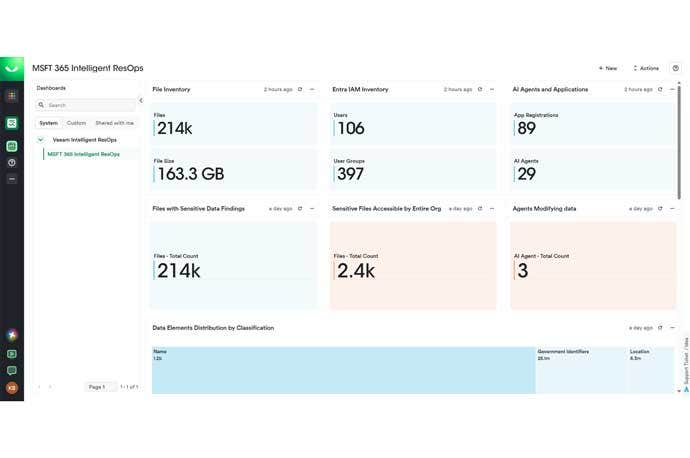
Veeam Intelligent ResOps for Microsoft 365
Kirkland, Wash.-based Veeam Softwareused Microsoft Ignite 2026 to show off its new Veeam Intelligent ResOps for Microsoft 365. The technology, released in October and now generally available, gives partners a new way to grow revenue with existing Veeam Data Cloud for Microsoft 365 customers. The add-on connects in a few clicks, with no data migration or re-architecture needed. It shows which AI agents, including Copilot, are touching data across SharePoint, OneDrive, Teams, and Exchange. Customers can find sensitive data, close oversharing gaps, cut storage costs by quarantining redundant data, and precisely undo AI-driven file changes. This helps customers more quickly adopt AI without losing control of their data. It is available in Foundation and Advanced editions through Veeam Cloud & Service Providers.
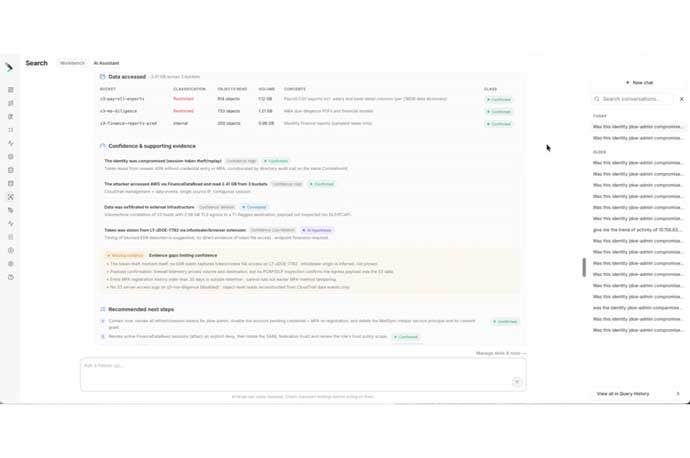
DataBahn Federated Search & Orchestration
Introduced in August, DataBahn Federated Search & Orchestration from Dallas-based DataBahn lets security teams and AI agents search data where it lives, across Microsoft Sentinel, data lakes, warehouses, and cold storage without moving or duplicating it. Analysts can ask questions in plain language. Lumen, DataBahn’s threat-hunting agent, correlates evidence across sources and returns a cited timeline instead of an unorganized list of hits. Reef, a live knowledge graph, ties each result to the assets and identities behind it. MCP Hub gives AI agents one governed, audited gateway to the data. DataBahn Federated Search & Orchestration, part of DataBahn’s Agentic Data Control Plane, is available through Microsoft Marketplace.
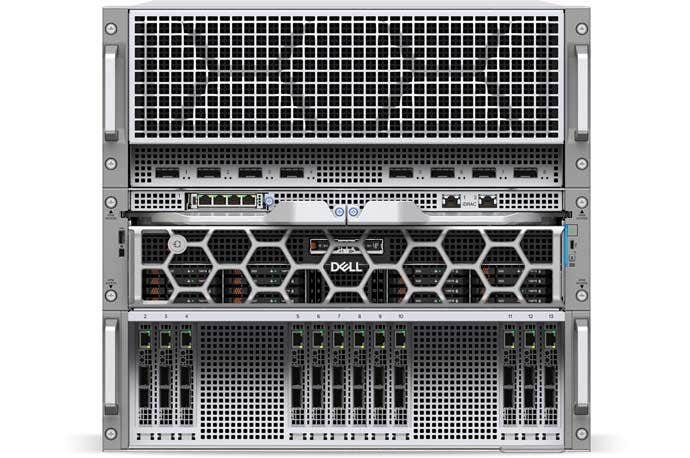
Dell AI Factory with Nvidia
Round Rock, Texas-based Dell Technologies and Microsoft extended the Dell AI Factory with Microsoft Foundry Local to bring AI models to Dell Private Cloud deployments of Azure Local. The technology, introduced at Microsoft Ignite 2026 and slated for shipping in the first half of 2027, combines Foundry Local with Dell’s compute and storage foundation, including PowerEdge XE9780 servers built on the Nvidia HGX platform for AI workloads. Customers can run models on-premises, keeping prompts, responses, data, and operations within their environment. Dell Automation Platform blueprint-driven automation connects the AI software and infrastructure layers to help simplify deployment and lifecycle management. The offering aims to pair cloud-like operational consistency with local control, security, and flexibility for organizations securely operationalizing AI locally.
Commvault Threat Scan and Microsoft Defender Integration
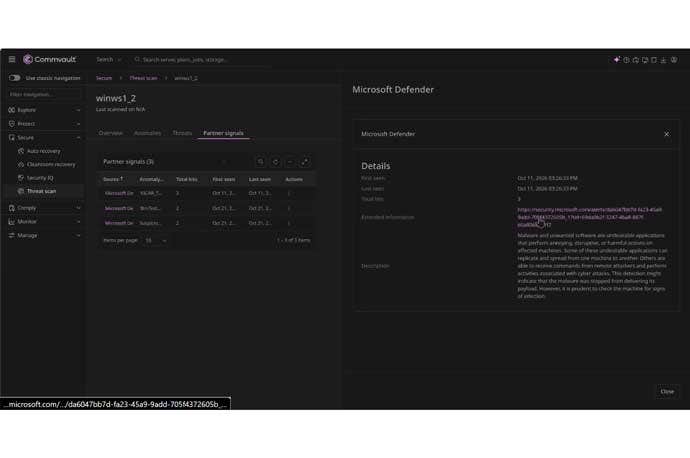
Tinton Falls, N.J.-based Commvault used Microsoft Ignite to unveil a new integration with Microsoft Defender to help enhance cyber resilience by bringing endpoint security intelligence directly into Commvault Cloud. Microsoft Defender alerts are ingested by Threat Scan and correlated with protected backup assets, providing additional context about potential threats and helping customers make more informed recovery decisions. By combining Microsoft Defender’s security detections with Commvault’s backup and threat intelligence, customers can gain greater visibility into which protected assets may have been impacted by an attack, helping them identify potential threats and recover with greater confidence.
Nutanix Cloud Clusters (NC2) On Azure Updates
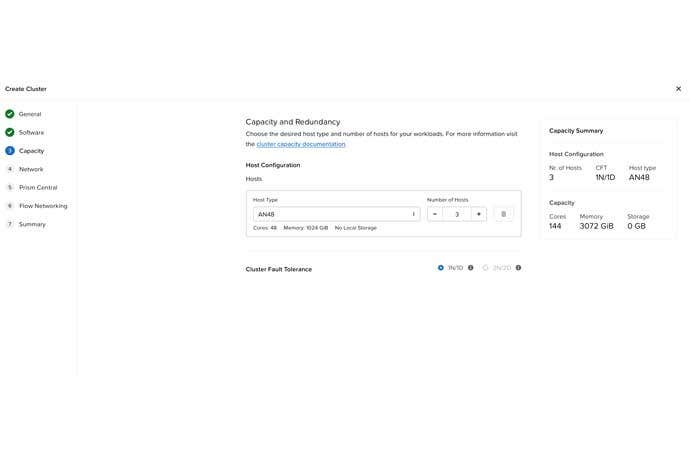
Nutanix used Microsoft Ignite to introduce an Azure update to its Nutanix Cloud Clusters (NC2) technology. San Jose, Calif.-based Nutanix said the move comes as organizations look to extend workloads to Azure to accelerate migrations, modernize applications, and respond to changing infrastructure and licensing requirements, leading to questions about how to preserve operations, plan for resilience, choose the right deployment model, and manage costs in hybrid environments. The Azure updates offer more options for sizing, placement, and cost control while preserving familiar operations. Nutanix said the technology lets Nutanix and Microsoft help organizations quickly move workloads to Azure, prepare for disaster recovery, and scale hybrid cloud strategies.
Cohesity Gaia Catalog Integration With Azure Databricks
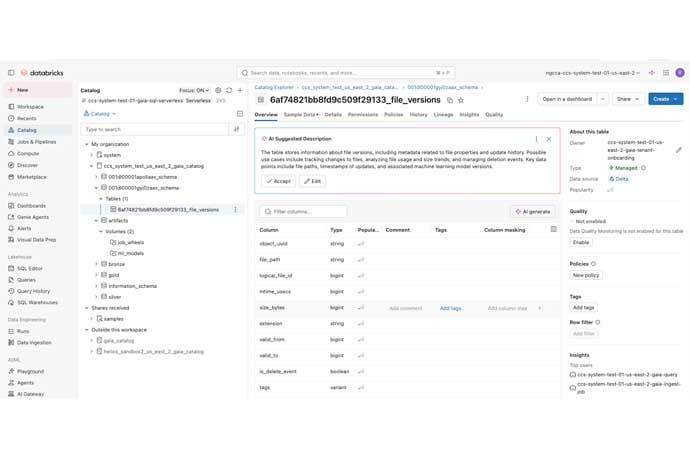
The Cohesity Gaia Catalog from Santa Clara, Calif.-based Cohesity now integrates with Azure Databricks to help organizations find, curate, and publish enterprise data for AI and analytics. Curated datasets appear in Azure Databricks as an external data source, while the underlying data remains in Cohesity Data Cloud. This eliminates the need to build new ETL (extract, transform, and load) pipelines to move or duplicate data. The integration helps organizations make governed enterprise data available for analytics and AI applications while maintaining control of the source data.
Everpure Cloud Azure Native For Azure Virtual Machines (VMs) And Everpure Cloud VM Extension
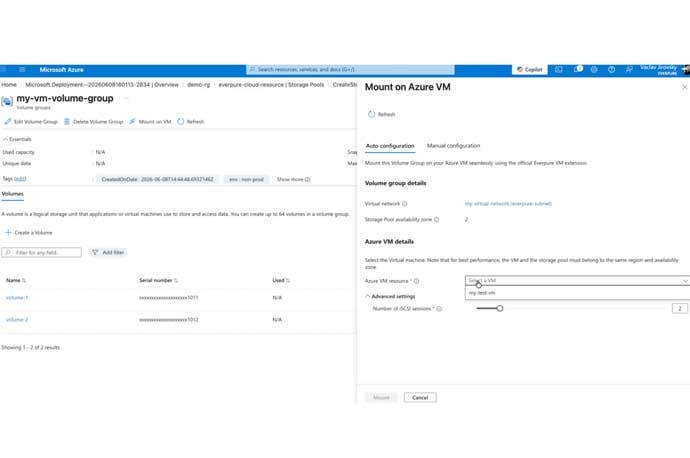
Everpure Cloud Azure Native for Azure VMs is a fully managed block storage service from Santa Clara, Calif.-based Everpure that is purpose-built into Azure. It delivers independent storage scaling and can reduce cloud storage costs by up to 40 percent for AVS (Azure VMware Solutions) deployments. Everpure Cloud VM Extension automates iSCSI, multipathing, and volume mounts on Linux and Windows guests on Everpure Cloud Azure Native and Everpure Cloud Dedicated. Together, they provide simplicity and flexibility to organizations looking to modernize Azure-based workloads without giving up enterprise storage capabilities, the company said.
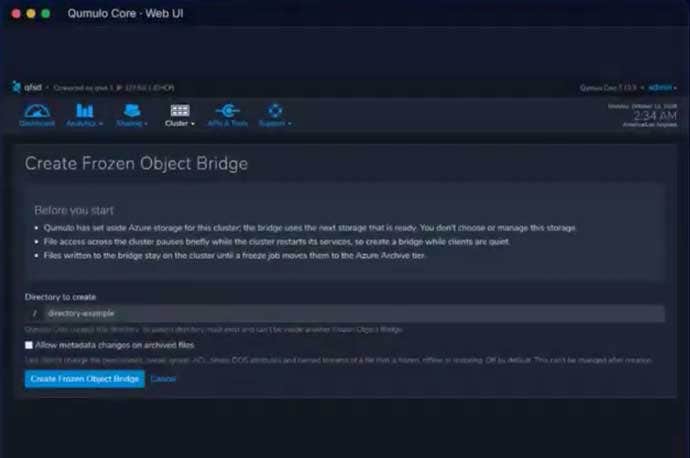
Qumulo ANQ Frozen
Seattle-based Qumulo used Microsoft Ignite 2026 to introduce ANQ Frozen, which extends Azure Native Qumulo to the low-cost Blob Archive tier as an alternative to tape for long-retention data. Data moves to Azure Frozen by policy, but the file namespace stays live, letting users browse directories over SMB and NFS. Qumulo NeuralSearch keeps file and application metadata searchable, so teams can find what they need, including data for AI training, before paying to retrieve it. Files are stored as native objects in a dedicated Azure storage account, avoiding lock-in. ANQ Frozen is available now in controlled preview, with general availability planned for 2027.