NetApp Posts Record All-Flash Revenue Amid Soaring Memory Prices
‘It’s a dynamic environment, and so we are staying super close to our suppliers [and] qualifying multiple different components so that we have first access to supply so that we can meet customer demand, and [access] competitive price points for those supplies,’ says NetApp CEO George Kurian.
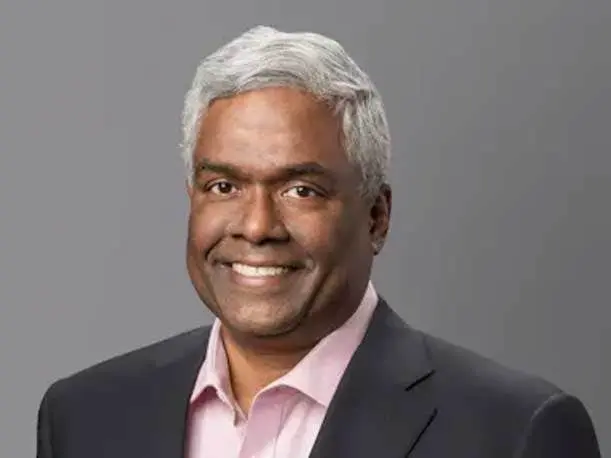
Storage and cloud technology developer NetApp Thursday said that despite what CEO George Kurian called “unprecedented inflation” in memory prices that its all-flash storage generated record revenue during its recently-concluded third fiscal quarter 2026.
Kurian also said AI is growing in importance as a business driver as customers increasingly choose NetApp for their AI workloads.
High memory and storage component prices have in the past few months been a top concern throughout the IT industry, and NetApp was no exception, Kurian told analysts in his prepared remarks during Thursday’s third fiscal quarter 2026 quarterly financial conference call.
[Related: Everpure, Formerly Pure Storage, Hits First $1B Quarter Despite Memory Constraints]
Kurian outlined several actions NetApp has taken this past quarter to manage the unprecedented inflation in memory prices currently affecting the global market.
“First, we have raised our pricing and will do so again, as needed,” he said. “Second, we are working with our customers and channel partners to be more agile in this dynamic environment. Third, we are working with our multiple suppliers to address availability and manage costs, as we have successfully done in the past. And finally, unlike our all-flash only competitors, we have a broad portfolio that includes hybrid flash arrays, giving us the opportunity to better service price-sensitive workloads.”
During the question-and-answer period following Kurian’s remarks, several analysts questioned how much rising memory and storage component prices are impacting NetApp and its peers.
When asked about availability issues regarding SSDs, Kurian said NetApp works very closely every year and every quarter with a broad base of suppliers for virtually every component in its systems.
“We are not experiencing any supply shortages at this time and are not aware of any that is upcoming,” he said. “Of course, it’s a dynamic environment, and so we are staying super close to our suppliers [and] qualifying multiple different components so that we have first access to supply so that we can meet customer demand, and [access] competitive price points for those supplies.”
When asked about component supplies, NetApp Chief Financial Officer Wissam Jabre said the mix of components is not as predictable as it was earlier.
“We did have to buy a little bit in the open market or basically replenish some inventories in Q3 because we had some unexpected high demand on certain products,” Jabre said. “But as we look for fiscal ‘26, the dynamics haven’t changed from what we discussed before. We’re still mostly covered from our pre-buys that we did earlier in the fiscal year. For Q4, we may have some demand where we were replenishing inventory.”
Jabre said he would pass on discussing the expected component environment in fiscal 2027 given that NetApp is still focused on closing fiscal 2026 in a strong way.
“This is a very dynamic environment,” he said.
When asked about NetApp’s thinking behind price increases because of the component issues, Kurian said the company raised prices at the start of its third quarter roughly in line with the rest of the market and varying by type of product.
“With regard to customers, as we have said for many, many, many years, customers budget in dollars, not in systems, and those dollars are tied to their IT spending priority,” he said. “We offer them a range of options [including] hybrid flash, all-flash, Keystone consumption, cloud offerings, as well as a huge range of features to optimize the use of flash in their existing system to give them more value. And so those conversations are ongoing, just like they’ve been every quarter for many years.”
When asked how the mix between hybrid flash and hard drive storage vs. all-flash storage is changing, Kurian said this is a topic of ongoing discussion with customers.
“As we said earlier, we raised prices at the start of this quarter, and so that has triggered some of the discussions with customers about what’s the optimal architecture, and we are seeing more discussions of HFA (hybrid flash arrays),” he said. “It’s too early for me to say it’s a trend, but you know, there were certainly a lot more discussions once we raise prices, and those price increases were more on AFA (all-flash arrays) rather than HFAs.”
AI has become a big driver for NetApp’s growth as customers rely on the company’s technologies to be the data foundation to support AI innovation, modernize data infrastructures, strengthen cyber resilience, and transform cloud strategies, Kurian said in his prepared remarks.
“In Q3, approximately 300 customers selected NetApp to help prepare their data for AI and to be the storage foundation for their AI innovations,” he said.” Last October, we announced major enhancements to our enterprise-grade data platform for AI workloads. These new solutions, AFX and AI Data Engine, are generating significant customer interest and engagement.”
NetApp AFX is the company’s disaggregated storage system purpose-built for AI aimed at providing customers enterprise-grade security and capabilities coupled with extreme performance and scale, Kurian said.
“We are excited to report strong early momentum with AFX in its first quarter of shipment,” he said. “We have secured significant AFX wins across key industries, including neo clouds, financial services, and semiconductor.”
To meet data challenges related to AI, the NetApp AI Data Engine helps to improve time to value in AI projects by simplifying workflows with integrated data discovery, curation, policy-driven guardrails, and real-time vectorization for GenAI, Kurian said.
“By understanding where their data is, customers can ramp AI projects faster, boost result accuracy, and slash time to insight,” he said. “Our early access program has been highly successful, engaging customers from key industries such as semiconductor, media and entertainment, financial services, and IT services. AIDE will be generally available in Q4.”
When asked during the question-and-answer period for details about NetApp’s AI-focused storage business, Kurian said the company’s AI business grew in terms of AI customer wins to nearly 300 wins this quarter compared to around 100 wins the same period last year.
“We’re seeing acceleration in our AI business,” he said. “Within the AI business itself, there are industries and use cases that are certainly more advanced and more repeatable in customers, and there are others that are further behind. So for example, in regulated industries where the data is well organized, you are seeing customers put stuff into production, or if you want to call it a pilot, it’s a very large-scale pilot [in areas like] healthcare, life sciences, some parts of public sector, manufacturing. … Within our mix of business this quarter, roughly 60 percent were still in the data prep, data readiness, data lake model, and 40 percent were in production training or production inferencing use cases.”
NetApp By The Numbers
For its third fiscal quarter 2026, which ended January 23, NetApp reported total revenue of $1.71 billion, up 4 percent over the $1.64 billion the company reported for its third fiscal quarter 2025.
This included hybrid cloud segment revenue of $1.54 billion, up 5 percent, while and public cloud segment revenue was unchanged at $174 million.
On a product-specific basis, NetApp said its all-flash array revenue grew 11 percent year-over-year to a record $1.0 billion in the third quarter, for an annualized net revenue run rate of $4.2 billion
Total revenue beat analyst expectations by $10 million, according to Seeking Alpha.
NetApp also reported GAAP net income of $334 million or $1.67 per share, up from last year’s $299 million or $1.44 per share. On a non-GAAP basis, NetApp reported net income of $423 million or $2.12 per share, up from last year’s $397 million or $1.91 per share.
Earnings beat analyst expectations by 6 cents per share, according to Seeking Alpha.
Looking ahead, NetApp said it expects fourth fiscal quarter revenue of $1.795 billion to $1.945 billion, GAAP earnings to be $1.76 to $1.86 per share, and non-GAAP earnings to be $2.21 to $2.31 per share.
This compares to last year’s revenue of $1.73 billion, GAAP earnings of $1.65 per share, and non-GAAP earnings of $1.93 per share.