The 7 Hottest Data Storage Startups Of 2026 (So Far)
These seven data storage technology developers in the last few years have brought new hardware or software aimed at helping businesses and users better protect and manage their data, scale it, and make it resilient and accessible.
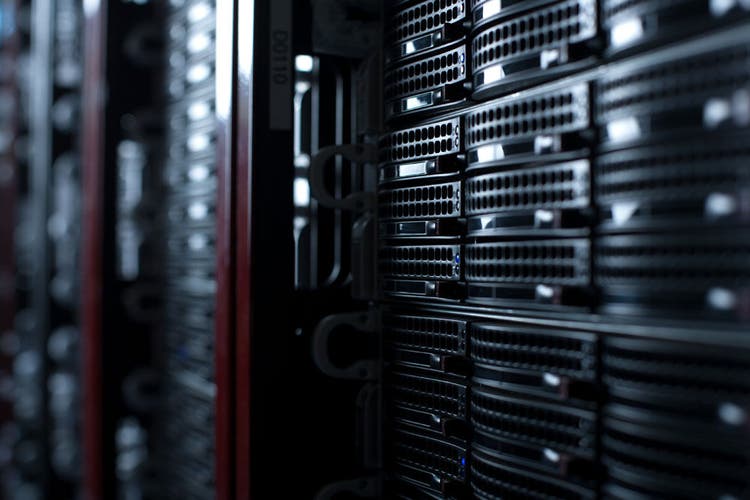
Users of modern cloud and AI tools are generating and storing unprecedented amounts of data. That boom is also creating opportunities for a new generation of storage innovators.
Startups are continuing to discover new ways to differentiate themselves in how they approach areas such as archival storage, object storage, observability data, media management, data pipelines and cloud-native architectures.
From DNA-based to glass-based storage technologies designed to preserve data for decades or even centuries to platforms that make archived information searchable and AI-ready, these companies are challenging traditional assumptions about how data should be stored, managed and accessed.
[Related: The 10 Hottest Data Storage Startups Of 2025]
CRN takes a look at seven data storage startups that have recently emerged with hardware, software and cloud-based technologies aimed at helping organizations better protect, manage, archive, analyze and scale their ever-growing volumes of data.
Atlas Data Storage
Founder, CTO: Bill Banyai
Atlas Data Storage is developing a new class of archival storage technology based on synthetic DNA to help businesses retain critical information for extremely long periods without the hardware refresh cycles and media migration challenges of traditional storage technologies. Atlas says DNA as a universal storage format can outlast conventional disk, flash and tape technologies while providing higher storage density. Its technology stores data in synthetic DNA strands that can be duplicated, transported and preserved with minimal power requirements. The South San Franciso-based company is targeting organizations with large-scale archival requirements while also reducing the environmental impact of long-term data retention by eliminating much of the infrastructure associated with conventional archives. Founded in 2025, Atlas is led by a team with backgrounds in synthetic biology, DNA synthesis and large-scale data storage technologies.
Bauplan
Co-Founder, CEO: Ciro Greco
Bauplan develops a serverless data platform aimed at helping businesses work with data infrastructure that’s similar to working with modern software development. Its technology treats pipelines, tables and data models as versioned software assets that can be built, tested and deployed using familiar engineering workflows. Bauplan’s architecture is built around object storage and open data lake technologies, allowing data teams to work with production data using branching, isolation, rollback and other software-style controls. The San Francisco-based company positions its platform as a foundation for AI agents that need safe access to enterprise data environments while helping eliminate much of the complexity associated with large-scale data systems while providing a code-first approach based on Python and Git-like operations. Launched publicly in 2025, Bauplan raised seed funding led by Innovation Endeavors.
Caeves
CEO: Shirish Phatak
Caeves develops software-defined deep-storage technology for businesses looking to reduce cloud storage costs while maintaining immediate access to archived information. The company’s Intelligent Deep Storage platform is built for Microsoft Azure and automatically tiers information into lower-cost object-storage services while preserving file access, metadata and security controls. The platform aims to keep historical information searchable, governed and accessible through familiar Microsoft tools. The New York-based company also integrates with Microsoft 365 Search and Copilot to help enterprises unlock value from stored information without extra archive migrations or retrieval processes. Caeves says its technology can dramatically reduce storage costs while maintaining accessibility across large collections of files and documents.

CtrlB
Founder, CEO: Adarsh Srivastava
CtrlB develops a cloud-native observability and telemetry data platform to help organizations manage, search and analyze massive volumes of machine-generated data. Its architecture stores data within cloud object-storage environments while providing high-speed access for analytics, monitoring and troubleshooting workloads. CtrlB supports logs, traces, metrics and security telemetry to offer a unified platform for application observability and operational analysis. The Bengaluru, India-based startup is focused on helping reduce the cost of storing and processing observability data while maintaining fast query performance at large scale. CtrlB also includes AI-powered analytics capabilities to help identify operational patterns and anomalies across telemetry datasets.
Ewigbyte
Co-Founder, CEO: Steffen Klewitz
Ewigbyte develops an archival-storage platform that uses glass as the foundation for long-term digital preservation. The Pocking, Bavaria, Germany-based
company’s technology writes data directly into glass using photonic processes that create physical structures it says will preserve information over extremely long periods of time. Its write-once architecture is designed to provide immutable storage while eliminating the need for continuous power once information has been recorded. The technology also provides resistance to environmental risks including heat, humidity, radiation and electromagnetic disruption. The startup positions its glass-based technology as an alternative to conventional long-term archive media and as a foundation for future large-scale preservation services.

HoloMem
Founder, CEO: Charlie Gale
HoloMem, founded in 2020, develops holographic storage technology to help modernize the cold data storage business while remaining compatible with many existing tape-storage environments. The company stores information as infinitely readable holograms within an available polymer ribbon rather than conventional magnetic tape media to help increase storage density and media longevity while minimizing disruption to established archive workflows. The London, U.K.-based startup’s HoloDrive architecture is intended to integrate with existing storage library environments so businesses can adopt new storage media without redesigning existing archive infrastructures. HoloMem is focused on helping customers address rapidly growing archive-storage requirements while reducing operational complexity.

Shade
Founder, CEO: Brandon Fan
Shade develops an AI-powered cloud storage and media-management platform focused on helping creative organizations store, organize and access digital content. The New York-based company combines cloud storage, search, collaboration, sharing and review capabilities in a single platform aimed at media-intensive environments. Shade uses AI to automatically generate metadata, transcripts and search indexes to let users discover content using natural-language queries. The platform also supports intelligent file streaming that enables users to access and work with large media assets without waiting for full downloads. Shade targets organizations including production studios, creative agencies, sports organizations and enterprise media teams that manage large collections of video, image and multimedia content.