Schneider Electric Partners Find Opportunities And Roadblocks With IoT In The Industrial Market

Schneider Electric's Partner IoT Roundtable
During Schneider Electric's Innovation Summit in San Antonio, Texas, an array of channel partners met during an exclusive roundtable with CRN to discuss what kinds of opportunities they see with Internet of Things solutions.
"I guess the point is when we have these conversations – one of my elements to it is, IoT is a thing, but for our customers on the digital journey, it didn’t start till now," said Paul Shelton, global director of software channel management at Schneider Electric. "All that wired infrastructure has been in place a long time. … But what's new and different now is how easy it is, and that's one of our messages to our customers … this is not a new capital expenditure project."
The roundtable included Michael Grasley, VP of technology and marketing at Callisto Integration, Darren Kline, vice president at Wonderware North, Luigi De Bernardini, CEO of Autoware. Following are excerpts from a roundtable discussion with these channel partners about the opportunities of IoT in the industrial market.
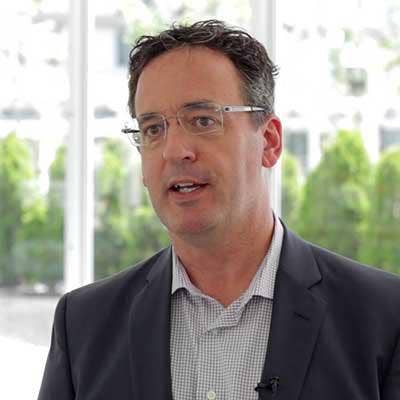
What do you see right now from customers in terms of interest around IoT?
Michael Grasley, Callisto
It's interesting to know how much [the IoT opportunity] varies by vertical. We operate both with jet engine assembly and medical devices – they get it. And they actually have use cases where they've moved beyond proof-of-concept, and they're implementing solutions. If you look at, say, food and beverages, they're still trying to wrap their heads around, 'what does digital twinning mean if I'm a food and beverage producer?' I think there's a huge opportunity because they are trying to squeeze out those one and two percent, they do need to respond quickly but are trying to figure out how to do it, because it's probably not intuitable in certain verticals.
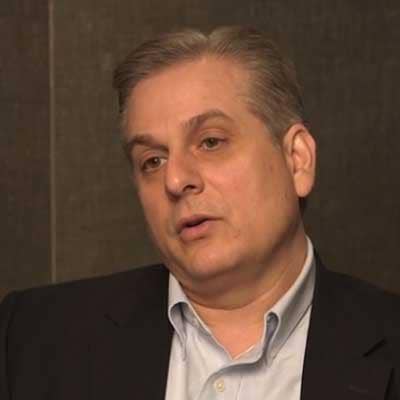
What do you see right now from customers regarding interest around IoT?
Darren Kline, Wonderware North
For our customers, it's been a research project – they're looking at how it will impact them and a lot of them are starting to come to the understanding that we've come to ... they've been collecting data and visualizing it, but they've been storing things in our historians solely for the purpose of looking at trends. But they have this wealth of information that they've been storing now for years that they could be doing other things with. Some of the analytics tools and things we're coming out with now, our customers are really keying in on that, and we want to start moving away from capturing what happened and then analyzing it – and moving into the place where we ask 'how can we stop it to begin with?'
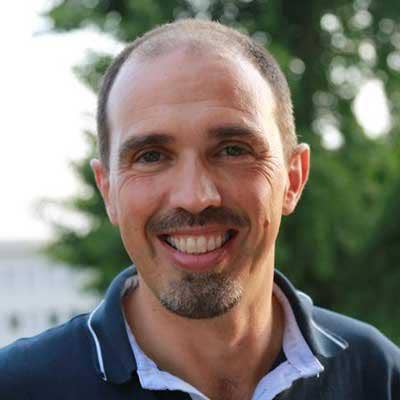
What do you see right now from customers regarding interest around IoT?
Luigi de Bernardini, Autoware
Several times I see that the word 'IoT' is used without considering that there's no internet, so just a connection of things over an Ethernet network – and it's not really IoT. It's something we did over the past 20 years, but there's a missing piece, which is the internet – a global network with things that are connected together, that enables totally different users and scenarios.
I think that in the clients themselves, there's still some confusion about this, so they are confusing data collection with sensors for industrial IoT. It's important to realize this because otherwise, we are just doing some good marketing on old solutions.
What challenges do you see with IoT? Do you think customers understand the benefits of IoT and how they can use it?
Michael Grasley, Callisto
For the customers, there's a baby step there, where they say we can instrument everything and tie it together all around the world, but haven't even done it locally with the plant we've had for years. So there's that intermediate step that they are more comfortable with.
IoT, I would argue, is essentially a technological concept. It is not a solution, what we are trying to achieve is smart manufacturing, Industry 4.0 – that's the vision we're trying to achieve. IoT is just a means to the end. We've been trying to do smart manufacturing for 25 to 30 years. IoT now allows us to do more, but customers may not be ready. That's why I differentiate between IoT and smart manufacturing. I think IoT is another tool in our toolbox.
What challenges do you see with IoT? Do you think customers understand the benefits of IoT and how they can use it?
Luigi de Bernardini, Autoware
It would be interesting to assess what the understanding of IoT is because, in the last couple of years, there was a lot of awareness of the importance of IT. But I'm not sure if there's an awareness of what IoT really is.
I think at the end of the day, it's just new technical computing. Schneider has been doing IoT for a long time. This is new way to have insights in real time and have more accuracy. With the tech evolution to AI, that's bringing more value to Schneider. Those projects are complex, but Schneider is making it simple for customers.
What challenges do you see with IoT? Do you think customers understand the benefits of IoT and how they can use it?
Darren Kline, Wonderware North
We're not getting the IoT conversations with executives – most of our customers are worried about not collecting stuff with paper on the plant floor. That's the reality. When you walk into 95 percent of manufacturing plants, they're still running around with paper and pens, they've got HMI stations around, they've got 15 custom systems that they've built over the years. ... They're hearing all this, and understanding that things are moving in this direction, but aren't ready to swallow a lot of this stuff yet.
How are you engaging with customers around IoT? What are the first steps?
Michael Grasley, Callisto
It's funny, it's kind of like the sales cycle with MES 20 years ago where no one knew what it was – some initial engagement with the customers helped them understand what unfulfilled challenges do you have, and then we can use our knowledge of the industry and the technology to go, 'IoT can help you here.' For us, we try to get to proof-of-concept, which is small, cheap, and fast, and is designed to give them enough success that they can say it is a viable addition to their technology suite. But right now [customers] are still needing to see that first success.
How are you engaging with customers around IoT? What are the first steps?
Luigi de Bernardini, Autoware
Digital transformation overall is more than just IoT – it's just one part, but then digital transformation also goes through cloud, analytics, augmented reality, artificial intelligence many other things. These are out of our knowledge domain for some of us. It involves different competencies that you can't find in many traditional businesses and it requires more cooperative business. We need new skillsets and competencies, and part of that is developing new partnerships. You need to talk with different people beyond the clients themselves – it's much different than what we're used to.
How is IoT – or digital transformation overall – in the industrial market changing your business and how you go to market?
Michael Grasley, Callisto
Digital transformation is actually requiring us to have a different business model. If you look at augmented reality and advanced analytics as examples, both of those are predicated on having a digital twin. You essentially need to have a digital twin to leverage it with AR or predictive analytics. The challenge is that this digital twin enables so many different things, the right answer for any individual customer is different – I can't do all of that. Our expertise is working on the edge, so we're well positioned if a customer needs AR, to help them get that digital structure set up. We're not well positioned to help them bring AR into maintenance, so we need to be able to partner with other companies. It's forcing companies to have an active ecosystem of partners – it's not realistic to do it all themselves. That is different than the way we've operated over the past 20 years.