Extreme Networks Exec Talks NFL Super Bowl 51 Technologies And Why Solution Providers Should Tackle A Hot Sports Market
Super Bowl Sunday
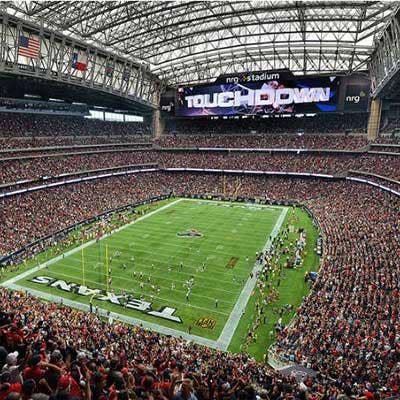
Extreme Networks, the official wireless and analytics provider of the NFL, spent three years vying for the contract to provide Houston's NRG Stadium with a network for the first time.
After a year of work and preparation, Super Bowl 51 is right around the corner and the NFL will be counting on Extreme Networks' software and wired and wireless infrastructure to support the 80,000 people in attendance and the millions watching at home.
Norman Rice, Extreme Networks' executive vice president of corporate development, global marketing and supply chain, who oversees the vendor's stadium business, spoke with CRN about Super Bowl preparations, what will happen during the big game, the role virtual reality will play inside future stadiums, and why solution providers should jump into the sports market.
What will Extreme be doing on game day this Sunday?
By game day, we'll have about 15 technology experts on-site. We’re responsible for the analytics platform, the Wi-Fi platform, the networking platform – so we'll physically have people that are there the entire time doing tweaks. Because what happens with the Super Bowl, just like for any big event, they'll modify the stadium. They'll put up different signs, or put up additional things for television and that creates interference, so our guys have to be ready to tweak it. You never know until it's happening, so you have to be there.
What is the NFL doing to make sure your technology is working correctly and there are no issues during the Super Bowl?
The NFL comes in and audits at the beginning of the year [how] connectivity [is working] in the first game. They provide requirements and fix things that need to be changed before the Super Bowl. Through the last home NFL game the [Houston] Texans had, the league tested and we passed the test. You have to effectively pass the thresholds and the medians. If you don’t, you have to go back and remediate it until you do pass.
What's the criteria in the NFL's test?
The test is around speed and throughput. It's density – being able to do that speed and throughput to handle video downloads, video uploads in the areas that they've designated as high-density areas. Then there's a number of applications that they run as well to see response times. We design our stuff for a continuous connection for the [best] fan experience. So the idea is, instead of you having one area where you're amped up and then you walk 10 feet and it blows up, we want you to be able to walk around the entire stadium while you're watching a video, for example.
Can you talk about the NRG technology command center?
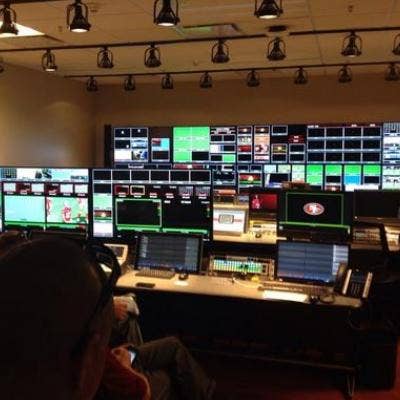
There's a command center where they have all the technology providers, they have the league itself, security folks – all kinds of stuff – and they're monitoring everything within the venue. It's a room. It's a big room. It's a guarded secure room because the Super Bowl is a national security event, it's covered by Homeland Security. So there's all kinds of stuff patrons don't see, but they're there.
Is the stadium and professional sports market a space that solution providers should look into?
One of the common misperceptions of doing business with professional sports teams is that it's a pay-to-play game. It's not. Some organizations have paid to play and, historically, there has been paid to play, meaning that you would effectively pay sponsorships in order to get deals like this. ...
The league in this case and the organizations are trying to align to their consumer needs very quickly. They don't want to trade off the consumer needs with the fan needs with trying to sell a near-term sponsorship. That was what was happening for years and years and we were fortunate enough to be part of breaking that dependency and that relationship.

Why should a solution provider jump into this market?
From a [solution provider] perspective, the biggest opportunity is getting these systems in place, understanding what the users are doing, and coming up with new services, new offerings to facilitate those actions. So learning what the customers are doing in the facility and then creating that linkage for these organizations. These professional sports teams, college sports teams, do not have significant IT staff. They have small IT staff and they depend on channel partners to provide turnkey offerings for them, and there's a lot of value-added services for the partner community.
Also for partners, there's no better showcase to take a client to a game.
What exactly is Extreme providing for Super Bowl 51 inside NRG Stadium?
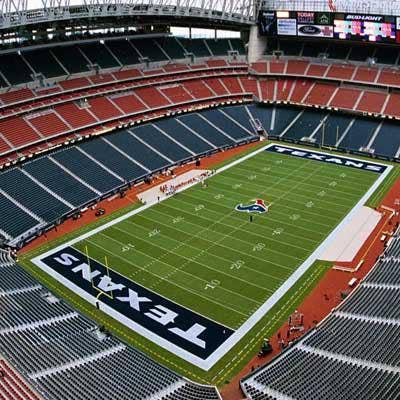
For the Super Bowl, we have the total networking solution -- so it's the wired, wireless software and we're collecting the analytics. We're going to see everything that happens.
What people don’t understand [is that] for the Super Bowl there's a massive security perimeter … and that requires connectivity. So the security apparatus, the ticketing apparatus -- we provide that with the NFL. In addition to that, in and around Houston this year with Verizon, we're providing the Super Bowl live areas – whether it's the sponsorship areas or point-of-sale in the Super Bowl live area, that's all running on our connectivity with Verizon. … The hotel where the NFL headquarters is is running on our technology as well and that is a Zebra-acquired technology.
You're using technology from your recent acquisition of Zebra's WLAN portfolio in the Super Bowl?
Yes. So we have a combination of our existing technology and Zebra technology all in the various venues around the city.
What is Extreme doing right now to prepare for the massive event on Sunday?
We've had people on-site pre-staging with the NFL [for] at least a month or more. The Super Bowl is a yearlong project, that's how long it takes the league and everybody to settle in for what's going to happen for the game itself, what's happening around it and then with the Super Bowl host committee.
How important is it for the NFL to provide connectivity during the Super Bowl?
The CIO of the NFL, Michelle McKenna-Doyle, lobbied with the league a few years ago and said, ''Hey, we need to make it mandatory that a host team or facility needs to require connectivity and technology to be qualified for [hosting the Super Bowl].' This is the first Super Bowl where it's been mandatory. Prior to that, venues would have it, but it didn't have to meet a standard. Now it's mandatory. It was mandatory in their application to get the Super Bowl. It's very important that the fan experience is just as good as the home experience.
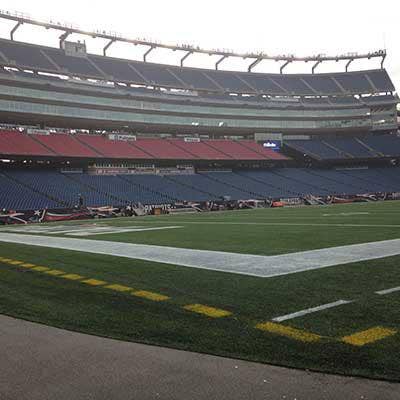
With the NFL's technology push, what will the future look like inside a professional sports stadium?
Where this all goes is complete interactivity between what you see here and what happens at home and virtual reality and gaming sights. My son plays [the NFL] Madden [video game] on his phone, and each week his players get updated based on their performance. For real, from the game itself. How are they doing that? They're collecting the analytics in the players off their RFID tags, on every player, they're collecting stats on the player – they're feeding that stat to EA Sports and it's making its way into the Madden game. The dynamic aspects where these two worlds start to merge, where real performance and virtual performance start to meld together.
So what does that mean for a fan who's attending a game a few years from now?
You start to participate. Connectivity is a requirement, but I see a lot more interactivity. Visionary-wise, I see [stats being traced] on the glass separating the fans from the game. So you can see how fast this guy is running, we'd see his trace, we'd see that he jumped – you'll see this interactivity. It would be a virtual glass or something like Google Glasses where you would see the stats and information about the player or team. I see what's happening on the field being more connected with us as observers and fans.