Q&A: Fortinet CFO Gives Update On Sales Reorganization, Talks Platform Security Strategy
Fortinet CFO On The Record
A year after the company's sales reorganization, under which Fortinet shuffled its U.S. enterprise sales team, Fortinet CFO Andrew Del Matto sat down with CRN to talk about the impact the company is seeing from the changes. The changes were slow to show results, creating some "execution challenges" and causing the Sunnyvale, Calif.-based vendor to lower its sales and earnings expectations last fall. However, Del Matto said the company's Q1 earnings show those changes now taking hold. Del Matto spoke about the company's progress, investment for partners, and the traction the company is seeing for its new Security Fabric messaging strategy. Take a look.
Talk about the sales reorganization Fortinet did a yrear ago and where you guys stand.
We feel great about what we have done over the past year. It feels like it's been really taking. We made our adjustments early in the year and then I think in August we went to more of a Fabric focus and really trained the people up on that,and then we felt like we needed less product-specific overlays, if you will. That’s what we did. We continue to invest very strongly through the channel. All of our business goes through the channel really, with very few exceptions. That's been the same all along. That's an area certainly of continuing investment for us. We feel like we're doing very well there, watch it very closely, and appreciate what we do get out of the channel. The business they bring us is very good.

How much of the growth you're seeing in the U.S. and North America regions do you attribute to the sales realignment?
A lot of it is the people that we brought in – we've been bringing in new people and as they mature, they do better. The people we brought in were focused on the enterprise. That's the way to think about it. As they mature, the names and the customers that we're bringing in are top-tier names. This just really goes back to the Security Fabric resonating. Customers are looking to consolidate. We use the word 'Fabric' -- you get integration, the common operating system across physical, cloud and virtual … and the ease of management and ability to orchestrate the security across that broad set of functions. That's critical. I think all of that has been really fertilizing our opportunity and our growth.
Palo Alto Networks did their earnings and hit a road bump with its sales strategy – is Fortinet doing anything to go after that?
We're focused on selling the Fabric and providing the best security, the best management, the best ease of use, the best operating systems to our customers. You hope to get in as many deals as you can, but we're really focused on our story. We feel like we've been doing that and we want to make our customers successful. The feedback that we're getting is very strong. That's really where we're focusing. We are going to continue doing what we're doing.

Is there anywhere in particular that you're investing around the channel to drive the sales productivity and efficiency gains you're looking for in the business overall?
I think training has been one of the beneficiaries, not only internally but to our partners and training them to sell the Fortinet Security Fabric. That seems to be resonating very well. … We are seeing a very strong uptake in that. We are offering it externally – opening that and encouraging to have all of our partners trained. The feedback is very strong.

What is Fortinet doing around marketing investment? I know you recently brought on a new CMO – how is the strategy there evolving?
Very well. I have to tell you – it feels like the end-to-end go-to-market model is working as well as I've seen it here. The changes we've made there have been very good. The training piece specifically has been going very well, both internally and externally. When I look at that investment, I think that has been a key ingredient to our success. With all the complexity in security, we're talking about the ability to understand the environment, and how to secure it is key, and how this technology plays in that, and how you can use these tools to manage it. That's really where the training goes and what the training provides. That has been very successful. It also educates people on our technology. We're focused on ROI. We're focused on where the return is and we're getting better about dialing that in and understanding where to continue to invest. Obviously growing, so even though we're expanding margins we have incremental dollars to invest and we're going to continue to focus on those areas.
What sort of messaging are you pushing around the Security Fabric – how do you differentiate the message in the market?
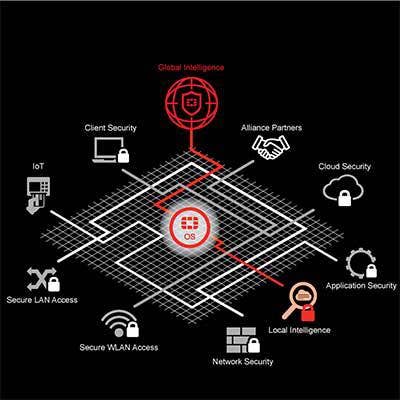
The Security Fabric really meets the needs of a customer who needs a cohesive, multi-product platform. What it provides is breadth, depth and orchestration they need to reduce complexity while providing protections across all points in the network. I think you get a couple of dimensions out of that if you back off. Clearly, the ease of integration because you can do it from a private cloud, into the public cloud and the operating system tethers across that. When you think about all that complexity, managing that complexity and orchestration is key. I think that's where we stand out versus the competition. I think we have done a stellar job there and that stands out. That's the feedback that we've been getting, both from the sales department and the customers and the partners.

Do you see any impact as other vendors roll out their own platform security strategies, similar to Fabric?
What we're hearing is the strength of our management capabilities are key. The products really are integrated with a common operating system. It's been out there for a while. We’ve been out there the longest, I think, with that strategy. Thinking about it originally, you're going back to this consolidation theme that probably started about a year ago. The Fabric hits that perfectly. Customers are saying they have too many vendors and too many point solutions and want a way to integrate. The key to integration is commonality of operating system, interoperability and the management capability becomes critical. To us, and what we're hearing, that's where we're superior.

Are there any areas of the Security Fabric that you're looking to build out? Or are you satisfied with the breadth?
We're obviously going to continue to invest. You want to continue to refine the capabilities that you have. We have always been focused on performance and driving the highest level of performance – we have a terabit firewall and I think we were the first to market with that, for instance. … We will continue to invest on that side. We will continue to invest in products that make it easier for our customers to secure their operations and do it better. Getting the highest level of performance and security effectiveness is paramount. Our threat intelligence analytics, for instance.

When you talk to customers, do they see you as a security company or a firewall company? Are you looking to change that perception?
I think they view us in a number of ways. We look at the feedback and what we're hearing directly from our customers – I know we received just under 500 reviews, compared to Cisco and [Palo Alto Networks] at 97 and 94, and we had the top customer satisfaction rating of 4.6. These were Gartner Peer Reviews. We remain very much a security company, and that has a very strong resonance in the enterprise space. We continue to do well in SMB and carrier, as well. What the pivot has been over the last couple of years has been building out the go-to-market capabilities in the enterprise. That has been what has been extremely good. It's interesting – I think we shared on the call that we grew in the U.S. 31 percent overall.

How far along in the opportunity around consolidation are we? Are customers just starting, in the middle, or almost all the way there?
I think that will be ongoing over time. We're thinking of consolidation in terms of product buying – some people talk about M&A, but that's not what we're talking about. … Talking to CIOs and CISOs, you still hear it: They have too many vendors. They will say they have anywhere from 30 to 40-plus security vendors in their environment. That's a lot to manage. … That theme is playing forward and I just think that ease of integration, ease of management longer term will continue to play to our advantage.

Are you seeing any traction around the cloud security solutions you rolled out earlier this year?
It's growing very well. I think it's doing two things. One, it enables customers to buy on demand if they want to do it or they can also go through our service providers, who we partner with. Also, it's pulling product off-premise. We see a lot of that. Also BYOL [bring your own licensing] – some customers are buying the appliance and then perhaps buying on demand somewhere else. … We feel like we cover all angles. That goes back to why the Fabric is so important. Common sense tells you that managing all that capability is key and I think we view our management capability as superior and I think that's a differentiator when you buy. It's really a way to operationalize security – I think that is key. As more people ramp up in security knowledge, when you have all this technology and clearly there is no shortage of cyberthreats out there – you need a way to manage it and the operation of security. That's what we provide. Our technology is focused on enabling ease of management.

What should partners expect to see from Fortinet in the next three to six months?
I just think we continue to invest in the channel. We really appreciate their feedback. We like to work 360 with them and get their feedback and provide them with the best opportunities. We hope we're providing them the right level of insight into our business and opportunities and partnering in a way that help them grow their business. By the same token, we want to get their feedback on where they think we should continue to invest more. They are the front line and we want to make sure we are listening and helping them be as successful as possible.

Any other messages you have for partners about the direction Fortinet is heading?
We are very proud of our results. We delivered billings growth of 22 percent and revenue growth of 20 percent. We exceeded our guidance. We are proud of that. We continue to outgrow the market and strengthen our position in the enterprise. That's why we saw strength around the globe for the first time. We saw very strong growth in North America and in the U.S., in particular, where we grew 31 percent. I think those are the key takeaways for the quarter. We feel like we're doing very well with our partners and the people we're bringing on board, and we want to continue to make all of those people successful.