CRN Exclusive: VMware COO Talks NSX Vs. Cisco ACI, Working Under Michael Dell, HPE-SimpliVity Impact And Product Roadmap

COO Talks NSX, Amazon, Cisco
With VMware NSX now at a $1 billion run rate, chief operating officer Rajiv Ramaswami spoke with CRN about his vision for the product, competing against Cisco ACI and how NSX is integral to VMware's cloud partnership with Amazon.
"Every major initiative at VMware right now has NSX as part of it – our cross cloud architecture, the VMware Cloud Foundation, the cross cloud services, VMware Cloud on AWS – all of those have NSX inside," said Ramaswami, COO, Products and Cloud Services for the Palo Alto, Calif.-based software vendor. "The majority of our NSX business is being tied to our vSphere platform … We recognize that the world is changing. It's not all going to be vSphere."
Ramaswami also discussed what it's like to be working under Dell CEO Michael Dell and the impact Hewlett Packard Enterprise's acquisition of SimpliVity will have on the hyper-converged market.
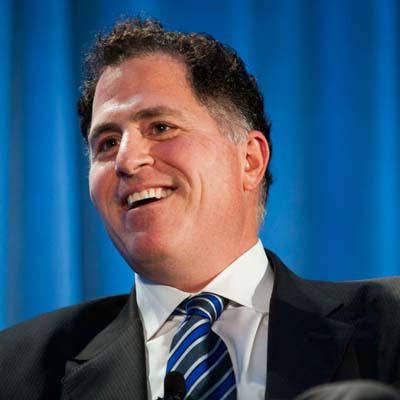
What is it like now working under Michael Dell and the new Dell-EMC umbrella?
Michael is extremely supportive of VMware and the strategy that we're driving and executing and most importantly we expect to drive an incremental $1 billion of revenue through the Dell-EMC combination. There's a very focused effort to make that happen across our compute, our hyper-converged offering, our end-user compute offers through this vast scale machine that Dell has in terms of their access to channels and lower-end smaller customers and their access to emerging markets.
So we look at this as a huge plus and positive for VMware and we still continue to operate as an independent public company. I would look at this as a synergistic, business opportunity for VMware.
Looking at Dell's networking strategy in 2017, what role will VMware play there?
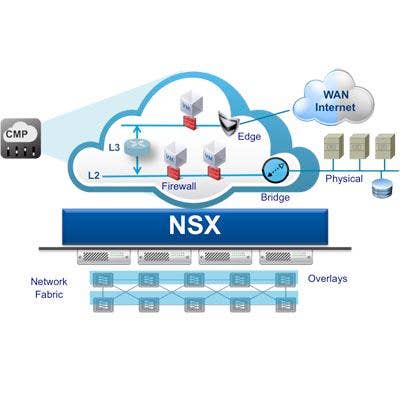
We still operate at an independent company … When we look at the networking ecosystem from our end, there's a number of vendors who do physical networking -- so Dell is part of that, Cisco, Arista [Networks]. For us, we are primarily in the virtual networking world so we sit above all of this from a physical infrastructure perspective. So whether our customers choose to deploy a Dell network or a Cisco network or an Arista network – for the most part we're agnostic. NSX and our networking fit above that physical layer.
Where are the areas that NSX directly competes against Cisco ACI?
It happens when Cisco ACI tries do to virtual network management and tries to extend up to segmentation. Often what we find is that the thing that wins for us is, we have a solution today with virtual networking that extends across any platform – it is not tied to the hardware. It works on any hardware as oppose to [just] Cisco Nexus 9000 … but it also extends to the cloud, which is very hard for ACI to do because ACI is tied to the physical network. So we have NSX that extends from a customer's premise into a cloud infrastructure at AWS or whatever they are running it on. It also extends into the container framework which is hard to do if you’re a physical switch provider.

How does VMware NSX stack up against Cisco ACI?
It is definitely not an NSX or ACI case. It's not an 'either or' case -- it's an 'and'. So the vast majority of our NSX deployments run on top of a Cisco physical infrastructure just because Cisco is the number one market share leader in physical structure. We have a number of customers that have deployed NSX on top of Cisco and also specifically Cisco ACI.
Can you give me an example of how Cisco ACI and VMware NSX can work together?
A customer will typically buy the Nexus 9000 platform, then they could buy Cisco ACI to manage those Nexus 9000s. ACI provides a physical fabric manager. So that's one use-case deployment where they buy Cisco for the physical network and use ACI to manage the physical infrastructure, [but] then they deploy NSX on top to manage the virtual infrastructure and to prove security and micro-segmentation … In a lot of scenarios, NSX and Cisco ACI work together hand-in-hand.
What are your thoughts on HPE's plans to acquire SimpliVity and its impact on the hyper-converged industry?
HPE buying SimpliVity is just showcasing the fact that the industry will consolidate. There's going to be a few large players at the end of the day who are going to drive the majority of the hyper-converged industry.
It will be driven by people who have significant reach into the end customer market. So that will be people like Dell, HPE, etc. If you look at how we take our product to market … with our vSAN [and VxRail] product line, which is our hyper-converged offering, we exited 2016 at a $300 million run rate – that's all pure software.
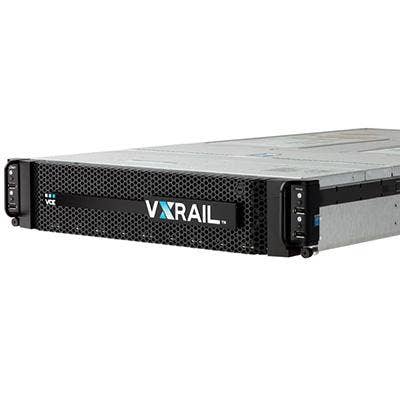
Looking at HPE-SimpliVity, how do you plan to evolve VMware's VxRail?
We did go to market through appliances, such as VxRail, Vx:Rack -- we take that to market through Dell, through HPE, we take it to market directly as well and through our channel partners in terms of pure software offerings on certified hardware that customers can buy themselves. In the long term, the things that are going to matter there are – in our case for example, we're more and more integrating hyper-converged with networking. We're more and more adding continued features to our hyper-converged offering, things like data protection. I feel very comfortable with where we are at with our market growth.
How important is NSX in regards to VMware's cloud partnership with Amazon?
NSX is an integral part of that offering. So Amazon has its own networking, services and offerings, so when we put our stack on top of it – the VMware Cloud Foundation – NSX is an integral part of that. It's the visual layer that stiches our hypervisors together to create a virtual compute layer on top of AWS.
What's advantage will a customer see from a result of the VMware-Amazon partnership?
The significant advantage of this for our enterprise customers is that now they have freedom. They can choose to run their applications that were running natively in their VMware environments on-premise (in an AWS environment). They now have the flexibility to run exactly that without having to re-platform or do anything with them in the cloud on our offering -- the VMware Cloud on AWS. That's the nature of the offering we have with Amazon.
Will NSX play any type of services role regarding the Amazon partnership?
[It's] what we call cross-cloud services. We haven’t announced any partnerships here – we work with Amazon, Google, IBM, we work with [Microsoft] Azure – and this is intended to be a set of services delivered as SaaS but will operate for customers who run workloads natively on those platforms. The big difference here is that there is no VMware compute stack running on those platforms in this instance. Customers are running applications natively on say an Amazon stack or Azure stack, and what we do is we insert NSX as-a-service in those environments – native AWS environments, native Azure environments – to provide security, virtual networking, overlay and extend from on-premise to off-premise … It's a very important role in enabling our customers to secure and manage their applications regardless of where they run it.

What are the three primary use cases for NSX in the market today?
The primary use cases that our customers have been deploying are, number one: security and micro-segmentation. Number two is automating their infrastructure -- their entire infrastructure. The third is application continuity and disaster recovery.
NSX is now at a $1 billion run rate. Can you talk about momentum in 2016?
It was a very strong year for NSX. Our licensing booking grew over 50 percent YOY (year over year) across pretty much all verticals. We almost doubled our customer count, we now have over 2,400 customers and we exited Q4 at a $1 billion run rate. All-in-all, we have a very strong progress in terms of adoption in the marketplace.

As far as NSX's roadmap, what can we expect this year?
If you look historically, the majority of our NSX business is being tied to our vSphere platform. We have many customers who have deployed and bought vSphere and we see a great opportunity for us to have them all become virtual networking customers over time. We recognize that the world is changing. It's not all going to be vSphere.
Also, we're continuing to enhance our services portfolio. For example, we talked about things like distributed network encryption, that's something that we'll build into the platform going forward. We have a distrusted firewall that's going to continue to get better and better. We have a L-4 to L-7 load balancer today, that will continue to be enhanced. We will continue to expand on the services capability of the platform as well.

How important is NSX to VMware's overall strategy in 2017?
We look at NSX as being very foundational going forward. You will see that every major initiative at VMware right now has NSX as part of it – our cross cloud architecture, the VMware Cloud Foundation, the cross cloud services, VMware Cloud on AWS – all of those have NSX inside. It is really the foundation for our multi-cloud strategy as our customers go across cloud. All of that is what's been driving the momentum in the marketplace.