IDC: Converged Systems Revenue Up, But Cautions Linger

How IDC Categorizes Converged Systems
IDC breaks what it calls the converged systems business into four segments:
-- Integrated infrastructure, or pre-integrated offerings including server, storage and networking hardware, along with systems management software. Dell EMC's VCE Vblock is a key example.
-- Certified reference systems, also known as reference architectures, have two or more vendors certify some combination of server, storage, networking and management technology into a single managed system. FlexPod, which combines Cisco's UCS server and networking with NetApp's storage technology, is the best-known example.
-- Integrated platforms, in which a single vendor integrates a complete converged system with server, storage and networking. Oracle's engineered systems are the best-known examples.
-- Hyper-converged systems, more popularly known as hyper-converged infrastructure, combine server, storage, networking and/or management technology into a server-based appliance.

Overall Converged Systems Market Up In Q3
The worldwide converged systems market in the third quarter of 2016 saw revenue increase 1.7 percent over the third quarter of 2015 to about $2.6 billion. Sales of converged systems in general led to the consumption of about 1.4 exabytes of new storage capacity, up 12.5 percent over the same period in the prior year.
The revenue growth, however, was a mixed bag for vendors and solution providers. While IDC said hyper-converged infrastructure offerings saw a doubling of sales in the third quarter of 2016 compared with 2015, sales of converged infrastructure and integrated platforms saw major drops during the same time.

Converged Infrastructure, Reference Architecture Sales Down
Total sales of converged infrastructure systems and reference architecture offerings fell 11.4 percent in the third quarter of 2016 compared with the same period in 2015 to $1.4 billion, according to IDC.
The big drop in this category was due to Dell EMC discontinuing its VSPEX reference architecture, according to IDC. The end of VSPEX should have been no surprise. Jeremy Burton, Dell's chief marketing officer, told CRN in May that reference architectures were already in decline as sales of hyper-converged infrastructure offerings were ramping up.
The Big Picture: Converged Infrastructure, Reference Architecture
Dell Technologies was the largest vendor of converged infrastructure and reference architecture offerings due to its acquisition of EMC, which brought with it the VCE Vblock line. Dell held 49.4 percent market share with $671 million in revenue for the third quarter of 2016, but that was down 9.6 percent compared with the same period in 2015, according to IDC.
The FlexPod reference architecture from Cisco and NetApp was the only real winner during the third quarter. IDC said sales of FlexPods rose 0.5 percent to $310 million, or about 22.9 percent of the total market.
Hewlett Packard Enterprise kept its No. 3 position in the market with $248 million in revenue for the third quarter of 2016, but that was down 18.1 percent versus the same period in 2015, IDC said.
The "other" category saw sales fall 28.1 percent to a total of $128 million, according to IDC.

Integrated Platform Sales Takes Almost As Big A Hit
Sales of integrated platforms in the third quarter of 2016 fell 9.7 percent to $672 billion, IDC reported.
Oracle led the market with sales of $308 million, which accounted for 45.8 percent of total integrated platform sales. However, sales were down 9.3 percent over the same period in 2015. Oracle develops what it calls "engineered systems," which combine its marketing-leading database or other Oracle software with its own server and storage technology.
HPE had sales of $72 million, for a market share of 10.6 percent. That was up 30.4 percent over the third quarter of 2015.
The "other" vendors had combined sales of $293 million, which was down 16.4 percent.

Hyper-Converged Infrastructure Sales Double
Sales of hyper-converged infrastructure offerings grew 104.3 percent in the third quarter of 2016 compared with the same period in 2015 to reach $571 million, making it the only part of the converged systems market to see growth. Given that hyper-converged infrastructure offerings accounted for about 22 percent of the total market, its growth is the only reason why the converged systems market as a whole grew.

The Hyper-Converged Landscape
IDC did not mention how specific hyper-converged infrastructure vendors did in the third quarter -- not surprising given that there is only one major publicly listed vendor, Nutanix, which held its IPO in September.
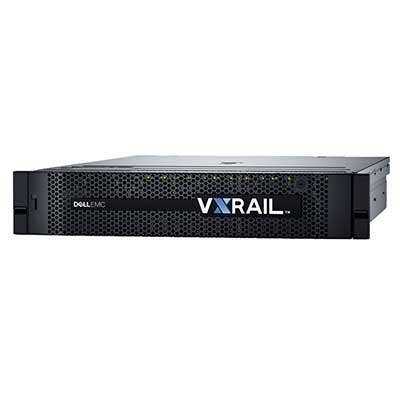
But it is a market ripe for growth. Dell EMC's VMware business in February introduced its VxRail hyper-converged infrastructure software stack. VxRail offers a significant leap in capabilities over its earlier EVO:Rail stack.
The year also saw Cisco introduce its HyperFlex hyper-converged infrastructure appliances, as well as a spike in the number of appliances being built using software stacks OEMed or sold by VMware, Nutanix, SimpliVity and several other smaller companies.
This market is also full of startups, including Pivot3, which in March closed a round of funding worth $55 million. 2016 also saw at least one company, Cloudistics, come out of stealth.