Securing AI At The Edge: Why The Endpoint Is Becoming Critical To Trusted AI Adoption
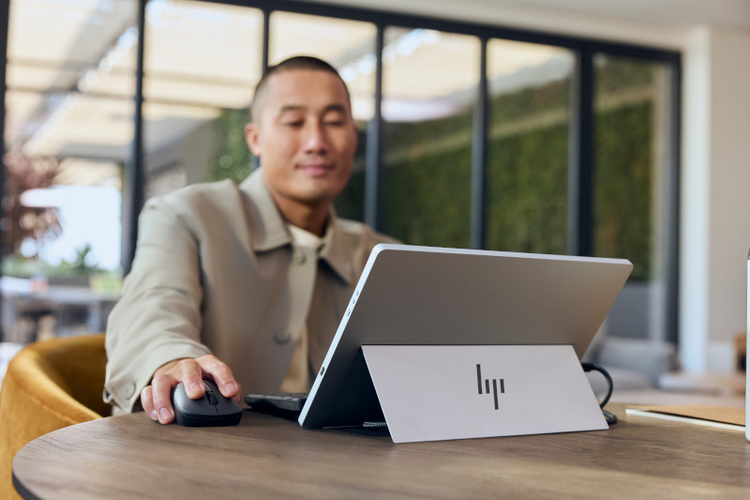
AI is increasingly moving from the cloud towards where work happens day-to-day: on the device. While this has created opportunities around performance, privacy and user experience, endpoints are increasingly targeted. And agentic AI introduces a new layer of risk because autonomous agents can access data, interact with systems, and take action across workflows.
This topic is already top of mind for many, with customer research showing that 99% of businesses require safeguards before AI agents can act[1]. For the channel, there’s a major opportunity to help customers move beyond AI experimentation to trusted AI adoption by implementing the safeguards they need.
CRN spoke to James Wright, Global Head of Personal Systems Security Solutions at HP, to understand why AI security must start at the endpoint, the importance of visibility and isolation, and the opportunity for channel partners to guide customers through the next phase of enterprise AI.
Q: Why is securing AI at the edge becoming such an important consideration for organizations?
James Wright: AI moving to the edge feels somewhat inevitable. There is an economic element to that, because using AI isn’t free, but there is also an important security and privacy consideration.
When you get into what agentic AI is doing, you’re potentially giving it access to a lot of private data and corporate IP. That requires a level of protection that can be easier to provide when you’re not sending that information outside the organization.
As we bring AI to the edge, the challenge is providing visibility into what it does and what it can access, while putting controls, protection, and governance around it. At the moment, the use of AI can still feel a little like the Wild West inside organizations. We need greater governance and control to give businesses the confidence to embrace it.
Q: Does agentic AI change the security equation?
Wright: Historically, creating malware and carrying out certain types of attacks required time, resources, and expertise. Agentic AI introduces much greater levels of automation and speed. That changes the threat landscape because areas that may previously have presented a relatively low level of risk become more attractive to attackers.
That means we need to think about AI security architecturally rather than treating it as an additional layer that gets added later. As agentic AI becomes more embedded across an organization, that architectural approach to security becomes increasingly important.
Q: Are businesses sufficiently aware of these risks today?
Wright: Right now, I would say many organizations are playing catch-up. One of the common themes we see is businesses realizing that AI is increasingly present across their organization, but they don't necessarily know what AI is being used, where it is, or what it is doing.
Problem number one is visibility. Organizations need to understand where AI is operating across their environment, including where shadow AI may be emerging. The industry is working on that challenge now.
There is also enormous pressure on businesses to adopt AI quickly. For security teams, that's difficult because you're dealing with new technology that is moving incredibly fast, while at the same time being asked to become more permissive and accelerate adoption.
Q: What does effective protection for AI at the endpoint need to look like?
Wright: It starts with understanding what AI is present and what it can access. From there, organizations need controls and protection around that activity, alongside appropriate governance.
Sandboxing is particularly interesting here. HP already uses isolation technology across a number of our security products to contain potentially malicious activity within secure environments. The same underlying approach can be relevant to some of the security challenges emerging around agentic AI because it can help reduce the available attack surface.
There is also an opportunity to take security capabilities that already exist on the endpoint and consider how they can address this new set of challenges.
Q: What differentiates HP's approach to securing AI at the edge?
Wright: HP has treated security as a priority for a very long time, and we're taking the same approach to AI. We've recognized that there is a major trust and safety element to this technology and looked at where HP sits within the technology stack and what we can do there.
We already have a portfolio of endpoint security capabilities that apply well to some of the problems people are discussing around AI. Isolation is one of those capabilities.
Another important differentiator is that HP operates across hardware and software. That gives us the ability to think about the problem architecturally from the outset. A pure software security vendor is working within a different set of constraints, whereas being involved at the hardware level gives us additional options when considering how security can be designed into the endpoint.
TPM Guard is a good example of the broader approach HP takes to security. It is not directly an AI security solution, but it demonstrates what becomes possible when you are able to work across the hardware ecosystem.
Q: What opportunity does this create for channel partners?
Wright: Customers aren't necessarily approaching partners saying, "I want to buy this particular AI solution." In many cases, they're coming to them with a problem and asking for help because there is still a lot of uncertainty around AI and the market is not yet mature.
Partners are very well placed to respond because they already have close relationships with customers and are heavily involved in providing their PC infrastructure. They can draw on capabilities from vendors such as HP and use those to develop best practices that address their customers' needs.
In some ways, partners are better placed than almost anyone to have these conversations because they understand the customer's environment and have that established relationship at a point when many organizations are still figuring out exactly what they need. HP and its channel partners can work together to help customers navigate that uncertainty.
Understand more about Security in an Agentic AI World | HP Wolf Security.
[1] Internal HP Research, (N=2,100) ITDMs in US, DE and IN, March 2026