5K Technical Services CEO: AI Is Inevitable. Help Customers Use It Safely.
MSP veteran Corey Kirkendoll explains how MSPs should take a proactive, ‘no-blame’ approach to helping customers use AI tools in a safe and secure manner.
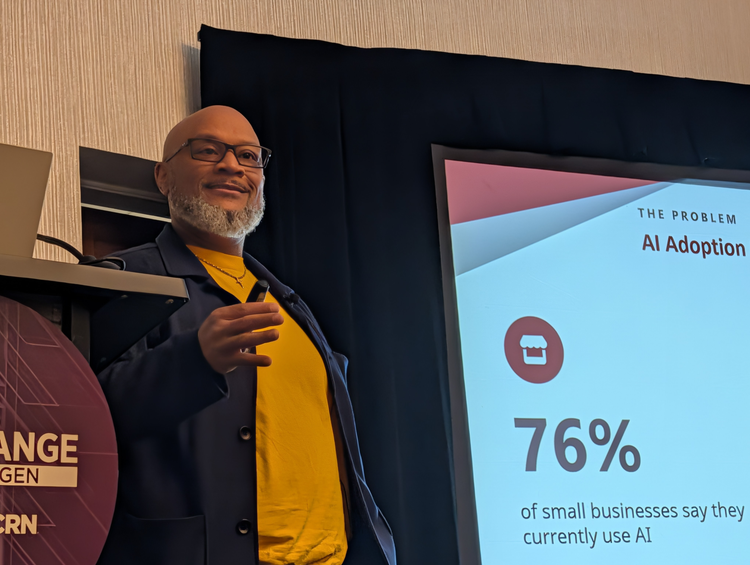
Customers are using AI applications. Potentially lots of AI applications. And MSPs may not know about all of them, creating risks for both parties.
This concept of “shadow AI” is becoming a rapidly growing issue for many organizations, and yet 5K Technical Services President and CEO Corey Kirkendoll said he doesn’t think MSPs should just try to shut it all down in the name of security.
[Related: MSP Panel: Clients Want To Use AI To Cut Staff, But It Doesn’t Work Like That]
Instead, the leader of the Allen, Texas-based MSP, part of CRN’s 2026 Managed Service Provider 500, believes there’s an opportunity for managed service providers to work alongside customers to roll out sanctioned AI tools, implement guardrails to protect against AI’s adverse effects and provide training on matters related to compliance and governance.
“It shifts you from having that conversation being, ‘I’m the guy who’s fixing your computers,’ [to] now I’m the guy to talk about, ‘hey, let’s do this AI thing the right way,’” said Kirkendoll in a Sunday presentation in a room packed full of MSPs at CRN parent The Channel Company’s XChange NexGen 2026 conference in Orlando, Fla.
But before MSPs can help implement a strategy around using AI more safely, they must account for the many ways that customers are already using AI, according to Kirkendoll. MSPs may be surprised at how pervasive it has become.
The CEO said MSPs can do this in various ways: reviewing authentication and enterprise app permissions in their identity platform, analyzing DNS traffic and web filter logs for generative AI tools, creating an inventory of browser extensions and surveying a customer’s employees about what AI applications they use in a low-pressure way.
“When we do that initial discovery, it always shocks me that we find no [fewer] than probably 50 or 60 applications that are running AI inside the environment,” he said. “So when you ask them, they say, ‘I only know two or three. I run Claude, I run Gemini, and we do Copilot.’ But when you show them the evidence and show them what that looks like and what that true shadow AI looks like, it goes different.”
To Kirkendoll, the prevalence of unsanctioned AI applications within customer IT environments shows how “AI adoption is outpacing governance.”
The issue with telling customers to simply ditch these AI applications, according to the CEO, is that they will then seek to conceal their activity rather than comply.
“They will find their way to do what they want to do to get the job done,” he said.
How MSPs Should Set Customers Up For Safer AI Usage
This puts the onus on MSPs to create a list of approved AI applications for customers and set up simple rules that determine which applications they can use for information that is non-sensitive, proprietary or highly sensitive, according to Kirkendoll.
“Make it very simple for them [for] how they move through it: ‘What can go in? What can go out? And where do I need to go?’” he said.
When it comes to choosing applications, the CEO suggested that MSPs should choose one or two AI assistants with business-level tiers that exclude customer prompts from model training. He said it’s important to find a high-quality AI assistant that customers will actually want to use so that they don’t feel tempted by shadow AI.
It’s also important that MSPs create a quick, open process for approving new AI applications so that employees know their requests are being heard, he added.
And MSPs should get customers started with a seed library of AI prompts for the most repetitive tasks, according to Kirkendoll, because he believes AI applications will soon shift from a fixed monthly subscription cost to consumption-based pricing, with customers getting charged based on how many tokens they use.
“How would you like for your customer to get a bill that says, ‘Hey, it was $20 a month per user, and now you got a $15,000 monthly [bill]’? It went well over their token [allowance] because you didn’t put any guardrails on it, right? Those days are going to come faster if they’re not already here,” he said.
When it comes to enforcing new rules for AI usage, Kirkendoll said MSPs can fall back on controls they already use for clients: single sign-on and conditional access; whitelists for AI connectors, plugins and browser extensions; sensitivity labels for confidential data; monthly reviews of new AI sign-ins; and API key rotations.
To get customers oriented to this new way of sanctioned AI use, MSPs should hold kickoff meetings to talk about what’s approved and how to get new applications greenlighted, establish one person in each department as an “AI champion” to share best practices and create a “no-blame” reporting system that encourages honesty, according to Kirkendoll.
The latter suggestion goes back to Kirkendoll’s view that employees within an MSP’s customers will seek out AI tools they deem useful, even if they’re not approved. The trick, he said, is to not make them feel guilty for doing something wrong but instead create an opportunity for how customers can embrace the kind of AI tools they want to use safely.
“Make it easy for them to come back. If they see something, they say something,” he said.