Arctic Wolf CEO Nick Schneider On Frontier AI Guardrails: ‘Right Now They Don’t Have It Figured Out’
The recent series of autonomous attacks resulting from testing by the developers of frontier models themselves, such as OpenAI and Anthropic, suggests there are in fact major questions to be resolved around the guardrails of the new models, Schneider says during an interview with CRN.
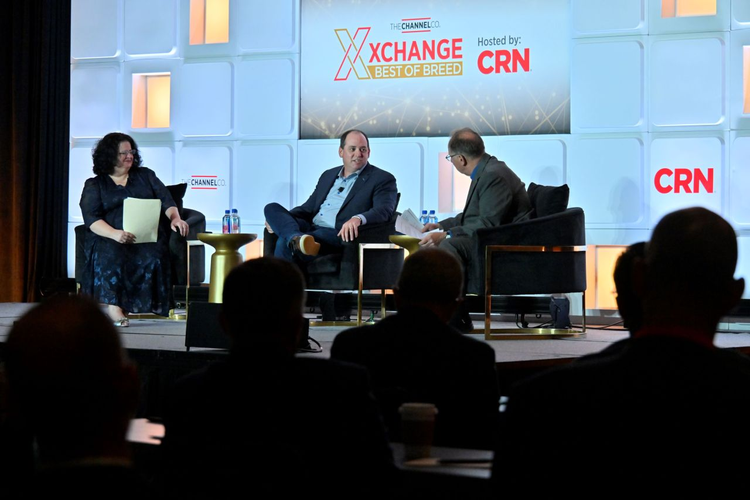
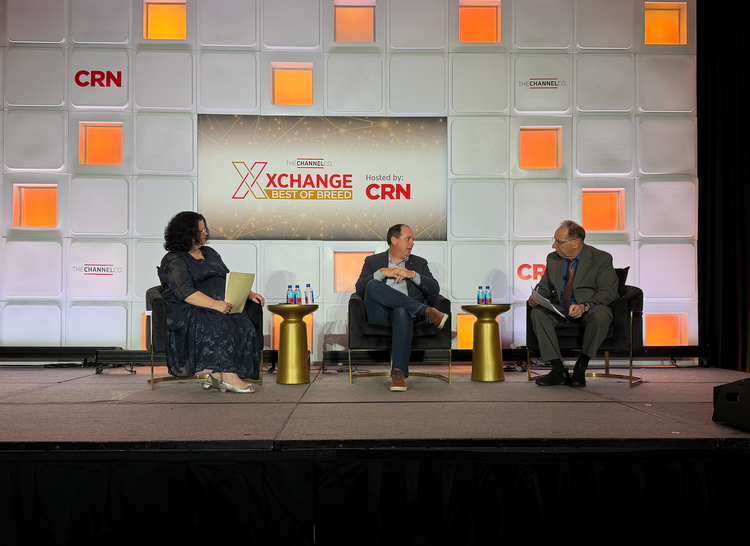
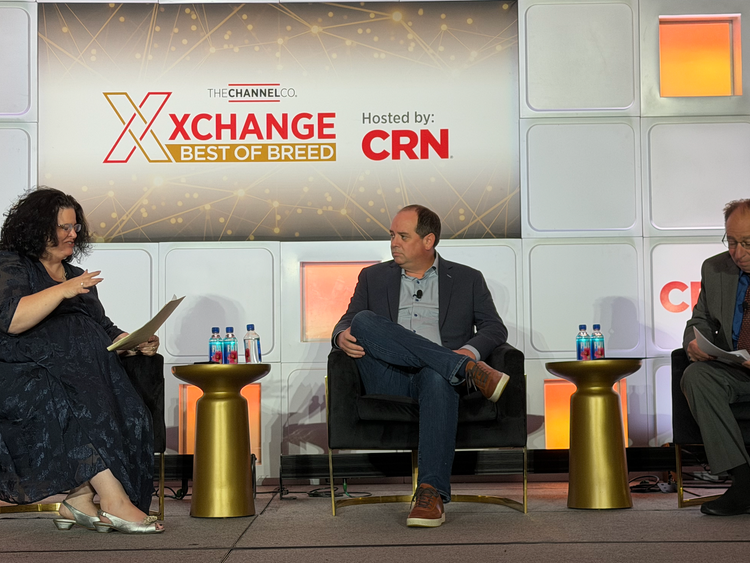
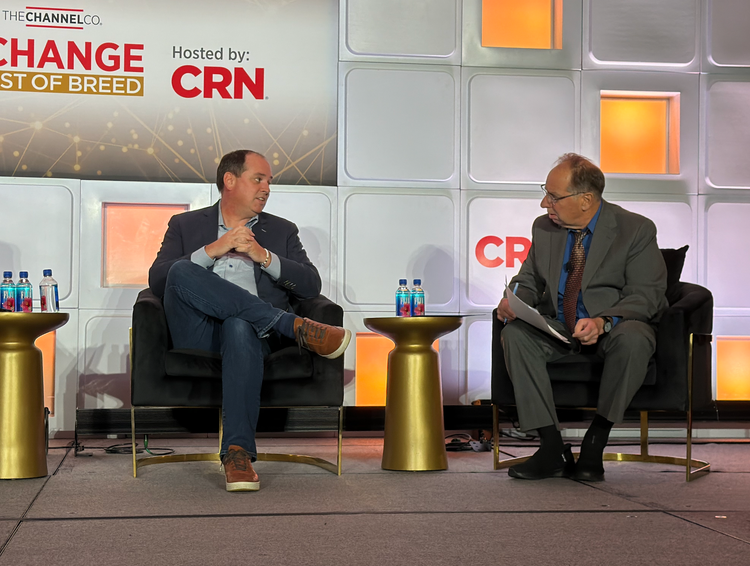
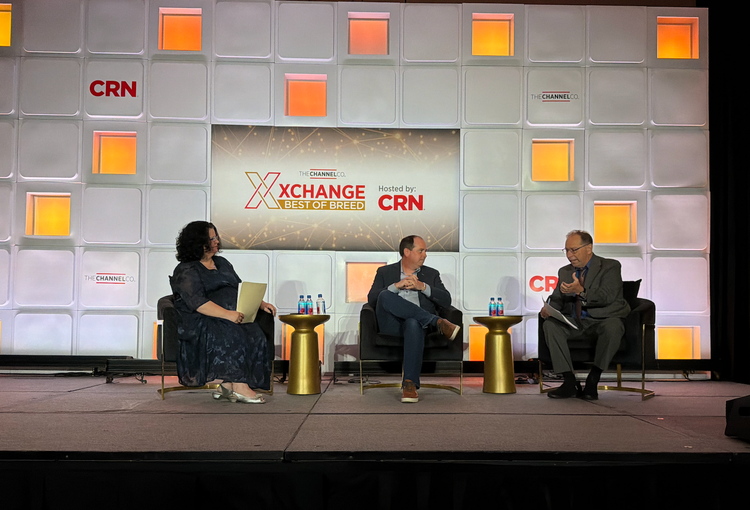
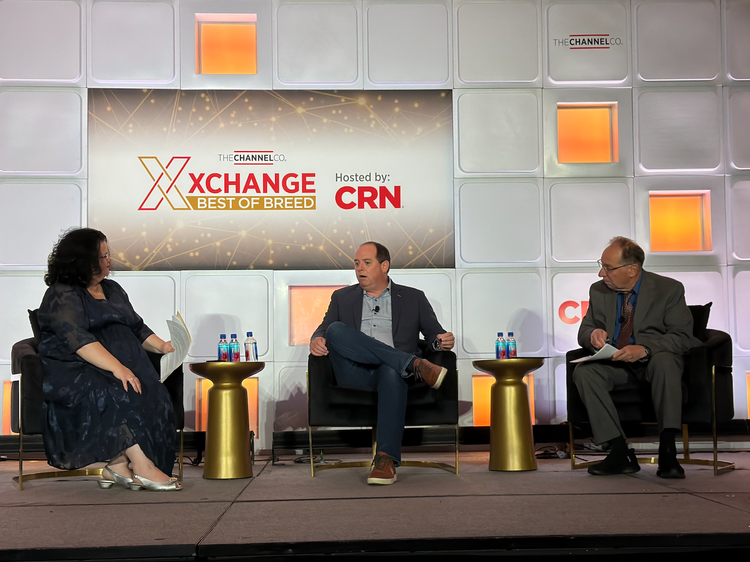
During an interview with CRN Executive Editor Jennifer Follett (pictured left) and Executive News Editor Steven Burke (pictured right) at the 2026 XChange Best of Breed Conference, Schneider said that while frontier AI developed by leading platforms is certainly enabling major advances in cybersecurity, businesses for the time being need a way to shut down agents that are found to stray beyond intended boundaries.
[Related: Arctic Wolf CEO: 75 Percent Of SOC Roles Could Become ‘Almost Entirely Agentic’]
“Clearly, right now, they don’t have it figured out,” he said during the conference, hosted by CRN parent The Channel Company in Atlanta.
“When that’s the case, you’re going to have to have some sort of a kill switch in case they kind of go off the rails,” Schneider said. “You’re going to need a kill switch until there’s provable evidence that those models can’t or won’t do things that they’re not supposed to be doing.”
For the massive AI platform vendors developing these frontier models, addressing security concerns is a fundamental part of winning customer trust, according to Schneider.
The investments in cybersecurity by players such as Anthropic and OpenAI appear to be primarily aimed at providing businesses with confidence in being able to adopt their technology, he said.
“There’s no world where, quite frankly, those businesses will be successful if companies have to look over their shoulder every time their models get deployed,” Schneider said.
“It’s in some ways—and I’ve said this to them—a little goofy that we’re living in a world where they built a product, and the product is attacking third-party companies, and we’re kind of like, ‘Hmm, that’s interesting,’” he said. “And not only [that] but they go, ‘I could do that too.’ You know, that’s not a good thing. That’s actually a bad thing.”
Ultimately, “there’s starting to be a lot more conversation around where does accountability lie there? How are they going to ensure that models are protected? Are they going to ensure that they’re not doing things they shouldn't be doing?” Schneider said.
During the wide-ranging, 45-minute interview, Schneider also discussed the limitations of AI regulation for impacting cybersecurity, Arctic Wolf’s evolving approach to agentic security operations and customer concerns about AI token costs—as well as the expanding opportunity for MSPs and MSSPs in working with the vendor.
What follows is more of CRN’s interview with Schneider.
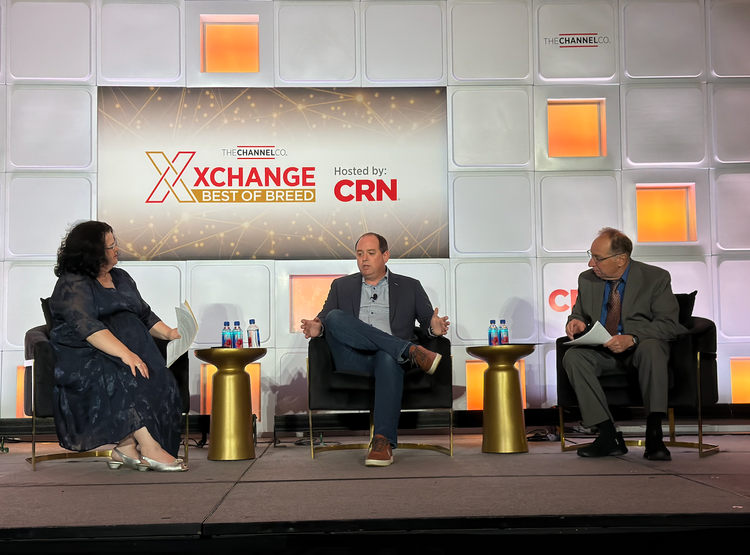
How is agentic AI changing cybersecurity economics, particularly as it impacts our audience of MSPs?
I think the challenge for the market right now is there’s just a lot of noise. There’s a lot of chaos. There’s a new industry report every day. There’s something in the news. I just saw another report today specific to Japan, speaking about an emergency situation with cybersecurity. So you can’t go a day or an hour without some new news around how you’re going to be able to respond to, in this context, the threat of AI for your overall security posture of your overall business. I think the way in which it presents itself to different types of customers, at some level, depends on their budget, sophistication and/or size of organization. But for the vast majority of organizations, they’re just trying to figure out what it means for their business, and then how to ensure that they’re protected. And I think the market spends a lot of time on speed. So clearly, in the age of AI, you’re going to have bad actors that have access to tools that they didn’t previously have access to. They’re going to leverage those tools to carry out attacks in a way that they previously weren’t able to, and in a volume that they previously weren’t able to. For most organizations, they’re just trying to figure out how to respond at that same speed or machine speed.
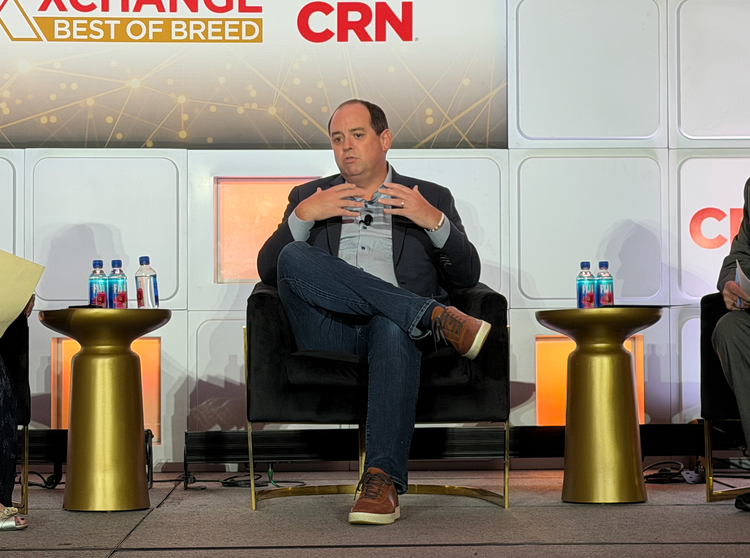
How would you compare the Arctic Wolf SOC value proposition to some of these newer companies that are coming up that are AI-native?
The biggest difference is when we set out to solve the Security Operations Center problem, what we’re talking about is the entirety of the Security Operations Center. When we deliver our agents—there’s 350-ish of them now, organized under eight different core competencies for operating a SOC. When we’re talking about security operations, we’re not talking about triage or threat hunting or threat intelligence, which are just pieces of the puzzle. Most of the agentic SOC companies in the market are tackling or focused on kind of one piece of that puzzle—whereas we know, having operated a SOC at scale for as long as we have, that you’re only as good as your weakest link. So you need to have the entirety of what it takes to operate a SOC at scale as part of your organization, not just one piece operating agentically, and the rest left to you to figure out the old way, or to cobble together with some other pieces that are operating agentically. I would say the other way that we’re a little bit different there is that even for broader solutions, a lot of them have been created more as a workbench for the customer. It’s one thing to deploy an agentic solution in your environment—but you need to continuously train, tune and refine the underlying model and the capabilities of those agents to be able to keep up with the rate of change within the market. And most organizations just aren’t set up to be able to do that on an ongoing basis. Now you need to have security operators that are experts, but also experts in the mechanisms and manners in which they’re going to train and tune the models, to be able to ensure that the agents are doing what you expect them to do. So it’s either, ‘Here’s a tool, good luck. Or I have a tool that’s more broadly applicable, but it’s really more broadly applicable to one facet of security operations.’ Whereas our approach has been, let’s make sure that we have an agentic solution for the entirety of the security operations so the customer is protected wholesale.
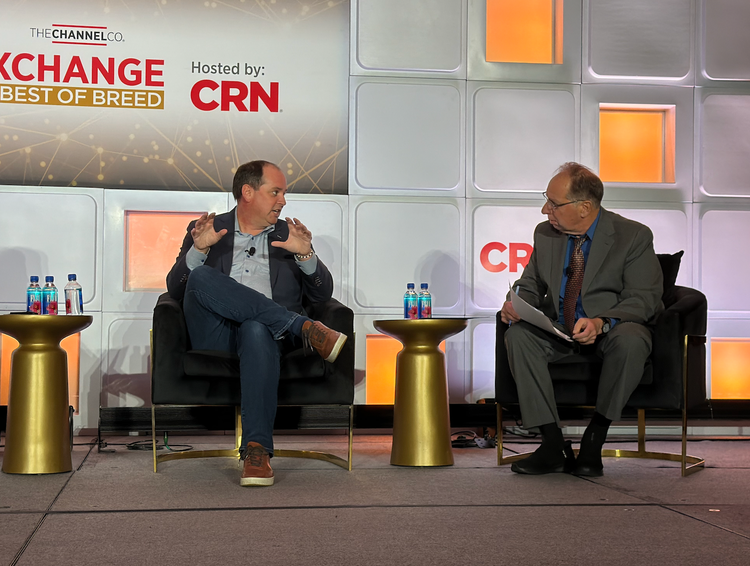
What do you make of the AI model makers themselves, like Anthropic, OpenAI and Google, dipping into the security space as well? How does that change the landscape?
I’ve talked to the leadership of every one of these organizations, in addition to the leadership of some folks that are kind of tangential to that market. I can tell you that by and large, at least internally, their primary focus is, how are we as a business going to impart trust in our models to the market? So as they’re thinking about cybersecurity, it’s less in the context of how am I going to become a cybersecurity vendor? But more, [it’s that] if my business model is being able to get more and more of the world or the ecosystem leveraging Anthropic or OpenAI or Google—or fill in the blank—how am I going to get them to trust the models [to] be used in their environment without adding a security risk? Or [without having to] ensure that they’re aligned to the tasks that they were actually assigned to do? I think that’s why you see them spending a significant amount of time, energy—both in marketing and in resources—on various cybersecurity programs. [That’s] because it’s more about making sure that they can get trust within the ecosystem and they understand what the models can and can’t do—and then what to do about them—than become a cybersecurity provider. That doesn’t mean that over time they’re not going to enter the domain at some space. But right now, I think they have a different focus.
Do you generally view it as a positive that they’re getting involved?
Yes, I mean, they have to. They have to. There’s no world where, quite frankly, those businesses will be successful if companies have to look over their shoulder every time their models get deployed. It’s in some ways—and I’ve said this to them—a little goofy that we’re living in a world where they built a product, and the product is attacking third-party companies, and we’re kind of like, ‘Hmm, that's interesting.’ And not only [that] but they go, ‘I could do that too.’ You know, that’s not a good thing. That’s actually a bad thing. So there’s starting to be a lot more conversation around where does accountability lie there? How are they going to ensure that models are protected? Are they going to ensure that they’re not doing things they shouldn’t be doing? And it’ll be interesting to watch it evolve.
Is your Aurora SOC ready to catch these rogue agent attacks?
Our agentic SOC is in production today. It’s not like a future platform, future announcement. We announced its deployment at RSA this last year. So we have it deployed against north of 11,000 customers. So every one of our customers is getting the benefit of it. We talked a little bit about speed to action or remediation, which is 15 times faster than even our SOC used to be. But against a typical customer, it’s probably 100 times faster because our SOC was very well-staffed when it was mostly human. And then, not only is it faster, but the efficacy of the outcomes is also as good, or better. So you get the benefit of this world where I come in, I’m leveraging the agentic SOC, it’s in production. As a customer, I’m seeing responses faster. They’re more accurate than they used to be. And it’s not leveraging AI just for the operational components of the SOC. There’s all the pieces that make a SOC work that are important. So, how are you leveraging AI for threat intelligence or for detection engineering or for threat hunting or for incident response? All these pieces [are what] make a security operation work. So I’ll give one example. Detection engineering used to be a very human-centric job. You had to build a detection for any new threat, and if you had a lot of humans, you could build them in a few days. If you didn’t have a lot of humans, it might take you weeks. So think about the time to exploit being negative—and then now you’ve got to build a detection. You’re trying to do it yourself, or you’re trying to leverage a third party to be able to do those things, especially things that are relevant to you. We’re able to build those now by leveraging AI in minutes. So [there’s a] new threat [and the] detection is deployed against 11,000 customers in minutes versus days. It just means that you’re protected much faster than you would otherwise be.
What’s the real-world ROI for this agentic AI agility?
It depends on who you’re measuring the ROI against. I think for the end customer, the honest answer is they didn’t have a big enough team to be able to do what they needed to be doing in the first place. So if they were going to try to build out a full security operation, for most of them it was like, ‘I can’t do this. So I need to either outsource it or I need to leverage a third party.’
I think for larger organizations, we’ve done some analysis on what you would need, at bare minimum, to be able to operate a SOC. And you can get about 75 percent of the roles to be almost entirely agentic. What you’re really leaving to the human is some level of trust and interaction. And this is different customer by customer and partner by partner—where their trust threshold is at a different level. Some customers are like, ‘I’m going to err on the side of leveraging the agents.’ And some customers are like, ‘No, how about we go this far, and the rest I still want to be human.’ So you get this kind of dial of engagement with the human SOC. And then the last piece is being able to tie then what’s happening within the SOC to real-world outcomes for the customer. So, am I more protected? How fast is it? Am I more insurable? Can I prove it to my board? Can I prove it to my customers? And all those outcomes are starting to become a lot more relevant.
Microsoft CEO Satya Nadella over the weekend called for an emergency brake control that would allow humans to shut down an AI agent, similar to an AI kill switch. What do you think of that?
This goes back to the frontier models being able to ensure and give confidence that their models have the proper guardrails. Clearly, right now, they don’t have it figured out. When that’s the case, you’re going to have to have some sort of a kill switch in case they kind of go off the rails. There used to be an old meme that was like, ‘Cut the hard lines.’ We’re in that world now. And you’re going to need a kill switch until there’s provable evidence that those models can’t or won’t do things that they’re not supposed to be doing.
Do you think we need government regulation of these agentic AI models at this point?
It depends on the lens. Do I believe that the government’s going to have to be involved at some level with the frontier models in particular? I think that they probably are going to have to be. Do I believe that that will make a difference in cybersecurity in reality? Probably not because the bad actors don’t care what we regulate, and there’s open-source models that are more than adequate that they can get their hands on—that are not U.S.-based companies, are not based in areas of the world that look favorably upon the U.S. or other countries—that will allow those tools to be in the wild. And they’re already in the wild. [Regulation] will be effective at some level. But in the context of cybersecurity in particular, I think we have to assume that the cat’s already out of the bag.
Can you talk about what you see as the biggest opportunity for growth and profitability for your partners in 2027, and what you want to see them doing to position themselves to capture that opportunity?
The whole conversation that we’ve just had here is without question the No. 1 or No. 2 topic of conversation, I think, in almost every boardroom. And I think the opportunity there then is enormous to help customers solve the problem that they’re trying to solve—which I think for most is just how they’re going to respond to the overall threat. There’s other tangential markets that I think are equally important. But the main topic of conversation is how am I going to keep up with this? If I were operating a channel partner, No. 1, I’d want to make sure that I have a really strong agentic security operations partner. I’d want to make sure that that partner can do things in a broad manner for the customer—so you’re not trying to piece together a bunch of different tools to make work for a customer that’s already concerned about the complexity. And then find a way to leverage, in particular, services or complementary products to the core security operations platform or agentic platform that you work with because those are the pieces that round out the story. There’s not a vendor in the space that has an answer to every single problem. So the core problem is how am I going to operate at the speed of AI? Then, what tools am I going to use that are required to operate on top of that platform? And then how can I leverage, in particular, services capabilities or advisory capabilities to be able to help customers weed through all the noise in the industry? And I think that has tremendous opportunity for product drag. I think it has tremendous opportunity for services drag. But the foundation of that whole thing is how you’re going to operate this thing in a business. So for us, for example, we have the product or platform that we can sell or resell, and that’s one way to engage. And then we have a managed service version of the platform, which allows the partner to actually be involved in the service delivery.
What are some of the investments then that you think you’ll be making in 2027 to help the partner community go out and grab those opportunities?
No. 1, we will do more on protecting AI as an attack surface, and we will do that relatively soon. That will give an additional attack surface that will have native product capabilities on top of our agentic SOC. We will also have some pretty unique offerings in the way in which either a partner, customer or some hybrid version of that relationship will be able to have access to and leverage the agentic SOC in a more customer-facing way. Think about that as one of the challenges customers have like, ‘Wow, you have 300 agents doing different roles within a SOC. How do I know what they did?’ So we have a product now, which is getting released in the next month or two, which makes all of that observable. It shows what each agent did, why they made a decision that they made, where a human had to be injected into the loop—and we will have a mechanism for the partner to inject themselves in that, as well. That will be very exciting. And then, we’re spending a good amount of time rethinking the way that people would operate within a SOC. So in a world where a security operation was 10 people or 100 people or, in our case, over 1,000 people, you need layers of management and orchestration, and people need to be able to do performance reviews. All the things that you would do to manage a team, you can now do a lot of that by leveraging technology—which means that you want to interact with that team or that technology in a different way. And I think we have a pretty unique way coming that will allow customers to interact with the agentic SOC where they work. So think about it in either tools like Slack or Teams, or even in an interface that kind of looks and feels like ChatGPT or a Claude interface—where they can carry out security operations tasks in a way that feels more natural in today’s world.
Can you just talk a bit about that and how the role of the MSP and the MSSP has really shifted over as this new AI era has gone?
We obviously have the platform and then the products that we sell on top of the platform as modules. Those can all be sold in a resale capacity. The MSP models are more about bringing the partner into the engagement model in a more meaningful way. So in the MSP model, the interface of the customer is the managed service provider. And in that world, there’s really two key elements. No. 1, you have to have the platform and the interaction and engagement with the platform set up in the way that the MSP works. It’s got to be multitenant. It’s got to integrate with their ticketing systems. You have to be able to work in the manner in which the MSPs are doing their jobs. We’ve made substantial investments over the last 12 months in that area in particular. And we will make substantial investments over the next 12 months in that area as well. The second component with MSP engagement is the business model. How do you price and package your solutions in a way that works for the way in which MSPs, in particular, price and package their solutions then to the end customer? We just launched an MSP Connect product or solution that kind of contemplates both the product and the business model aspects of how to operate as an MSP. And then our MSP Plus engagement is more of a hybrid engagement. I gave a little bit of a teaser for this world where a customer can better understand what’s happening with the agents, and where a human may or may not be able to be in the loop. You could think of that as the human’s core responsibility there being critical decisions, and those critical decisions may be at a different level for each customer. But think about a world where a customer could denote where they want a human involved—and then that human could be Arctic Wolf, or it could be the partner. That’s what we would call more of a hybrid engagement model. There’s a lot of product work that has to get done to make that possible because the customer needs to be able to see who’s on first and who’s doing what in real time. And then we have to finalize the pricing and packaging for it. But think of it as more of the security operations for the agentic product offering that Arctic Wolf has had, but brought to the partner as a product, which will be very differentiated in the market.
I do think that the demand has lagged a little bit for some of what you talked about—budgeting, what should I really put the budget against. I do think that the conversation is changing pretty dramatically for most customers, from like, ‘Let’s talk about cybersecurity,’ to, ‘This is a business risk we have to solve for.’ And that I think is changing the aperture with which people are looking at cybersecurity within their companies.
I think part of the problem with AI is when you talk about leveraging AI for security, folks are really nervous about what that means for a budget. Like, how do I budget for that? If I’m going to deploy an agent into my organization to carry out cybersecurity tasks, how much is that going to cost? Because they’re hearing the horror stories about Uber spending a gazillion dollars in a quarter, and they’re applying that into cybersecurity.
So we’ve tried to take that cost on for our customers by embedding it into the platform itself so that there’s not some amorphous budget that they have to work with. It’s a lot of work and effort on our end to control it. But I do think that will be a topic of conversation for folks. It’s not just how do I budget—but what am I budgeting for if I have to use AI tools that are token-based?
You’re on the board of Helen’s Pink Sky Foundation. I know that’s a cause you’re very passionate about. Hoping you could tell us a little bit about it and why you’re so involved in it.
The short version on this—my niece has a disease called Batten’s disease, which is an ultra-rare disease. We’ve created this foundation called Helen’s Pink Sky Foundation. We’ve been super fortunate in raising a lot of money, and we’ve gotten some really good progress. She was just treated a week or two ago, the first human ever to go through a certain procedure with the University of Minnesota. We went from idea to treatment in 14 months, which is unheard of in rare diseases. And then we’re working with another company called Latus Bio, which is doing both novel work on Huntington’s disease, but also on CLN2 disease. … You find out, in ways you don’t want to, that there’s a lot of rare diseases and there’s no money because it’s hard to monetize it. So the only way to make something happen in that space is for more people to hear about it, find a way to raise money, and do something about it.