Halo Launches AI Studio, MCP Push To Help MSPs Automate Service Delivery
‘You can basically create AI agents, and you can create as many as you wish for projects, for service, for sales, for CSM, for reporting, for QBRs. You can decide what model it uses, you can give it prompts and instructions and you can deploy that within the UI,’ says Halo executive Tim Barton-Wines about the vendor’s new Halo AI Studio.
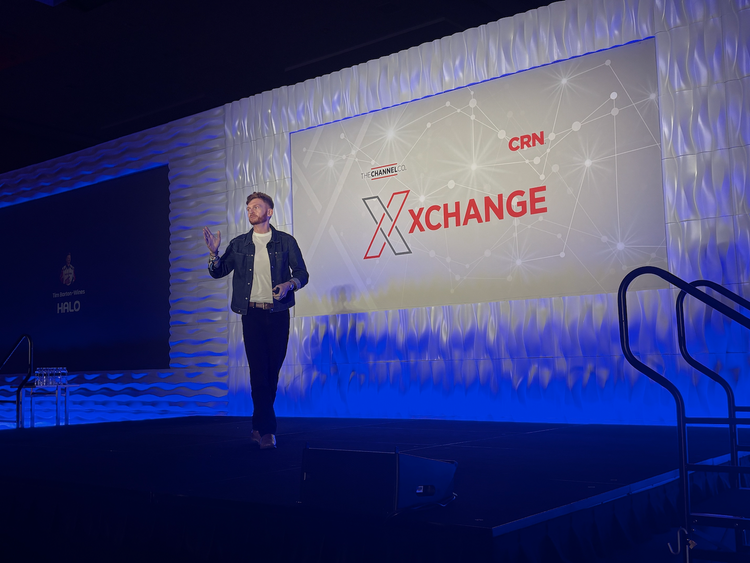
Halo unveiled a host of new offerings to help MSPs automate more of their operations, expand into larger accounts and reduce the cost of running their service management platforms.
Speaking at CRN parent company The Channel Company’s XChange August conference in Washington D.C. this week, Halo executive Tim Barton-Wines said the UK-based PSA vendor is also reducing pricing.
Existing partners, he said, saw prices fall at the beginning of 2026, with promises of further reductions when Halo reaches certain growth milestones.
The biggest product announcement was Halo’s new AI Studio. Released only weeks ago, the capability allows partners to create, configure and deploy AI agents directly through Halo’s user interface. Barton-Wines said MSPs can use the agents for everything from service desk triage and sales to customer success, reporting and quarterly business reviews.
[Related: HaloPSA Expands Managed IT Services Platform With AI-Driven Service Ticket Triage]
“You can basically create AI agents, and you can create as many as you wish for projects, for service, for sales, for CSM, for reporting, for QBRs,” he said. “You can decide what model it uses, you can give it prompts and instructions and you can deploy that within the UI.”
Halo is also pushing deeper automation through AI-driven ticket classification and dispatch and positioning domain separation as a way for MSPs to move further upmarket and create new recurring-revenue opportunities. The capability allows MSPs to give customers separate Halo environments while maintaining connectivity between them through two-way API ticketing.
For the Automated AI Triage, it can analyze incoming tickets, compare them with historical incidents and determine categories and urgency.
“The idea is to fix it before they feel it,” he said. “You should have an analytics engine that understands previous work to predict future work.”
That predictive model, he said, could allow MSPs to anticipate demand and automate routine requests.
Additionally, the vendor launched its own Model Context Protocol, or MCP, allowing MSPs to use Halo as a central interface across tools.
“The world is going for service delivery where you’re going to be under a single UI on your service desk,” he said. “Your techs haven’t got to leave that screen, and they’ll be able to essentially bring up, execute, fix issues across an orchestration layer across all of your toolsets.”
For Halo partner John Douglass, the vendor’s AI and MCP push is already moving beyond the roadmap and into day-to-day MSP operations.
“Everything that Halo is doing is just helping us tremendously,” Douglass, president and CEO of Wichita, Kans.-based Pileus Technologies, told CRN. “As we’re going through and setting up MCP servers, I just thought, ‘What can we do with Halo?’”
That question has turned into hands-on experimentation inside Pileus’ Halo environment, where Douglass said the MSP is tailoring and automating workflows around its own processes.
“There’s just so many things that we’re tweaking in our instance,” he said. “I mean, it’s helping tremendously.”