One MSP CEO Says Community, Accountability Are Key To Success
‘I think a lot of us tend to go into this and think of it as kind of a lone venture. Whether that is something where you think you know what it takes to run that business, or you’re running your business and you just don’t really have anyone to talk to, you can get caught up in thinking you have to figure everything out yourself,’ says Paco Lebron, CEO of ProdigyTeks.
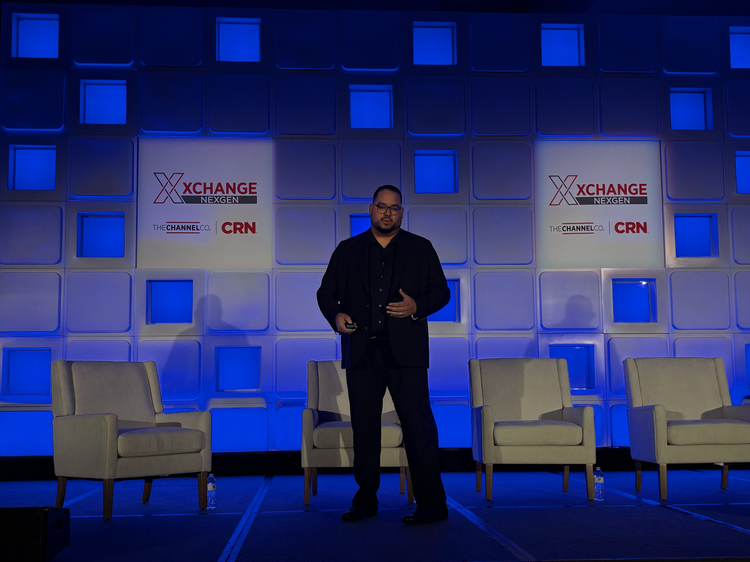
Paco Lebron’s journey from running an MSP part-time to leading MSP Owners Group has taught him that building a successful business requires more than technical expertise. It takes accountability, the willingness to learn from mistakes and a community of people who understand all those challenges.
Lebron, CEO of Oakbrook Terrance, Ill.-based ProdigyTeks and now CEO of MSP Owners Group, spoke at CRN parent company The Channel Company’s XChange NexGen event in Orlando, Fla., this week about his 13-year entrepreneurial journey, including the struggles of leaving corporate America, finding his first clients, building a profitable business and eventually exiting his MSP while remaining involved in its future.
Success, he stressed, was never something he achieved on his own. The relationships he built with fellow MSP owners, mentors and business partners helped him work through tough decisions.
[Related: How One MSP Founder Is Breaking The Mold, Harnesses DEI And Started His Business Out Of Spite]
“I think a lot of us tend to go into this and think of it as kind of a lone venture,” he said. “Whether that is something where you think you know what it takes to run that business, or you’re running your business and you just don’t really have anyone to talk to, you can get caught up in thinking you have to figure everything out yourself.
“What I found through community was a group of like-minded individuals who really understood what we do,” he added. “They gave me conversations I never knew I needed to have, new tools and different perspectives on how to run a business. It allowed me to see that this was something I could do and that building a business was well worth pursuing.”
Finding The Courage To Take The Leap
Lebron (pictured) initially launched ProdigyTeks while working as a database manager and holding another job with a national break-fix provider. Frustrated with the way the company delivered IT support, he believed he could do better on his own.
In the early days, he turned to Google for client intake forms and documentation templates. That search led him to a podcast network where smaller MSPs shared their experiences and discussed the realities of running their businesses, giving him a community and a place to learn from people facing similar challenges. But moving from a part-time operation to a full-time business required accountability, he learned.
After getting a new job and deciding he would pay down his debt before leaving corporate America, Lebron became comfortable. Three years passed, and he still had not made the move. Eventually, layoffs forced the decision for him.
The following 18 months were a struggle. Even after landing his first managed services client, he found himself questioning whether he could make the business work.
One particularly difficult job became a turning point. Lebron had expected to spend about 15 minutes connecting a client’s internet equipment. Instead, he arrived at a construction site and discovered a much bigger project. After hours of work, he slipped while trying to locate a cable and cut his hand on construction equipment.
But the injury was not what shook him. That Friday, while finishing the job, he forgot to pick up his eight-year-old daughter from school.
“For any parents in the room who do this for their family, understand what that pain and that notion does to you,” he said. “That was the moment that I said, ‘This is done.’ I had been struggling for 18 months, clawing and climbing to get to the next month, trying to figure out how to stabilize this business. It messed with me so much that I said, ‘This is it.’ I had to step back and really ask myself what I was doing and whether I could make this work without losing sight of the people I was doing it for.”
That pause helped him realize he needed to change how he was running his business. He made three major adjustments: outsourcing work he disliked, switching from complicated annual software renewals and retainer arrangements to monthly billing, and partnering with a larger MSP that could pass along qualified leads.
Building A Business Around Profitability
Lebron experimented with different staffing models, including building a help desk in Latin America, hiring administrative and technical employees and using local subcontractors.
“The question was, what’s the quickest road to profitability? What is going to allow me to scale in the way and in the time frame that I want to?’” he said. “Through a lot of bad partnerships, I was able to find good partnerships with teams and people who cared about what I did. That allowed us to structure our per-user pricing, understand our margins and figure out which tools could be managed by those teams. We could build an operating system for the MSP and focus on the things that really mattered, like quality business reviews, business outcomes and understanding what our customers needed.”
He also emphasized the importance of mentorship. Juan Fernandez, a longtime industry veteran who had built and sold MSPs, became an important influence on Lebron. Fernandez’s experience growing an MSP from $4 million in revenue to $20 million in five years before exiting helped Lebron think about the next stage of his own career.
Lebron eventually exited ProdigyTeks while remaining involved with the business, moving into his current role as CEO at MSP Owners Group, the MSP that acquired ProdigyTeks.
Turning Hard Lessons Into Community
Lebron’s experiences also inspired MSP Unplugged, a community and podcast initiative that gives smaller MSPs a place to share their stories honestly. When he was starting out, he couldn’t find peers who understood the challenges of running a small IT services business, so he created a space for it.
“Sometimes you have to make choices about whether you’re going to handle your living expenses or hide the vehicle from being repossessed because that’s the vehicle you use every day to service your clients,” he said. “These are things people tend to be ashamed of, and they never tell you about them.
“But every loss, every situation that feels like it’s going to be a disaster can become a learning opportunity,” he added. “By sharing those experiences, you can help somebody else understand that it’s OK, that they’re not the only ones going through it and that they can move forward.”
Marcial Velez, CEO at New York-based Xperteks Computer Consultancy, said Lebron’s message resonated with him because his struggles are familiar to entrepreneurs across the industry.
“One of my biggest takeaways was the inspiration about how to get up when you fall down,” Velez told CRN. “Especially when he was talking about how he slipped and fell, cut his hand and really forgot about his daughter, that kind of touched me. It’s getting up, moving forward and having that tenacity, that real drive to push you forward even though things just aren’t going your way.”
He added that Lebron’s story was relatable because MSP owners often experience those struggles firsthand, even when they are not discussed publicly.
“I live that,” he said. “It’s something where everyone has their own story and their own struggles with it, so I can completely relate to what he was talking about.”