These Are The Biggest Sales Hurdles To AI Adoption In 2026: Solution Provider Execs
Executives from eight solution providers speak with CRN about the biggest sales objections and hurdles to AI adoption they are hearing about from customers.

AI Adoption Hurdles
While discussions of AI growth opportunities abound in the IT channel, the challenges for adoption of AI-powered applications and agents remain a major issue for many solution providers and MSPs.
This week, CRN editors spoke with eight solution provider executives at the 2026 XChange Best of Breed conference in Atlanta about the biggest sales objections and hurdles to AI adoption they are hearing about from customers.
[Related: What’s Next For AI, Security And The Channel: 10 Expert Takes]
Editors asked each solution provider executive the same question during the conference, hosted by CRN parent The Channel Company: “What are you seeing as the biggest sales objections and hurdles to AI adoption as you talk to your customers?”
The reality is that “adoption is now a much harder job than just showing how cool it is,” said Harold Mann, president of Mann Consulting in San Francisco. “I think that the adoption of the technology is actually not the problem or the challenge. It’s [the question of], what do you do with the people who are about to be impacted by it?”
Other major obstacles include the prevalence of disconnects between IT and business leaders—as well as AI security and governance challenges, executives said.
“Right now, the solution [we are bringing is] AI readiness, not AI,” said Carlos Maldonado, founder and CTO of Atlanta-based Proda Technology.
What follows are insight from eight solution provider executives on the biggest sales objections and hurdles to AI adoption in 2026.
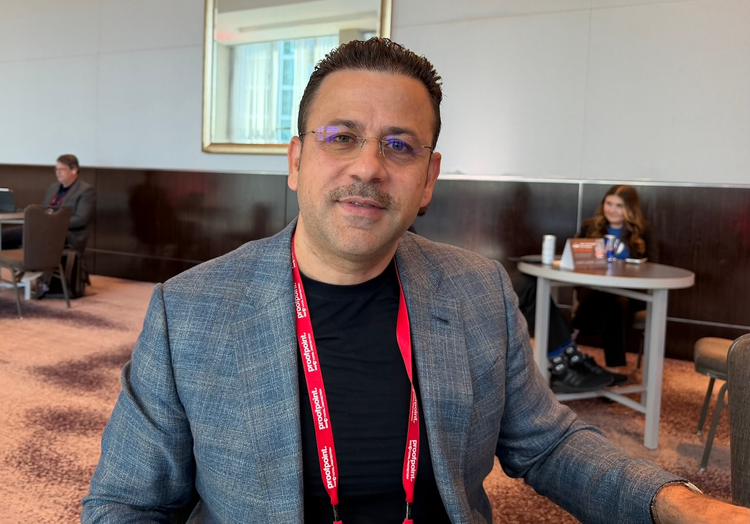
Ahmed Mahmood
CEO
Ocean Solutions
If you try just to sell AI for the sake of AI, people would want to push back. If I’m a midlevel worker and I’m doing a task manually—if I am the decision-maker [about whether] to switch it with AI, I will push back because I’m scared of it. The pressure has to come from the top. Leadership needs to say, ‘It’s taking too much for us to do this expense management or this billing reconciliation, or that time to production’—and then start to get some numbers. What does it do to your business? What’s the cost of it? How is that affecting your profits? How is that affecting your relationship with your customers? If we go bottom up—if we start from the [individual] person doing the work—then you get their resistance and their lack of clarity. And if you don’t monetize it with a dollar amount over time—and then relate it back to [the amount of] the one-time and recurring investment, it is a foggy decision. Every business owner, every single day, has to make a lot of big decisions. This wouldn’t be one of them. They’re just not going to deal with it. There’s not enough clarity for them.
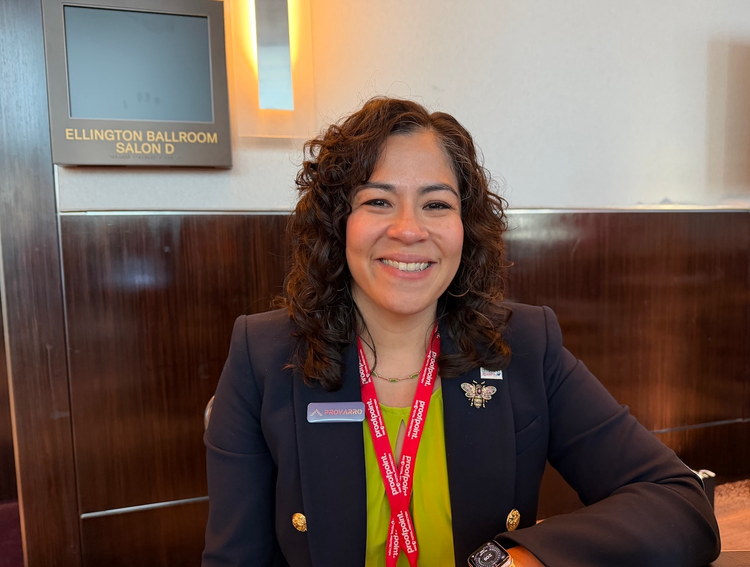
Marissa Maldonado
CEO
Proda Technology
We have the people that are adopters. And then we have people who are not adopters. We have specialties within health care, more [on the side of] the private practices. The private practices are a lot more hesitant. And I think that’s where the greatest opportunity/risk is. They’re more hesitant—but everyone that’s working in the organization is using AI. So we’ve had really, really strong traction around overshare reports, around governance. Governance in AI, to us, is [akin to the] security risk assessment of yesterday. That’s the new conversation right now.

Harold Mann
President
Mann Consulting
My thesis is that the No. 1 job for any information worker these days is to keep their job. And that is in direct conflict with what AI purports to offer. So when we talk with customers, there’s the people who get it—and then the people who clearly are threatened by it. AI does exist to remove inefficiency. As MSPs, if we’re going to implement this, we’re kind of [responsible for] change management more than technology. Adoption is now a much harder job than just showing how cool it is. You have to find and suss out the detractors. I think that the adoption of the technology is actually not the problem or the challenge. It’s [the question of], what do you do with the people who are about to be impacted by it? Do you work with them or do you work around them?

Carlos Maldonado
Founder, CTO
Proda Technology
Since we’re in [pediatric health care] so much, most of those clients are very hesitant in introducing AI—anything patient-facing—which makes a lot of sense. But we have to also show them that you can use it in operations. They almost don’t even know that until you explain it to them. The other struggle we’ve been finding is we go into clients who want to introduce AI and they don’t have their processes documented anywhere. So we need proper governance. We need proper documentation on your workflows so we can figure out where we could fit automation and AI in there. Right now, the solution [we are bringing is] AI readiness, not AI. You need your processes documented. Otherwise, it’s going to cost you a lot more by the time we get to build the AI. That’s been a little of a struggle because of businesses that never did it in the past. Now all of a sudden on the tech side we’re telling them to do those.
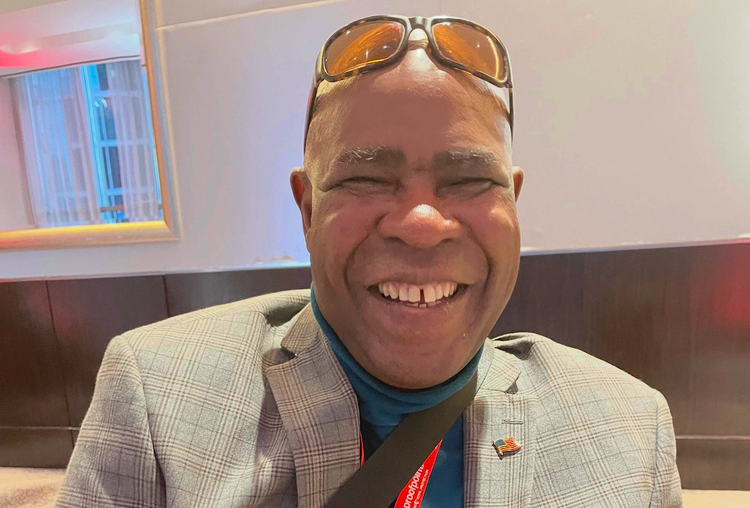
Leonard Ozoemena
Senior Partner
Compass Solutions
I would have to say the biggest impediment to AI adoption is the current fear of what AI would do to employment and the displacement of people. And with the gap between where AI is today and where people are—and I think there’s a huge gap—most people feel very intimidated because they don’t really understand, nor do they have the skills to narrow that gap. Now, having said that, I might also add that increasingly there’s an objection to some of the ingredients that AI needs, such as water supply and energy. In most localities now, people are thinking that it’s going to increase the cost of energy and reduce the water supply in their areas. It’s increasingly becoming a political issue at a time when the government is really interested in competing with China and making sure that we don’t fall behind.
The way I answer customers' questions about that is that I try to assure them that technological revolutions come and go, and I give them instances of when the internet just came out and a lot of people were apprehensive about it. But the productivity and efficiency that came as a consequence of the internet was something they welcomed. I also believe that there will be significant productivity as a consequence of AI to the point where people will see that AI can, in fact, improve their lives by offering employment and other benefits that might overcome some of the challenges they currently face. I do believe that the speed of AI’s evolution and development will very soon begin to show returns that they will come to appreciate. It’s certainly faster than the returns from the internet.
And the other thing, lastly, is, it’s one thing to have AI, but you almost always have to have human beings to look at what AI is doing because AI, in itself, even though you know it has all this data and can process it, the fact of the matter is that AI also still requires a very significant level of human supervision. You see a lot of people in, for instance, the legal industry and other places where they use AI but then find it could make errors. There are a lot of areas where we don’t tolerate errors, so human beings have to be involved. And so I think that when people understand that, then all is not lost.

Michael Tanenhaus
Principal
Mavenspire
It kind of depends on who you talk to. If you’re talking to IT, they're terrified of two things: How do I make sure I can secure this in a way that I’m not going to get blamed if something bad happens, and two is who’s going to maintain this because I’m not going to code it. I’m going to enable my internal customer to use the technology, and then the people closer to the lines of business are going to start implementing it. And are they going to tell us what they do? Like they’re just terrified they won’t be in the loop but somehow still be responsible for it all.
But then when you talk to the line-of-business people, there is the traditional struggle going on of what can make me more productive, what can vastly change my business, and what’s the stuff in the middle that has something to do with the applications that I already use today. Nobody wants to sit it out. If your vendor comes along and says, ‘I have released the newest, coolest thing,’ what, you want to sit on the sidelines and not use it? ...
And when you're asking the people on the street, they just want to do more, right? They see what’s happening. I can’t go anywhere now without sitting down with somebody and showing my coolest new thing that I do with AI, and them going, ‘Oh my God, I have to have it.’ I mean that’s what it is. But IT is like, ‘Oh my God, how am I going to manage all that?’

Patrick Shelley
CTO
PKA Technologies
It’s really budget. Well, a combination of two things. I’d say budget and then just understanding where to go with it. From the conversations I’ve been having with people, IT isn’t talking to the business side of things, and they don’t understand how IT can help solve some of the business problems. So, for example, HR might have some processes or things that could be helped by AI, but IT doesn’t know that. So what I try to do with the relationships I have is tell the IT leaders to start having those conversations, to start having meetings to understand where they can solve a business need and focus on that.
The other biggest thing is people are trying to boil the ocean instead of just focusing on one thing. One thing, move it out, and move on. Then you can start expanding things. So a narrow focus. Find something that you know is a business driver. Change things and start having those conversations with the line-of-business people and become more tightly aligned.
And then the budget part. People start looking at what it is for hardware or tokens or the cloud. It’s like, ‘Well, I’m going to make this pretty big investment, and unless you’re a giant company that can afford to throw $20 million at it, that’s not practical for a lot of small and medium-sized businesses. So again, just finding a use case that can prove it out, and then building from there. And there’s got to be ROI there. That’s the biggest piece to me.

Mark Galyardt
CEO
XX Companies LLC
The biggest issue is the lack of a definition around AI. Not having the capability and the value clearly defined. Too many people are just throwing AI around as a buzzword or saying you need it for your business. You can do probably 1,000 different things. But what do you need it to do? But it really is a game-changer in efficiency when it is properly positioned.
To overcome the objections, you find out what’s the problem you’re trying to solve. It kind of goes back to selling technology. What is it you need solved? How would you like to be a leader? What are your limitations? Is there a time restriction to delivery? Are there budget restrictions? Then you take the parameters you’re given and say, ‘OK, well, so we can do it this way. And here's what your results should be. You can do a few other things. We can maybe deliver faster with some additional capabilities that you need.’
It’s hard to know exactly what it is that they need solved. They may have heard their own buzzwords saying that it’s going to solve everything. So you have to figure out what it is they’re looking at from AI before they’re looking at why they need it. Understand their problem and the root cause. The root cause will usually lead you to a better answer if you can define it.