Softcat CEO: ‘We Screened About 100 Targets’ Before Landing $1.05B GDT Deal
Softcat CEO Graham Charlton discusses Softcat’s latest acquisition, how it took a five-year U.S. search and where the company could look next.
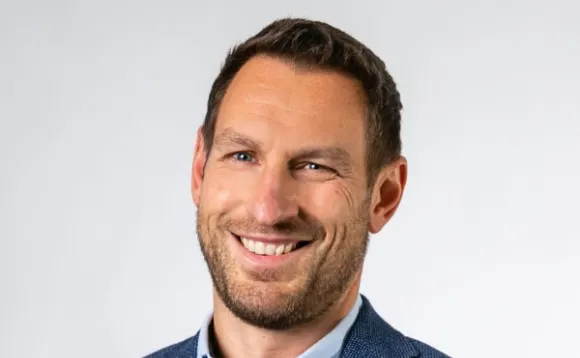
Softcat screened around 100 potential acquisition targets over five or six years before settling on GDT as the platform for its long-planned expansion into the U.S.
The company acquired U.S.-based GDT in a $1.05 billion (£785 million) enterprise-value deal to expand its presence in North America and India.
CEO Graham Charlton (pictured) told CRN U.K. that GDT was the only company Softcat encountered during its multiyear search that combined the culture, capabilities and scale required to meet the VAR's M&A criteria.
"It was the right fit because it was the only thing that we've seen in five or six years of looking that had that combination of capability and culture," he said.
"The capability, the scale, the culture, the combination of factors that we were looking for was overwhelmingly compelling, and we hadn't seen that mix in any of the probably 100 targets we'd screened over five or six years."
The deal comes barely a year after Softcat acquired data specialist Oakland, its first acquisition in roughly three decades.
Despite the sudden acceleration in dealmaking, Charlton said the VAR's stance on M&A has not fundamentally changed.
The company's strategy has centered on two potential avenues: capability bolt-on acquisitions, as demonstrated by Oakland, and geographic expansion to better support customers internationally.
"The U.S. was always the focus for that," Charlton said.
"What changed was we found a target that cleared a very high bar that we'd always set around culture, capability, ambition, potential and having an important set of capabilities in the right space that we could build out and broaden from.
"Our stance on M&A hasn't changed. Finding the right target is what's triggered this."
Softcat ranks No. 1 on CRN U.K.'s Top VARs list.
Why GDT Stood Out
GDT brings roughly 850 employees into the group, with about 600 based in the U.S. and another 250 operating from an integrated service center in Bangalore, India.
The company also has just under 700 customers.
Charlton said GDT has significant scale in the eastern U.S. while retaining the ability to operate coast to coast.
But its India operation emerged as another major attraction during Softcat's search.
"The technology talent market in Bangalore is really exciting," he said.
"What they've built over five years, an integrated service center in Bangalore that works with the U.S. teams to deliver services to customers, is something we can now invest in and use as a more global platform."
Charlton said the operation proved so compelling that Softcat realized it would eventually have needed to build something similar even without the GDT acquisition.
"Once we'd seen it, we realized that even if we didn't do this deal, Softcat, to reach its potential, would have to create something like that eventually anyway."
Softcat was also already familiar with the company before entering the acquisition process.
Charlton said he first met GDT CEO Shawn O'Grady about four years ago and that Softcat worked closely with the company during the six or seven months leading up to the deal.
GDT To Retain Autonomy
Despite the scale of the acquisition, Softcat does not intend to fully integrate GDT into its existing operating structure.
Instead, Charlton said the two businesses will gradually establish what he described as a "federated operating model."
"It will retain a lot of autonomy," the CEO said.
"We will create over time what we're calling a federated operating model, which will mean both Softcat and GDT remain locally led while being able to leverage global shared services where it creates value."
The model will allow the companies' sales teams to remain locally led while supporting each other's customers across different markets.
Softcat has already built international fulfillment capabilities, including offices in Hong Kong, Singapore and the Philippines, while GDT gives it a substantially larger team on the ground in the U.S. and a new operation in India.
"Joining up the sales functions so they can support each other with customers in different jurisdictions will be a really important part of it too," Charlton said.
But the CEO drew a clear line around how far the integration will go.
"What we won't ever do is fully integrate the two businesses," he said.
GDT's leadership, management and operating structures will remain in place, with additional layers of collaboration created across the group.
"The combined entity is able to operate as a unit when it makes sense."
Oakland Provides Integration Blueprint
Softcat will draw on its experience with Oakland as it brings GDT into the group.
Charlton said the model used for the data specialist closely aligns with what Softcat plans to do with its latest acquisition.
"We were buying into their leadership team and broader business structure as well as the value they could add to Softcat," he said.
"The way Oakland has been integrated into Softcat, the GDT collaboration will follow a very similar approach, and that's worked very well for us over the past two years."
Oakland, which Softcat purchased in April last year, has reportedly retained its identity while Softcat has increasingly connected its operations with the broader group and directed customer opportunities toward the business.
What Could Softcat Buy Next?
GDT may have completed a major piece of Softcat's geographic expansion strategy, but Charlton left the door open to further M&A.
The company's two acquisition priorities remain unchanged: geographic expansion and capability bolt-ons.
GDT provides Softcat with a significant base from which to grow in the U.S., shifting the emphasis toward capabilities when evaluating future targets.
"We've now got a big base to build around in the U.S., and so the much more likely way we would find a compelling opportunity is around capability bolt-ons," Charlton said.
Softcat intends to broaden GDT's offerings primarily through organic investment but could turn to M&A if it identifies an opportunity to accelerate that process.
"We do want to broaden the offering of GDT over time," he said.
"We'll primarily approach that organically, but if we see a need and an opportunity to do that faster through M&A, then we've got the firepower to act as well."
This article originally appeared on CRN’s sister site CRN UK.