IBM Q3 2025 Earnings Preview: 5 Things To Know
Possible software growth reacceleration, the state of the consulting market and an update on the z17 mainframe refresh cycle are some of the potential topics.
IBM’s quarterly earnings report Wednesday will have analysts watching for a possible software growth reacceleration, the state of the consulting market and an update on the z17 mainframe refresh cycle as some of the major discussion topics.
The Armonk, N.Y.-based vendor will cover its performance for the third quarter of its 2025 fiscal year, which ended the three months ended Sept. 30.
IBM should report a solid quarter thanks to AI demand and expanded partnerships across the portfolio, Wedbush said in a report Sunday. The investment firm called IBM a primary beneficiary of global investments across organic and inorganic verticals with a scalable, open foundation allowing rapid innovation in hybrid cloud and AI.
[RELATED: Salesforce’s Dreamforce 2025: Channel Takeaways Involving Agentic AI, SaaS]
IBM Q3 2025
Wall Street is looking for about $16 billion in revenue, about 6 percent growth year on year ignoring foreign exchange. Wedbush found the numbers attainable given IBM’s previously disclosed $7.5 billion generative AI book of business.
The vendor will likely hold to its previous calendar year 2025 free cash flow forecast of more than $13.5 billion and report third fiscal quarter free cash flow of around $2.3 billion, which would reassure investors, according to a Morgan Stanley report this month. The investment firm expects IBM to forecast $19.1 billion in revenue next quarter, which would mean 9.8 percent growth year on year in software, 0.1 percent growth in consulting and 7.5 percent growth in infrastructure. That revenue number is just below Wall Street expectations.
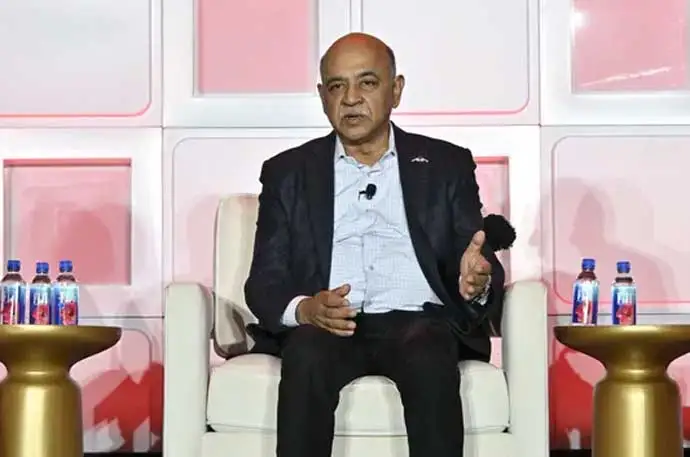
IBM Chairman and CEO Arvind Krishna (pictured) recently told a group of solution providers gathered at the 2025 XChange Best of Breed Conference hosted by CRN parent The Channel Company that he wouldn’t consider the AI market in a bubble at the moment given the amount of value AI holds for the world in the long run and given the limited impact to the vast market if a correction occurs.
“Is there a lot of frothy, money-raising things? Yes,” he said. “Will all these investments pay off? Don’t know. … This reminds me so much of the fiber days in circa 2000. All that fiber is useful today.”
Krishna also said that he sees GDP staying at around 3 percent growth.
Here’s more of what to expect when IBM reports results for its third fiscal quarter Wednesday.
AI, Software Product Innovation
IBM executives will likely want to talk about innovation and, potentially, growing business in its software portfolio—with at least one investment firm calling software growth the most important metric going into the vendor’s quarterly results.
The vendor should report that its software business is reaccelerating organic growth year on year, Morgan Stanley said in a report this month. IBM should tell analysts Wednesday that it forecasts 9.8 percent growth year on year ignoring foreign exchange, an acceleration of about 2 points from the prior quarter and after two straight underperforming quarters. Wall Street as a whole is predicting growth closer to 8.6 percent year on year.
Hybrid cloud and Red Hat should grow 14.5 percent year on year, according to Morgan Stanley. Automation should grow 17.3 percent year on year thanks in part to $190 million from the recent acquisition of HashiCorp.
IBM is fresh off its TechXchange event held earlier this month, where it showcased product innovation and expanded partnerships. Some of the innovations IBM unveiled during the event include a preview for the Bob AI-first integrated development environment and pair developer,
Its Watsonx Orchestrate AI automation platform in particular should help the vendor gain share in the agentic AI market through more than 500 tools and customizable, domain-specific agents that can be tool-agnostic and adapt to any environment with scalable deployment and governance, Wedbush said in its Sunday report.
IBM now has more than 70 workflows in areas ranging from sales and finance to marketing that are infused with AI, Wedbush said in its Sunday report. The vendor also continues to benefit from strong demand for its Red Hat division.
Krishna said at the Best of Breed conference that focusing on AI in the enterprise is a winning strategy for the company and its solution providers.
“AI is incredibly powerful, incredibly competent, but you still need to expend the energy to insert it into the workflow, how work is done,” he said. “In the context [of] that enterprise, you need to integrate it with the existing systems of record. That, again, requires people with the expertise of knowing the client to bring it there.”
Krishna also took a more conservative outlook on AI, saying that over the next two or three years, the technology “will be growing slower than you would want and it is not growing at the pace that you read about from the media.” In 10 years, however, is when AI will really transform the world, he said.
He also said IBM’s investment in hybrid environments should help in the AI era when agents will retrieve data from a variety of resources and possibly take action in another part of the environment.
Risks To Consulting
One of the risks to IBM’s showing positive results from the quarter is disappointing growth in its consulting business—ranked No. 6 on CRN’s 2025 Solution Provider 500.
Headwinds in the consulting market overall make those disappointing results a possibility, Morgan Stanley said in a report this month. The investment firm predicts IBM Consulting’s growth to be about flat or even decline year on year, with about 21 percent fewer job postings for IBM Consulting quarter on quarter potentially a bad omen. IBM has also seen consulting cannibalization from lower-yielding AI bookings.
AI consulting bookings should grow at least $1 billion quarter on quarter, but without material revenue contribution to the quarter’s revenue, Morgan Stanley said in its report. The firm lowered its forecast for IBM Consulting the next fiscal quarter due in part to seasonality, the U.S. dollar growing stronger and consulting giant Accenture recently telling analysts it expects decelerating organic revenue in fiscal year 2026.
Although IBM’s channel partner program is not a usual topic on its earnings calls, Krishna revealed at the Best of Breed conference that his company now sees about $15 billion in revenue touched by the channel, meeting a 50 percent increase goal he has previously discussed. He said he could see another $25 billion in revenue that has channel attachment. At that point, about 50 percent of IBM revenue would touch the channel.
IBM Hardware, Infrastructure
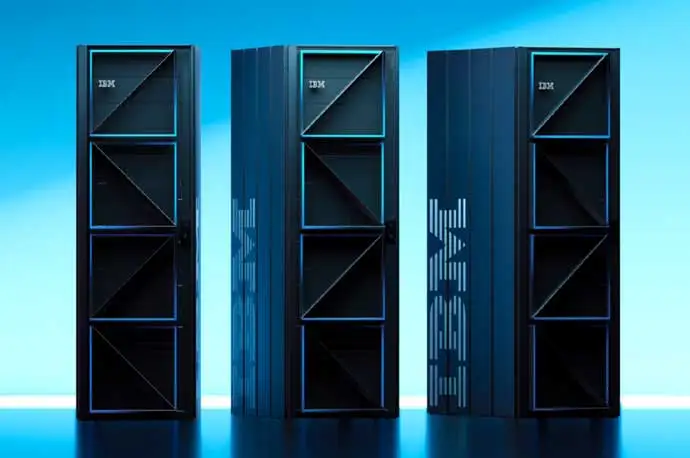
IBM executives will likely want to update analysts on its ongoing mainframe refresh cycle.
The vendor could report around 10 percent third fiscal quarter infrastructure revenue growth year on year ignoring foreign exchange, Morgan Stanley said in a report this month, thanks to first movers adopting the z17.
That growth would mean a decline quarter on quarter of $741 million, better than the $882 million decline IBM reported in the last z refresh cycle in the third quarter of fiscal year 2022.
A potential signal for trouble in the infrastructure business is 12 percent of CIOs who say they expect to increase spend on z17 cycle to cycle, according to a recent Morgan Stanley survey. That percentage is down from 20 percent of surveyed CIOs in the first quarter of 2025.
During IBM’s TechXchange, the vendor said that its Spyre accelerators, set for general availability Oct. 28, will bring generative AI to IBM z17 for generative asset creation and ingesting and interpreting vendor or customer data for outreach, cross-offers and real-time risk assessments, among other use cases. The accelerators become GA in early December for Power11 servers.
IBM also updated its Watsonx Assistant for Z conversational AI product with multi-agent orchestration, an agent builder and prebuilt agents for everything from system monitoring and workload scheduling to automation and support.
Although Krishna stressed during his Best of Breed appearance that quantum computing still has at least three more years until it becomes more mainstream, Wedbush said that quantum computing positions the vendor well for long-term profitable growth.
The quantum computing market should reach $4 billion in value by 2030, up from about $300 million in 2024, according to a Bank of America report in September. IBM has a book of business in the space of about $1 billion cumulative.
So far, IBM’s quantum strategy has focused on superconducting qubits, going cloud first and making quantum hardware and software available publicly to developers and enterprises, the investment firm said in its report. The vendor is scaling quantum data centers across the U.S. and Europe and building a large-scale fault-tolerant quantum computer capable of running quantum circuits of 100 million quantum gates on 200 logical qubits.

Expanded Partnerships
IBM leaders will likely tout the many expanded partnerships disclosed throughout October, a possible stamp of approval on the quality of the 114-year-old company’s AI and other cutting-edge technology and a way to further grow the market IBM serves.
Anthropic has teamed up with IBM to accelerate enterprise-ready AI development, infusing the upstart’s Claude AI model into IBM software for secure AI use cases with governance and cost controls. Early testing is yielding strong productivity gains, according to Wedbush’s Sunday report. The companies already have a private preview for an IBM integrated development environment that allows access to Claude for software modernization and other projects.
On Monday, IBM unveiled a strategic go-to-market and technology partnership with AI inference infrastructure upstart Groq, with plans to integrate and enhance Red Hat open-source virtual large language model technology with Groq's language processing unit architecture. As part of the partnership, GroqCloud will support IBM Granite models, according to IBM.
Other partnerships IBM is expanding include adding to the Oracle Fusion Applications AI Agent Marketplace agents for intercompany agreement reviews, sales order entry and converting purchase requisitions to contract purchase orders.
Integrations, M&A
Analysts will likely look for updates from IBM on the work integrating its most recently acquired companies and details on the M&A road ahead.
Integrating products from its HashiCorp acquisition completed in February should drive incremental growth upside over multiple upcoming quarters, Wedbush said in its report Sunday.
IBM also completed its acquisition of DataStax in May and should be further along in its strategy of bringing on the company’s enterprise cloud database software and platforms built on Apache Cassandra and Apache Pulsar. And in June IBM revealed its acquisition of expertise and license technology from Seek AI, which focuses on agentic AI for mining value from data.
While that integration work goes on, IBM is working on the acquisition of Cognitus to boost skills in digital transformation for regulated industries and to leverage the provider’s proprietary, SAP-endorsed software assets that are enabled by AI.