Salesforce Channel Chief Samenuk: ‘We Will Not Be A Successful Consumption Company’ Without Partners
‘The focus and expectations on the ecosystem have never been greater,’ Salesforce SVP Phil Samenuk tells CRN.
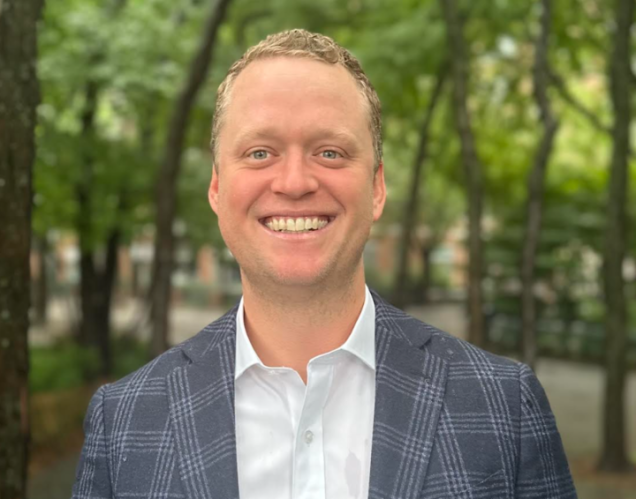
Even though Salesforce is traditionally known for a direct-sales model, the enterprise applications vendor’s channel chief Phil Samenuk says that members of its 16,000-plus partner ecosystem can expect more resources and more enablement to pursue growing business opportunities in the agentic artificial intelligence era.
Post-implementation work helping the San Francisco-based vendor’s customers with consumption pricing–Salesforce is better known for seat-based pricing–is one of the biggest opportunities for Salesforce solution providers, Samenuk, who became Salesforce’s senior vice president of global alliances and channel revenue in February, told CRN in an interview.
“We will not be a successful consumption company without our ecosystem and partners,” Samenuk said. “The focus and expectations on the ecosystem have never been greater. … It just shows that Salesforce is really evolving its thinking and not just relying on what got us here.”
[RELATED: Salesforce’s Dreamforce 2025: Channel Takeaways Involving Agentic AI, SaaS]
Salesforce Partner Program
Megan Glasow, Salesforce practice managing director for St. Louis-based Perficient—No. 61 on CRN’s 2025 Solution Provider 500—told CRN in an interview that her company has been investing in its Salesforce practice, launching a multi-year strategic partnership with the vendor in October and even acquiring Salesforce consulting partner Kelley Austin.
Perficient has done more than 3,000 Salesforce implementations over its 10 years-plus partnership with the vendor, according to the solution provider. The new strategic partnership focuses on accelerated time-to-value with trusted AI, deploying intelligent agents and predictive models to automate workflows and reduce costs, unify fragmented data for AI-powered insights and more–all with Perficient seeking to differentiate itself as a large system integrator with a small boutique feel.
“We have very ambitious growth goals as a practice, which, for the market, means us investing in our clients and in our people to deliver more value,” Glasow said.
Salesforce made its Agentforce 360 agentic AI platform generally available last month and revealed that it wants to hit $60 billion in revenue by its 2030 fiscal year. It expects to hit about $41 billion in sales in the current fiscal year.
Samenuk has been with Salesforce more than 14 years, previously serving as an area vice president working with global professional services vertical for about a year, according to his LinkedIn account.
The vendor’s previous channel chief, Steve Corfield, took on a different role earlier this year leading strategic partners' go-to-market (GTM) and integration, a Salesforce spokesperson said.
Read on for more of what Samenuk had to say on investing in Salesforce solution providers and their biggest sales opportunities looking ahead.

What should solution providers know about Salesforce’s investments in the channel?
We are a hardcore direct selling company. That's our model. That's worked for us. We're guiding to $41 billion [in sales] this year.
But what's really exciting is—what got us here won't get us there. And the level of intentionality and support and focus investment that's now coming to our ecosystem has been unlike anything I've ever seen.
This is a little new to the Salesforce motion. We have this incredible partner ecosystem, and they've all built really good businesses, made a lot of money, drove a lot of customer success. But now we're basically tripling down on it.
What was like a pretty focused effort with our partners, now we're looking at the whole ecosystem.
I had previously run our professional services vertical—so selling to professional services. I had consulting, staffing and recruiting, and legal services.
I know our partners so well because I've been selling to them. So many of our largest partners are also some of our best clients. Professional services has become a very impactful place for Salesforce tech to go add value.
PwC, Accenture, KPMG, other great clients. And then there's this new entrant into the partner ecosystem. We have these nontraditional firms like Adecco or Randstad, the largest recruiting firms in the world, who are safe-proofing their businesses. As their core competency of staffing and recruiting is slowing down, they’re getting into professional services and, specifically, consulting services. They all have Salesforce practices. The ecosystem is absolutely growing.
What are you seeing with traditional Salesforce solution providers?
Our traditional GSIs [global system integrators] are doing great. They're meeting the moment. They're figuring out this new world of Salesforce because it's a different business than it was in 2015 or 2020.
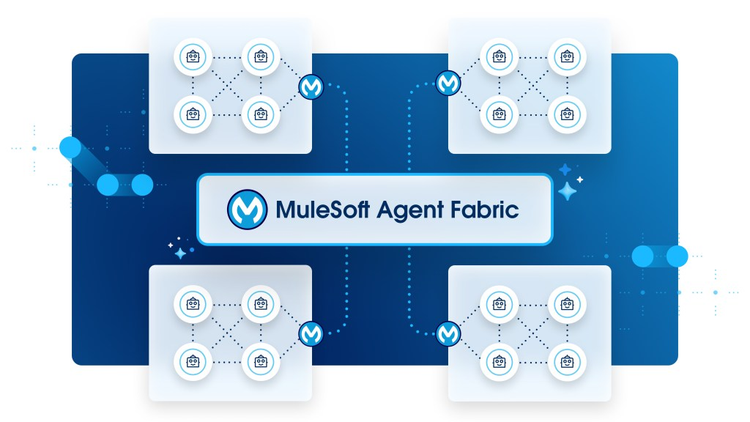
And then we have all these new entrants that see this opportunity– maybe they have a different take on how they're going to be impactful because of agentics. Or maybe they see the data opportunity that Salesforce has now with MuleSoft and Data Cloud and our intent to close our acquisition with Informatica.
There's just a lot of excitement in different swim lanes.
Salesforce [in] 2015, it was a great business. But it was, ‘Let's go respond to an RFP [request for proposal] for 5,000 Sales Cloud licenses at this firm.’
Now it's, ‘We're going to go talk about these different agentic use cases.’
Over the last year, we've had these really cool, but singular agent use cases. Maybe you want to go help on customer service. Maybe you want to go help on selling … maybe you want to go help on middle office processes for folks that use Salesforce and want to identify those use cases.
What's happening now is these companies are saying, ‘OK, we did our science fair experiments with a bunch of you. Some of them have worked. But some of those solutions we can't necessarily go scale [across] the whole enterprise.’
They're saying to us, ‘Hey, Salesforce, these three to five use cases that we rolled out and implemented for the most part by your ecosystem. Now agent-ify our whole company.’
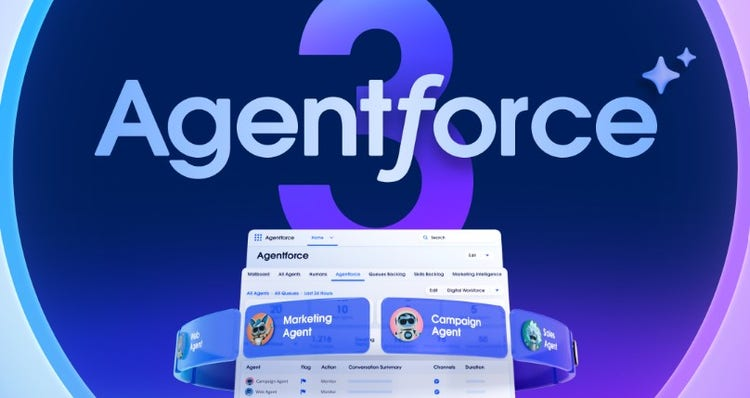
We heard a lot at Dreamforce about agentic enterprises. What does that mean for the channel?
Think of a large Salesforce client that might use sales, service, marketing, integration, analytics. That is a great client to Salesforce. But what is the next chapter of growth? And how do we go and make that instance way more useful, impactful in agent-ifying every process?
The TAM [total addressable market] just grew quite a bit because it's no longer singular Agentforce use cases. Which has been great. We're starting to see the meter [grow] for sure.
For a license-based, traditionally, company, we're like, ‘Wow. This consumption thing is pretty spectacular.’
But now the partners are seeing, too, what a great services opportunity to go bring agentics to every instance of Salesforce. It's gotten to a fever pitch that, if you're not having this agentic enterprise conversation with these large clients, they're coming to us and [asking], ‘How do you agent-ify my front office? I run my front office, part of my middle office on you. Bring me into the agentic enterprise.’
We are very thrilled about this opportunity. Our partners are very thrilled about this opportunity. We are learning a lot from our partners. They're very much thought leaders and helping us drive this new strategy.
We're moving from this world of license-based, seat-based, into consumption. We will not be a successful consumption company without our ecosystem and partners.
The focus and expectations on the ecosystem have never been greater.
It just shows that Salesforce is really evolving its thinking and not just relying on what got us here.
What should Salesforce partners know about the outsourcing service provider program you oversee?
OSP [Salesforce outsourcing service provider] companies, our partners, have these very large contracts with our end clients. Hundreds of millions—if not 1 billion-dollar contracts. A lot of them are commit-to-consume types of relationships.
We had an example here in our second quarter that ended in July. It was one of our larger deals. But we have a very large known–you'd call them a logistics company–under heavy cost pressure. Business model under attack.
They still wanted to go drive innovation within their walls. … They went to their largest services provider, who happens to be one of our largest partners, and said, ‘What can we do creatively here?’
We've been telling this message to partners the last–call it a year or two–we have this OSP model. We have this indirect model. We are here to support our direct sales team. We're not here to compete with our direct sales team. It's simply a lever for pull to go get a deal done and drive impact for our client.
It is now part of the nomenclature and our direct sales team. It was a tremendous win-win-win for all three parties because the end client was able to go add the capabilities they needed and burn down a commit that they already had with this partner. So they were very happy.
[The] partner loved it because they just basically secured themselves and kicked out competition to go be the front office services provider.
They took ownership of the Salesforce contract, so they became our client, then doing services on behalf of that end client. And then we loved it because we were able to secure what was going to be a one-year flat renewal, made it a three-year renewal of material growth.
[We met with the client] 30, 60 days into this arrangement [and asked], ‘How's it working out?’
And they're like, ‘It's tremendous. We have the relationship with our services consulting partner. But we don't feel like we've lost that one-for-one relationship that Salesforce has always been really intentional about.’
These [indirect seller] models–we like to go into them slowly because the last thing we ever want is to lose that understanding of the customer. We love the direct model because we know our algorithm. But we love the model because we own the client. We know them and we're with them. We have a relationship.
And so we're really excited about this movement. We're going to continue to see it snowball. And then in the longer term, you're going to see us start to explore more of these one-to-many type OSP, BPO [business process outsourcing] deals.
[A partner] might be doing an accounts payable solution for a large bank. They might have 1,000 people in there. And then in two years, the expectation from the client is, ‘I don't want 1,000 people. I want this to be a service.’
We're getting a lot of interest now to say, ‘Salesforce, we would like to build some of these solutions—whether it's a procurement offering, accounts payable offering—on Salesforce or on some of your componentry. Maybe we want to take Data Cloud. Maybe we want to take Agentforce.’
That's really exciting for us because that's a whole different revenue stream. But it's something that we've never been able to do because they weren't going to come buy licenses for us.
It just shows the evolution of what consumption will do for us.
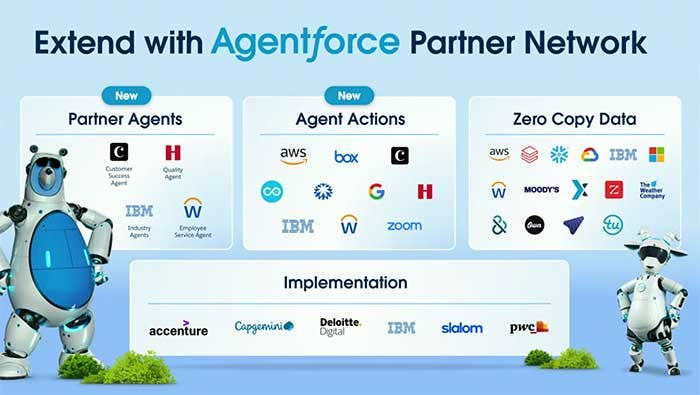
We’ve seen multiple acquisitions of Salesforce partners this year—Accenture bought NeuroFlash, Tata Consultancy Services bought ListEngage, Perficient bought Kelley Austin—what do you make of all these mergers?
There's a lot of M&A excitement. What a telltale sign of the opportunity with these GSIs and some of these nontraditional entrants.
They want to be part of this Agentforce game because there's a lot of money to go make on these Agentforce pursuits.
[For an example of what Salesforce partners can do, look at] T. Rowe Price and Deloitte.
This was actually a, ‘How do you go make salespeople more productive [project]? Taking away those menial tasks. It’s the definition of human in the loop. It's not here to replace a human. It's here to take away those menial tasks. Make that person more productive.
But this is also interesting because T. Rowe Price is obviously financial services and highly, highly regulated. And so being able to go demonstrate success in regulated industries—whether it's financial services, health care [or] public sector—that's really exciting for us because those are three of our largest industries and segments. So we need to go demonstrate success there.
The ecosystem, it's competitive out there. … It's just validating the opportunity. Now, if the TAM weren’t growing and we didn't have this—call it the great next frontier of Agentforce, Data Cloud, this whole agentic enterprise, Agentforce 360—it'd be a different story with the ecosystem.
There's a lot of, ‘I have got to go faster.’ Is it on the enablement side and the credentials? Which, we're seeing a record amount of credentials on Agentforce.
Is it in-person training? There is a revived excitement around, ‘How do I get in with your salespeople? How do I understand how to work better with you guys? We've always had our Salesforce practice. Now we're tripling down on it.’
[Salesforce solution provider Perficient], they saw a huge gap in the market with the type of partner that they wanted to be.
They're now working with us on some of our biggest deals in the funnel, helping us with some of our largest downstream implementations. That's also great because it's not just a GSI game in our ecosystem. And I love all of our partners, and we got to bring all of them along. But it's pretty fascinating to see Perficient working on some of our largest deals and pursuits.

What’s your advice to Salesforce solution providers on building their practices?
You have to get smart on Agentforce and Data Cloud. That is where the company is going.
Our core—call them applications—re not changing. Sales, service, marketing, integration, data. That's not going away. That's become table stakes.
But if you're not becoming an expert on Agentforce, Data Cloud, understanding that world and where the opportunity is to go bake that on every one of those applications—we will be the agentic leader in [those areas].
That might mean, who needs to go get credentialed. What acquisition do you need to go make?
We do our own hardcore internal enablement and training. In fact, we had our large leadership meeting … and to go, you had to have a very high level of certification. And that was a very healthy reminder and validation point to nontraditional technical people like me.
There's an expectation that everyone in the company understands agentics and Agentforce and the differentiator.
And then the advice I have to all of our partners, whether they're new, whether they've been with us for a long time—it's very dangerous to try to be everything to everyone.
Finding your industries, finding your geographies, finding your use cases.
This is why NeuroFlash was so incredible. They were our best call center slash bot-type partner back in the day. So as this thing evolved into agents, this was an innate part of their DNA.
Salespeople would just pick up the phone, ‘Hey, NeuroFlash. You understand the service use cases. You understand the call center. You understand bots.’
That was their special sauce. But when you peanut butter spread it—I'll get on these calls, they're like, ‘Well, we do financial services, health care, public sector, retail, tech.’
[At Salesforce], we practice ruthless prioritization here.
The advice is, where are you going to go stand out? That's how I can go get them to make a name, and then we go build up from there.
How is Salesforce evolving its partner program for this new era?
Because of this direct selling model that we have, one of Salesforce’s superpowers is relationships.
And so our relationships with the partners, whether it's CEO to CEO, ground level to ground level. Our relationships are so strong with the partners. The partners have done very well working with us. But because of our direct selling model—it’s not at odds, but we have to work through how we work together.
What's different now is, we cannot be a successful consumption company without partners.
Customer success is one of our core five values. But we really need post-implementation. We need it to be successful because we need the consumption flywheel going. And when we're done selling, we still maintain the relationship. But who is still there? It's the partner.
We are pushing the partners. We're relying on the partners. We have plans to incentivize the partners on how we drive consumption.
If you look at Google and their shift and focus on the ecosystem and partners, it's been a key part of why their GCP [Google Cloud Platform] is growing like it's growing. That's where this is going for the partners.
Internally, these direct sellers see it, too. Because once you close your deal, these salespeople need the consumption meter running. And that's going to require a partner. That's where this is all going.

Have you seen the number of certifications obtained by solution providers growing?
We caught my enablement and certification crew a little off guard. We were relatively planning for a spike. But the way that the partners gravitated towards the Agentforce and Data Cloud certs specifically—flying off the shelf.
We're trying to get way more capacity there to go accommodate. That's been really exciting.
There are [more than] 12,000 Agentforce clients now—almost one year from the day … Agentforce went GA [generally available] and we could start selling.
The opportunity for these partners now to go back to some of these Agentforce clients that we sold to [early on] and make sure that they're consuming and driving the flywheel and were they set up the right way—it’s pretty insane when we look at the scale of this, 12,000 clients, that's a lot of specific companies to go after. There's room for everybody.
Do you want to see the number of Salesforce partners grow, or are you more focused on going deeper with partners?
It's both—because of the amount of new entrants, these nontraditional entrants we're seeing. If I looked at the top consulting firms in the world … all have large Salesforce consulting practices.
Where there's going to be growth are these nontraditional entrants.
We had one of the largest oil and gas companies in the world not based here in the U.S. come to us and say, ‘We have a, we have a very large services arm. We want to become a Salesforce practice.’
It's going to be both, but it's going to get really intentional on our top partners. We don't care about size, scale. The way that we treated NeuroFlash [for example] was almost akin to a GSI because they proved it.
We are trying to be as democratic as possible.
We're not going to push partners aside. Everyone's always going to be able to have a call and be supported.