Amazon Q3 Earnings: CEO Jassy Says Bedrock Could Become As Big As EC2
Twenty-plus years in technology has taught Amazon CEO Andy Jassy ‘that there is not one tool to rule the world,’ he says.
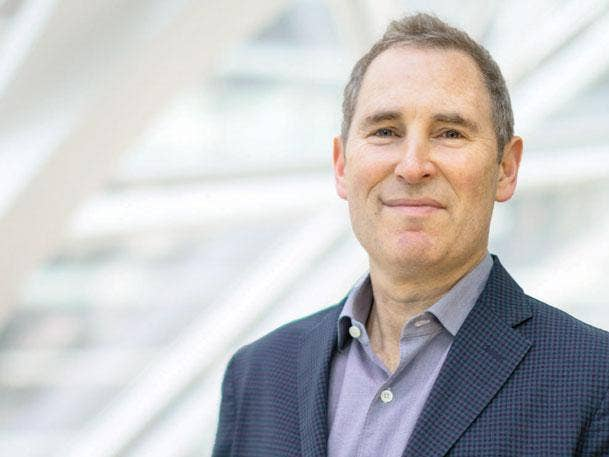
Amazon Web Services’ Bedrock artificial intelligence inference service could become as large as its core Elastic Compute Cloud web service as enterprises adopt multiple models and seek to avoid model lock-in, Amazon CEO Andy Jassy said Thursday.
Jassy made the prediction during Amazon’s third fiscal quarter earnings call, arguing that customers want access to competing models without sacrificing security, controls or the ability to switch providers.
Twenty-plus years in technology has taught Jassy “that there is not one tool to rule the world,” he said on the call, which covered the company’s third fiscal quarter, ended Sept. 30. Google’s TensorFlow was expected to be the dominant AI framework at first, but now PyTorch is much bigger, Jassy said.
Over the next two to three years, six to eight AI models could become capable of handling at least 95 percent of workloads, with different models standing out in reasoning, coding, visual tasks, latency and cost, he said.
“People always assume that whatever is in the lead early on is going to be the only thing or things that people use, and it’s never the case,” he said. “It’s not going to be true with models either. … Most customers are going to use multiple models, and many will use multiple models in the same generative AI application.”
[RELATED: Google Cloud Sales Explode 103 Percent As CEO Touts TPU ‘Extraordinary Demand’]
AWS has more than 140,000 partners worldwide, according to CRN’s 2026 Channel Chiefs.
Scott Morrell, CEO of Centroid Systems, a Troy, Mich.-based cloud services provider and longtime Oracle channel partner, told CRN in a recent interview that one of the biggest sources of demand for his company has actually come from the close relationship between Oracle Cloud Infrastructure and AWS.
“[About] 40 percent of our new work is Oracle and AWS, OCI and AWS, OCI in [Microsoft] Azure, and so forth,” Morrell said. “With the OCI being available on all those other clouds, and Oracle actually working with us to do that in recent months, it’s just expanded our demand probably more than we even anticipated.”
Bedrock Token Volume Up 17X
Jassy shared a host of product milestones for Bedrock, with his positioning of the service as a window into the latest AI models while maintaining organizational security and governance echoing similar arguments made this year by Salesforce co-founder, Chair and CEO Marc Benioff about his product portfolio and by Microsoft Chairman and CEO Satya Nadella about his Copilot AI assistant.
Bedrock token volume grew nearly 17-fold year over year, while spending by Fortune 500 customers increased nearly sevenfold, Jassy said. He called Bedrock the fastest-growing multibillion-dollar service in AWS history.
Tens of thousands of customers use Amazon Bedrock AgentCore, with users deploying twice as many agents during the third quarter as in the prior three quarters combined. And Jassy said AWS’ acquisition of DuckLabs will allow customers to execute queries across AWS analytics services without migration or portability costs.
He added that Lambda, AWS’ flagship serverless offering, topped a $1 billion annualized revenue run rate.
In a sign of growing AI use in e-commerce, relevant to solution providers working with clients to build e-commerce agents, Amazon also said more than 400 million customers used Alexa for Shopping during the past 12 months, with interactions rising nearly sixfold year over year.
AWS AI Demand Drives More Cloud Consumption
On Thursday’s call, Jassy said AWS benefits from a flywheel in which customers place applications and data in its cloud, run AI inference near that data and then consume additional compute, storage and networking for post-training, reinforcement learning and agent tools.
The CEO appeared to take a swipe at neoclouds by putting his business model above those that are “primarily hosting GPUs or renting short-term data center capacity.”
“This is a long-term platform strategy that broadly helps customers invent and evolve their customer experiences, operate stably, and build a reliable partnership they can grow for many years,” Jassy said.
Jassy explicitly criticized using neoclouds as “about 3,500 basis points worse in operating margin” for cloud providers compared with long-leasing data centers.
“Most of our capacity is either owned or long-leased” compared with cloud providers using colocation and neoclouds and other structures. The fact that we’re running on top of our own chip that’s providing both [an] advantage [in] price performance and is more cost-effective for ourselves because we own it, I think gives us some structural cost advantages that I think are going to be very helpful to customers … and helpful to the overall economics for AWS,” he said.
As a signal of continuing long-term potential for cloud, about 85 percent of global IT spend is still on-premises with a 10- to 20-year cycle to flip that share to cloud, Jassy said.
AWS has seen migrations of mainframes, storage networks and other linchpin workloads long believed to never make their way to the cloud, the CEO said. Enterprises moving workloads to the cloud should see less CapEx, lower operating costs, faster innovation, better developer productivity plus data accessibility to more easily leverage AI.
Inference accounts for “well over” half of AWS’ AI revenue even though enterprises are still very early in using inference at scale, Jassy said.
Amazon Maintains $220 Billion In 2026 CapEx
Despite the high cost of memory that has plagued the entire IT channel and depreciation from Amazon CapEx, AI operating margins are “rapidly improving” and “well ahead of where they were on core at a similar time of evolution,” Jassy said.
He said he has “even more conviction than we already had that the investment we’re making in AWS will yield a much larger revenue and free cash flow generating business than we would have imagined a couple years ago with strong return on invested capital.”
AWS still expects to spend about $220 billion in cash CapEx in 2026 and “meaningfully more in 2027, with a clear line of sight to attractive financial returns,” Jassy said.
AWS is installing an AI accelerator about every 14 seconds, Jassy said. “Almost as fast as we install capacity, customers are gobbling it up,” he said.
Amazon has its CapEx planned out over the next eight to 10 quarters, he said, with visibility into the large-scale hundreds of megawatts and gigawatt capacity deals into 2029 while also saving “a fair bit of capacity” on demand for EC2 and Bedrock.
“We are the leader today in, I’ll call it, the infrastructure and AI space,” he said. “We can fund this plan. And I think it will forever change the size of Amazon. It will forever change our revenue. It will forever change our free cash flow. And we’re going to invest, and we’re going to pursue it to continue to be the significant leader.”
AWS Targets Lower AI Costs With Trainium, Graviton
One Amazon investment that could lead to more efficient CapEx and economics for its AI portfolio—and even open a new market for the vendor and, potentially, its partner ecosystem—is its custom silicon.
Although AWS intends to make its custom silicon available externally in late 2027, its emerging chip business still posted triple-digit percentage growth year over year, Jassy said.
He told analysts on Thursday’s call that AWS is “continuing to evaluate as we speak” the balance of using its custom silicon in its cloud and selling the chips externally.
Selling chips externally generates revenue sooner, while using them internally over five or six years produces more absolute revenue and free cash flow, Jassy said.
“Our ability to create price-performant, scalable chips is going to be a very significant strategic advantage for us at scale, both in our own cost structure as well as building a separate business selling external chips,” he said. “Selling external chips really is a very different business than the cloud infrastructure business.”
Revenue commitments for Amazon’s Graviton CPU and Trainium AI accelerators have each increased more than 20 times year over year, the CEO said. AI continues to be a tailwind for Graviton because post-training reinforcement learning and agent tool use is mostly done on CPUs compared with accelerators.
Jassy said that Graviton has 30 percent to 40 percent better price performance than other x86 providers.
Customers using Amazon’s custom silicon saved more than $2 billion in the third quarter, Jassy said. And users still demand older chip iterations, with backlog for prior-generation Graviton instances still more than double quarter over quarter.
Short-term capacity for prior-generation Trainium instances sold at a premium compared with the first half of the year, he said.
Amazon’s custom silicon is part of its effort to bring down the cost of AI inference to encourage more AI usage, Jassy said.
“It’s incredibly important for customers to be able to use inference in a much more cost-effective way,” he said. “That has come down a lot, the cost of inference, over the last couple of years. And I think it will come down meaningfully more.”
That will also help customers feel comfortable adapting to new major AI use cases, with the CEO pointing to AI-powered security of finding and fixing vulnerabilities en masse potentially contributing to around 20 percent of the total amount of tokens used over the next year or two. And the now-classic AI use case of AI-powered coding continues to grow.
“I believe virtually every modern enterprise production application will be rewritten to be agentic-y capable,” Jassy said. “That’s the way you’re going to have to deploy if you want to move quickly or you want to actually guard in the right way against some of the security risks. There is just so much AI coming.”
AWS Sales Jump 39 Percent To $46 Billion
AWS sales grew 39 percent year over year to $46 billion with a $184 billion annualized revenue run rate. That marked AWS’ sixth straight acceleration quarter and its fastest growth in nearly five years.
Backlog grew triple digits year over year to $578 billion. And core compute and storage revenue grew at their fastest rates in several years, the CEO said.
AWS’ parent company saw net sales grow 13 percent ignoring foreign exchange to $201.9 billion during the quarter.
AWS segment operating income for the quarter was $17.8 billion, up 56 percent year over year. The parent company saw operating income grow 61 percent year over year to $28.1 billion.
Amazon’s net income fell about 2 percent year over year to $20.7 billion in the quarter due to a pretax gain of $9.5 billion last year from its investment in Claude maker Anthropic. Operating cash flow grew 29 percent to $168.3 billion for the trailing 12 months (TTM). Amazon saw a free cash outflow of $42.4 billion TTM due to spending $94.8 billion more on property and equipment, mostly due to AI investments. At this time a year prior, Amazon reported a free cash inflow of $14.8 billion.
AWS On The Way To $1 Trillion
AWS projects revenue growth rates of more than 40 percent in 2027 and in 2028, reaching $1 trillion in revenue in the next five to 10 years, Jassy said.
“We’re in the very early days of this inflection,” he said. “Our strategy is working, and I expect it will for the foreseeable future.”
Amazon will also launch its initial service of the Leo satellite internet network this year, a notable development as Elon Musk’s SpaceX eyes channel growth for its competing Starlink service for enterprises and government agencies.
Brian Olsavsky, Amazon.com senior vice president and CFO, said to expect Amazon to start capitalizing production, launch and other Leo costs in the first quarter of its next fiscal year. Amazon should expense the majority of Leo-related costs in the fourth quarter.
Olsavsky said to expect fourth fiscal quarter net sales between $240 billion and $247 billion. Operating income should be between $28.5 billion and $33.5 billion.
Amazon’s stock fell about 7 percent after the market closed Thursday, trading at about $226 a share around 4:44 p.m. Pacific.