AMD Advancing AI 2026: Top News On AI Chips, CPUs, Robotics
AMD revealed new offers around Helios rackscale, MI400 GPUs, new Epyc CPUs, a robotics partner network and more during its annual conference.
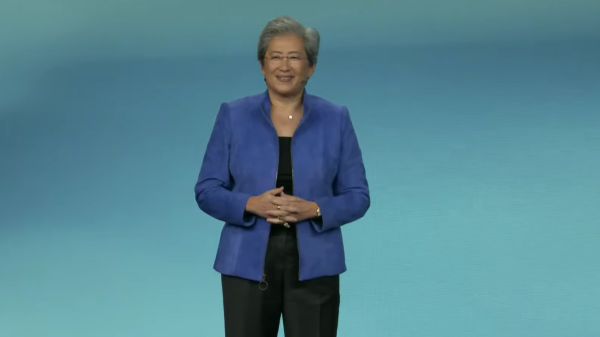
Advanced Micro Devices’ new Robotics Partner Network, an updated roadmap for future semiconductor releases and the Helios rackscale artificial intelligence infrastructure platform were among the biggest reveals during AMD’s annual Advancing AI conference.
Although the Santa Clara, Calif.-based semiconductor maker’s focus for the conference was on product innovation and reaching the growing total addressable markets (TAMs) in data center AI accelerators and central processing units (CPUs), AMD CEO Lisa Su told a CRN reporter after her keynote that services partners and system integrators remain an important section of her ecosystem looking ahead.
“We want to make sure that enterprises have a way to easily deploy,” Su said. “System integrators are a big piece of that.”
AAI runs through Thursday in San Francisco.
[RELATED: AMD Expands Microsoft Foothold With New Azure AI Deal]
AMD Advancing AI 2026
AMD has more than 100 partners in North America, according to CRN’s 2026 Partner Program Guide.
Chris Bogan, vice president of sales at Houston-based IBM solution provider Mark III Systems, told CRN in an interview that Mark III’s CPU business, which includes AMD, has seen customers looking to the solution provider for help with optimization choosing the right components based on the workload.
Although GPUs remain a big business and powerful force in bringing AI use cases into reality, CPU usage has been growing as customers invest in data centers and other hardware projects.
“The demand had been there—our chip business across the board has been growing—it is just people are paying attention now versus I think before everything that was making headlines was only GPUs,” Bogan said.
Here are some of the biggest product, innovation and partnership reveals coming out of AMD’s Advancing AI 2026 conference.
AMD Launches Robotics Partner Network For Physical AI
AMD introduced a new Robotics Partner Network during AAI 2026 for system integrators, benchmarking and safety businesses and hardware and software vendors focused on accelerating robotic and physical AI system development and deployment, according to the vendor.
Application and system integrators in the program include World Wide Technology—No. 10 on CRN's 2026 Solution Provider 500—Bosch's Rexroth division, MulticoreWare and Makarena.
The network includes original design manufacturers (ODMs), independent software vendors (ISVs), simulation providers, and sensor and perception companies. The members will work with common AMD hardware and an open standards-based software foundation.
Network members can validate systems before deployment, reduce integration complexity and speed up the cycle from prototype to production without depending on proprietary runtimes and closed development environments.
The partners will use the AMD’s ROS 2 Perception Node accelerated application, its Radeon Open Compute (ROCm) open software ecosystem, Ryzen AI software, Vitis AI software and the Open Neural Network Exchange (ONNX) development framework and other reference platforms—although the program pledges to be model agnostic.
The network doesn’t charge licensing or membership fees for any of its four tiers. It has a free registered tier entry for qualified robotics companies. Members can receive co-marketing, validation designations and early platform access at higher levels.
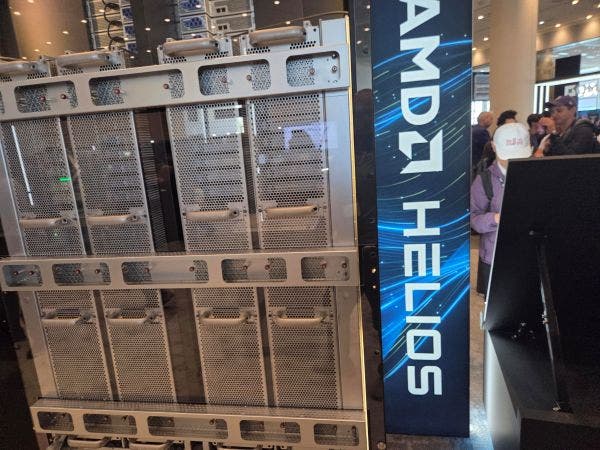
AMD Helios Rackscale Platform Targets Frontier AI Deployments
AMD launched Helios rackscale, an open AI infrastructure platform that unifies the vendor’s Instinct MI455X GPUs, sixth generation Epyc server CPUs, Pensando networking and ROCm software to support frontier AI, large-scale inference and foundation-model training.
During her keynote address, AMD CEO Lisa Su said that Helios shipments are on track to start during the third quarter, ramping in the fourth quarter.
The vendor said to expect future systems from Bull, Hewlett Packard Enterprise (HPE), Lenovo, Supermicro and other OEMs plus infrastructure partners Sanmina and Wiwynn.
The platform can scale from one rack to gigawatt-scale AI clusters and promises better peak 4-bit floating point (FP4) performance, high-bandwidth memory capacity, HBM bandwidth, higher token throughput performance at low and medium and high interactivity levels compared to similar offers from Nvidia.
Helios rackscale spans 72 Instinct MI455X GPUs and 18 Epyc Venice CPUs. Su said during her keynote address that Venice is in full production with major server OEM and cloud provider rolling it out in the fourth quarter.
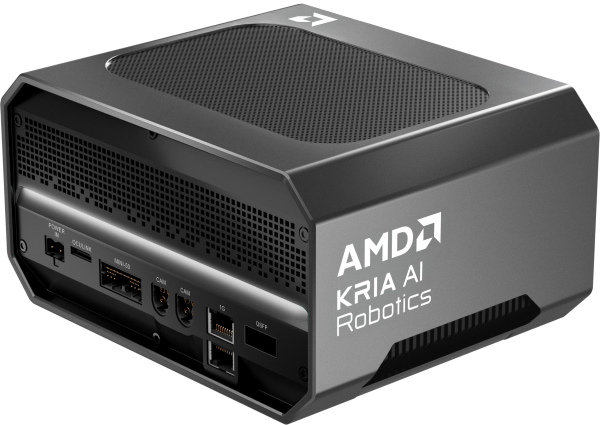
AMD Unveils Kria AI Solutions For Robotics, Physical AI
During the conference, AMD revealed the upcoming Kria AI Solutions portfolio for developers and users prototyping, building and deploying autonomous robotics and physical AI systems.
Kria AI systems-on-modules (SOMs) powered by AMD’s Ryzen AI Embedded X100 Series processors should hit the market with original design manufacturers (ODMs) in the fourth quarter of 2026. The Kria AI Robotics Developer Platform is already in sampling with early access users and should become generally available in the fourth quarter as well, according to the vendor.
An open software ecosystem supports the portfolio to avoid vendor lock-in with physical AI systems, according to AMD. Users can migrate from Nvidia’s Compute Unified Device Architecture (CUDA) to AMD’s ROCm while preserving on average 75 percent of existing CUDA code. These AI solutions support PyTorch, Onnx, Robot Operating System (ROS) 2, Movelt and other industry-standard frameworks.
The portfolio promises deterministic real-time control with more than 8,000 control decisions per second and sub-100 millisecond vision-language-action (VLA) AI reasoning. AMD boasts of support for 2.3 times more concurrent AI agents compared to Nvidia Jetson T5000.
Ryzen AI Embedded X100 Processors Power Token Improvements
AMD plans to make its Ryzen AI Embedded X100 Series processors production available in the fourth quarter and said to expect developer platforms featuring Ryzen AI Max Pro 400 will be available in the Ryzen AI Halo and OEM systems later this year.
These processors promise up to 2.1 times higher multithread CPU performance for better concurrency, 1.7 times more graphics performance uplift and 3.5 times higher token generation throughput, according to AMD. The processor also promises 1.4 times faster time-to-first-token (TTFT) compared to Intel Core Ultra Series 3 processors.
The Embedded X100 Series can also deliver up to three times higher peak 32-bit floating point (FP32) performance compared to Nvidia’s Jetson T5000 and 1.7 times higher performance compared to Nvidia RTX 4000 Ada and other discrete GPUs for beamforming for advanced medical ultrasound and other use cases.
Users can also migrate existing codebases from Nvida’s CUDA to AMD’s ROCm to avoid vendor lock-in, according to AMD. The AMD processors can operate across -40 degrees Celsius to 105 degrees Celsius with 24-hour operation for up to 10 years in harsh environments.
The processors can give autonomous systems reliable perception, reasoning and the ability to perform actions fast—key for humanoids, smart manufacturing, surgical robots and unmanned systems. Ryzen AI Embedded X100 Series processors integrate up to 16 AMD Zen 5 CPU cores, a discrete-class integrated GPU and neural processing unit (NPU) on one embedded SOC, according to AMD.
Meanwhile, the Ryzen developer platforms coming later this year should allow for larger open models, longer context, deeper agent memory and more sophisticated multiagent workflows run locally on personal systems, according to the vendor.
Ryzen AI Max Pro 400 Series processors come with increased unified memory of 192GB and support models up to 300 billion parameters, among other capabilities.
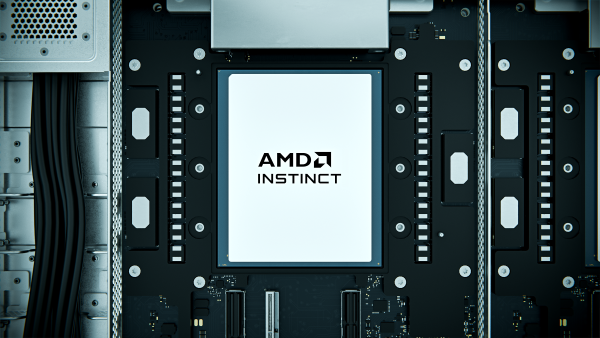
AMD Instinct MI400 Series GPUs Target Training And Inference
AMD’s new Instinct MI400 Series GPUs—including Instinct MI455X GPUs for frontier AI and AI factory deployments and AMD Instinct MI430X GPUs for sovereign AI and high-performance computing—bring together HBM4 memory, advanced security, scalable system architectures and the open ROCm software stack.
MI455X is aimed at high-volume inference, frontier-model training and fine-tuning, according to AMD. MI430X GPUs deliver up to 288 trillion floating-point operations per second (TFLOPS) of hardware-based 64-bit floating point (FP64) performance for scientific computing.
Their advanced security capabilities include secure boot, encrypted GPU-to-GPU links and hardware-based protections for sensitive AI and high-performance computing (HPC) workloads. They offer an open software foundation with programming models, compilers, libraries, runtimes and deployment tools for AI and HPC use.
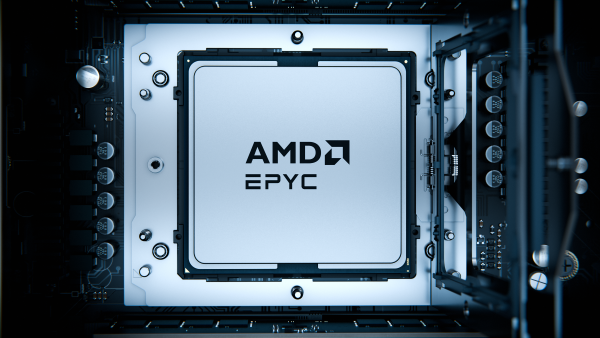
Sixth-Gen Epyc CPUs Built For Agentic AI Workloads
AMD’s sixth-generation Epyc 9006 Series promises users workload-optimized server CPUs for agentic AI, cloud, enterprise and HPC environments.
These CPUs can power running agents, feeding accelerators and enterprise services used by agents, according to AMD.
The 9006 SP7 is aimed at high-density agent execution with up to 256 cores and 512 threads. It can serve as an AI host node with up to 5GHz frequency, Peripheral Component Interconnect Express (PCIe) Gen 6 and and pledge of more agents per watt, per dollar, per rack, according to the vendor.
The 9006X SP7 is usable for simulations, modeling, analytics, retrieval and other memory-sensitive workloads with high frequencies, cache and memory bandwidth, reaching up to 5.15GHz frequencies and 3x the L3 cache per core of AMD EPYC 9006 SP 7.
The 9006 SP8 gives users 8- to 128-core options for agent workloads, enterprise systems, edge sites, smaller clusters and power-constrained racks.
And the 9006 LP offers users an AI host-node CPU with enhanced External Global Memory Interconnect (XGMI). These processors can help feed accelerators in dense rackscale AI systems and promise powerful CPU-GPU communication speeds.

AMD ROCm.ai Aims To Simplify AI Development
In August, AMD will make its ROCm.ai software experience available, giving users AI-assisted development, intelligent deployment and AI-powered software optimization capabilities.
The ROCm CLI command-line experience is available for developers installing, validating, serving and managing AI workloads. AMD Skills is available for Anthropic’s Claude, Cursor, OpenAI’s Codex and other leading AI coding assistants. Skills aims to decrease the amount of documentation crawling for setup.
ROCm.ai pledges an average 3.3 times inference improvement and 2.4 times training improvement for the latest version of ROCm compared to AMD’s ROCm 7 on the same hardware, according to the vendor.
The Hyperloom open-source, agentic system that’s part of ROCm.ai automates optimizing end-to-end inference workloads, handling profiling, analysis, kernel optimization and validation. Weeks of specialized engineering should come down to hours for developer teams.

AMD Details AI Roadmap Through 2030
AMD provided an updated roadmap during the conference, giving insight into its annual cadence of CPU, GPU, networking and rackscale developments through 2030.
Users can expect next-generation, Zen 7 architecture-based Epyc server CPUs in 2028, according to AMD. Florence, Ferrara and Fidenza CPUs will aim to provide improvements in density, performance, performance-per-system dollar and performance- per-watt.
In 2030, AMD should have Ravenna CPUs based on Zen 8 architecture. Next-generation AMD Instinct MI500 Series GPUs are expected in 2027 with better compute, memory and interconnect technologies. AMD Instinct MI600 Series GPUs should arrive in 2028.
AMD has plans for a next-generation AMD Helios 500 rackscale offer powered by AMD Instinct MI500 Series GPUs and AMD Epyc Verano CPUs. The offer will also leverage next-gen Pensando Como and Monza networking. AMD will later bring to market a Helios 600 rackscale product powered by Instinct MI600 Series GPUs, Epyc Ferrara CPUs and Pensando Palma and Levanzo networking.
---

AMD Deepens Partnerships With Anthropic, OpenAI, Cisco, Microsoft
The most surprising partnership news for AMD during AAI 2026 was a new strategic partnership with Claude maker Anthropic involving a future $5 billion strategic equity investment by the AI upstart into the chipmaker.
As part of the partnership, Anthropic will deploy up to 2 gigawatts of AMD Instinct MI450 Series GPUs in AMD Helios rackscale products. The companies plan to deploy the first gigawatt in the first half of 2027.
Anthropic and AMD will also work to leverage Claude for optimizing Instinct GPU workloads and accelerate AMD ROCm development. AMD plans to adopt Claude across its engineering and product development teams.
Anthropic will also deploy AMD Epyc Venice CPUs and its Pensando networking product.
Alongside the big Anthropic news, AMD revealed new and deeper partnerships with Cisco, OpenAI, Microsoft and AT&T.
AMD and Cisco are combining the chipmaker’s Ryzen AI Halo systems and other high-performance inference engines with Cisco networking, observability and security capabilities for deploying, governing and managing hybrid and local agentic AI at scale.
OpenAI is working with AMD to leverage the ChatGPT maker’s Triton framework with AMD ROCm software. Both companies will optimize GPT-class workloads on AMD Instinct MI455X GPUs and AMD Helios racks. OpenAI plans to bring Helios online in the fourth quarter, with deployments accelerating throughout 2027.
Meanwhile, AMD, AT&T and Microsoft’s OTel 2.0 open-source model marks the next step in their Open Telco AI initiative, unifying models, datasets, benchmarks, tools and compute for operators to interpret network data, understand standards and support complex operations. The companies bill OTel 2.0 as the largest, best performing model of its kind, capable of supporting more automated operations, faster troubleshooting and improved resilience and customer experiences, according to AMD.