Cognizant CEO: We’re Focused On ‘Solving The AI Velocity Gap’
‘As we enter 2026, our strategy is focused on solving the AI velocity gap, the gap between massive AI infrastructure spending in the past few years and business value realization for our clients,’ says Cognizant CEO Ravi Kumar on the company’s fourth fiscal quarter 2025 earnings call.
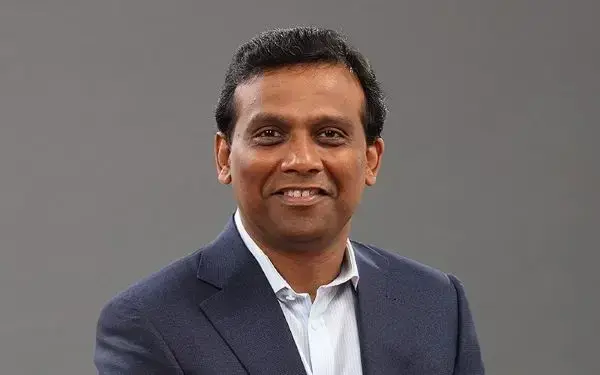
As AI technology is maturing, 2026 will be the year for using AI to offer transformative value, said Cognizant CEO Ravi Kumar.
Kumar, in his prepared remarks during Cognizant’s fourth fiscal quarter 2025 financial conference call Wednesday, said the company is looking to take AI technology to the next level.
“As we enter 2026, our strategy is focused on solving the AI velocity gap, the gap between massive AI infrastructure spending in the past few years and business value realization for our clients,” he said.
[Related: Cognizant CEO: ‘Still At The Early Innings Of Capturing The AI Opportunity’]
While AI technology is now mature enough to offer transformative value, the methodologies and tools to harness it are only just emerging, and the value to enterprises hasn’t been realized, Kumar said.
“In fact, our latest New Work New World research released last month reveals that AI today is capable of unlocking $4.5 trillion in U.S. labor value in the future,” he said. “Cognizant’s mission is to be the AI builder bridging this gap to enterprise value by converting the technology to measurable returns on investments for our clients.”
Cognizant, which ranked No. 7 on CRN’s 2025 Solution Provider 500, is tackling this mission with a multipronged approach, Kumar said.
First, the company is applying AI-led productivity to augment and accelerate traditional software cycles. “We see a massive multitrillion-dollar opportunity to help clients accelerate the elimination of technology debt, build classical software in newer ways with AI platforms, and repurpose savings towards innovation,” he said.
Second, Cognizant is building entirely new cycles of agentic capital and digital labor that go beyond the reach of legacy software, creating a much larger total addressable spend, Kumar said.
“Closing this velocity gap, the AI velocity gap, requires new methodologies and evolving beyond the traditional IT services role of the last two decades,” he said.
To that end, the company’s AI Builder strategy, which helps bridge the gap between heavy AI infrastructure investment and the business value of that investment, acts as the connective tissue that addresses four layers of the ecosystem, including AI compute, cloud, model access and human capital services, he said.
That AI Builder strategy has four key elements, Kumar said.
- Cognizant’s trademark basis framework, which is its proprietary blueprint that guides clients in architecting new business processes specifically for deploying and orchestrating autonomous agents instead of using legacy rigid logic to design behavior, persona, intent and outcomes.
- Cognizant’s pioneering science of context engineering, which is the company’s methodology for mapping a client’s unique work graph, is giving AI the situational awareness it needs to produce reliable business outcomes. “Context engineering bundles an organization’s operating principles, tribal knowledge, work patterns, friction sources, and historical and cultural imperatives so that AI intelligently binds to the enterprise’s heterogeneous context, creating highly productive agentic capital,” Kumar said.
- Third is Cognizant’s increasingly strong AI partnership ecosystem with such companies as Nvidia, Anthropic, Google Cloud, Microsoft Azure, OpenAI, Adobe, Typeface, Claude, Cognition, GitHub, WinSurf, Workfabric, Ryder, Uniphore, Palantir, Salesforce and ServiceNow.
- Fourth is Cognizant’s proprietary intellectual property across platform services and research, including Cognizant Flowsource to elevate the company’s engineering velocity and Cognizant Neuro IT Operations to harness AI to proactively manage and self-heal hybrid environments, he said.
To industrialize its AI Builder stack, Cognizant formed three units to sharpen its go-to-market muscle, Kumar said. These include market-facing AI units that serve to find customer value in the expanding market; an integrated AI solution unit that acts as an architectural core to bring various components of the AI stack together with strategic partnerships, Cognizant methodologies and AI platforms; and a centralized AI platform and product unit packaging custom IP into repeatable solutions.
Underpinning Cognizant’s AI Builder stack is its talent strategy, Kumar said.
“Over the last two and a half years, over 340,000 of our associates have completed AI skilling,” he said. “We are shifting from a traditional linear staffing model to an asynchronous autonomous software engineering model. In this framework, our associates are trained to delegate complex high-value macro tasks to agentic networks while they micro-steer to outcomes using platforms like Cognition, Gemini, Cloud, GitHub and others, orchestrating through Cognizant Flowsource. We are in the process of developing a hyper-productive high-velocity delivery model for agents to asynchronously assist human software developers and agent managers.”
Cognizant is also broadening its talent base with non-STEM talent and early career programs, including aggressively recruiting interdisciplinary skills at the intersection of industry domain and technology, Kumar said. The company added over 16,000 associates in India in 2025, and in 2026 is targeting 2,000 campus hires in the U.S. and approximately 20,000 in India.
Even as clients rethink their operations through an agentic lens, demand for Cognizant’s business process outsourcing business powered by digital labor grew 9 percent year over year in the quarter, Kumar said.
“As the next decade of contextual computing unlocks new waves of nonlinear enterprise productivity and agentic software cycles, I believe there is a significant opportunity to create shared value for our clients, our associates and our shareholders,” he said. “The foundation is set. I believe the boldest chapters of our story are still ahead.”
During the question-and-answer period, when asked by an analyst how much of Cognizant’s business comes from AI package implementation, Kumar said it is easy to think that old technology is quickly replaced by new technological revolutions.
“The new technology will actually provide more opportunities,” he said. “I see this as an increase in our total addressable spend. I mean, if you’re referring to what’s happening in the last few days, I can tell you any tool, any technology, will not magically generate value on the other side. You need a bridge. And that bridge is what companies like Cognizant do. I’m going to be precise on what I mean. You can’t apply this technology on existing old processes. So you have to reinvent and reimagine a process.”
Businesses still have a lot of technical debt, Kumar said.
“There is the elasticity of traditional software, let alone the new software we’re going to write, which can actually expand,” he said. “So we see this as a net-new tailwind for us on two swim lanes. On the traditional software, apply it, do more for less, and get more consumption because of elasticity, take out technical debts, take out the backlog. On the other end, apply this on a new addressable spend which classical software didn’t penetrate. So I see this as more of a bigger opportunity for us with a higher surface area for us to actually operate.”
When asked by another analyst how the business process outsourcing business will fare in the future as AI is increasingly adopted, Kumar said that business has seen 9 percent to 10 percent growth for three years in a row because it remains on the cutting edge.
“We think this is a longish tailwind because operations of companies is a much bigger addressable spend, and we think we have an opportunity not just to transform, reinvent and reimagine flows in a company, we also have the ability to maintain them,” he said. “I think we are underestimating how much that reinvention will need. It’s decades of work. We are underestimating how much it needs to maintain. I mean, this is a contextual technology. It has to be grounded. It has to be situational. … We have actually more work to do in maintaining than before. So I see this as a significant tailwind to our [business process outsourcing] business.”
Cognizant By The Numbers
For its fourth fiscal quarter 2025, which ended Dec. 31, Cognizant reported revenue of $5.33 billion, up 4.9 percent over the $5.08 billion the company reported for its fourth fiscal quarter 2024.
This includes health science revenue of $1.62 billion, up 5.2 percent over last year; financial services revenue of $1.59 billion, up 10.5 percent; products and resources revenue of $1.32 billion, up 1.8 percent; and communications, media and technology revenue of $808 million, down 0.4 percent.
North America accounted for $3.99 billion in revenue, or 74.7 of the company’s total revenue.
Total Cognizant revenue beat analyst expectations by $20 million, according to Seeking Alpha.
Cognizant also reported GAAP net income for the quarter of $648 million, or $1.34 per share, up from last year’s $546 million, or $1.10 per share. On a non-GAAP basis, Cognizant reported net income of $651 million, or $1.35 per share, up from last year’s $601 million, or $1.21 per share.
Cognizant’s non-GAAP earnings beat analyst expectations by 3 cents per share, according to Seeking Alpha.