General Informatics CEO Don Monistere On AI, Security, And The Future Of Managed Services
General Informatics’ recent acquisition of fellow MSP IMS Solutions Group not only expands its customer and geographic base, but brings a business that complements the AI strategy GI has been developing for at least three years, and also finally gives it its first CIO, CEO Don Monistere told CRN.

IT solution provider and managed services provider General Informatics placed an early stake in the ground when it came to investing in an AI practice, and this month drove that stake even deeper with the acquisition of fellow MSP IMS Solutions Group.
As organizations scramble to make sense of AI’s practical value and risks, General Informatics has already carved out a unique position. President and CEO Don Monistere told CRN in an exclusive meeting that his company’s dual focus on operational excellence and technological foresight has seen it develop its own AI platform, integrate advanced analytics, and maintain a relentless commitment to protecting client data.
Monistere said that General Informatics has embraced AI not as a buzzword, but as a practical tool for solving real business problems.
[Related: ITPartners+ CEO To MSPs: ‘Valuation Is Not A Mystery. It’s A Scorecard.’]
“We started running that practice right after ChatGPT launched,” he said. “It was funny. We started talking about neural networks, and obviously we had a lot of going on the data analytics side with business intelligence and using the Microsoft Power, Automate and Microsoft Power Apps applications and all their business intelligence applications. When ChatGPT came out, though, we recognized pretty quickly that we needed to get to the market pretty fast.”
Fast indeed. Monistere said his company went live with its first instance of AI for its customers sometime in May of 2023.
More recently, General Informatics just closed its acquisition of IMS, a move that not only expands the company’s geographical and customer base but also brings a complimentary AI practice, Monistere said. He declined to discuss the dollar value of the acquisition.
There’s a lot going on at General Informatics, IMS, and AI. To understand it all, read CRN’s complete conversation with Monistere which has been lightly edited for clarity.
How do you define General Informatics?
We are what I would call a traditional managed services provider with a heavy, heavy lean into security and artificial intelligence. And I would argue that we have had a data division that has worked with analytics and high-end databases for some time. So our approach to AI has been very much on the data side. We have our own platform that we utilize with various customers. So that’s really where our bread and butter is. We also have an advisory services division, and that division helps us with virtual CIO, virtual CISO, and as well implementing AI solutions with our customers.
How long have you had that AI practice?
Believe it or not, we started running that practice right after ChatGPT launched. It was funny. We started talking about neural networks, and obviously we had a lot of going on the data analytics side with business intelligence and using the Microsoft Power, Automate and Microsoft Power Apps applications and all their business intelligence applications. When ChatGPT came out, though, we recognized pretty quickly that we needed to get to the market pretty fast, and we started building our portal and our LLM fairly early on. So I’d say we went live with our first instance of AI for our customers sometime in May of 2023. We’ve been doing it roughly three years.
Good for you guys.
Yeah, we were on top of it. It was really basic back then, but that’s all that was required then. But now it’s getting a lot more involved where we’re pulling in data from all sorts of different databases and putting large language models over the top of them and really extracting some great intelligence for our customers.

Have any of your customers had any security issues related to the use of AI yet?
No. We don’t get too crazy about that. That’s one of the reasons why I say we have a heavy, heavy security lean. We’re not on the bleeding edge when it comes to AI. Most of the larger installs are all private inside their own networks. We’re not sharing information on the public web. I had a couple of customers who were wanting to implement [Anthropic’s] Claude Cowork, and we just haven’t had enough time to test that and to make sure we feel comfortable with it. I mean, it looks good on its face, and we tested OpenClaw and a lot of those other really interesting agentic applications, but, man, we’re not deploying any of that in the corporate world yet. It’s way too soon.
Claude Cowork is very much agentic and allows you to utilize your computer to do certain things. You’ve heard a lot of people talk about OpenClaw, but that is really more open source and definitely has a lot more bugs inside that application than anything else?
General Informatics just made a new acquisition. What did you buy and what do they do?
It’s a company called IMS Solutions Group in Greenville, South Carolina. They were owned by a company called Comporium. IMS was the managed services arm of their data center business, and they had a telco business as well. So for Comporium, this was really them focusing on their data center business and divesting out of the managed services business. Obviously, we’re investing in the managed services business. And I would say that IMS was probably one of the companies that I felt were embracing AI the same way that we were, both internally as well as offering up solutions to their prospects and customers. And so it was a really interesting mix of the two organizations. [IMS was] approaching $10 million top line, and so it’s a meaningful size organization. And it just so happens that I used to work with the CEO back in my days when I was with TekLinks here in Birmingham, back in in 2018 before we sold that company. So I go way back with the CEO. It was how I knew about the IMS business. We had lunches over the last three years, way before we started talking about an acquisition. And it seemed like after every lunch we had, I would tell him, ‘Call me first.’ He said, ‘Alright, I’ll do that.’
There was a little competition in there as far as others wanting to acquire IMS, but man, the match between our two companies really made a lot of sense. There were a lot of folks who worked with him who had worked with me in the past, and so they felt comfortable. They know me. I always say I’m a known quantity to those guys. So it was an easy process because they know exactly what we expect as an organization and what we’re trying to accomplish. A really good match, I would say to them. They’re also a traditional managed services provider. They really have a lot of focus on network as a service, network management utilizing a number of different vendors. But their primary vendor is Cisco, and with the AI solutions that Cisco is offering, it just made a lot of sense for us. And IMS CEO Brandon Myers is coming on board with us as our CIO, and that really is his bailiwick. It’s what he did for me when I worked with him at TekLinks. I was president of TekLinks at that time, and he was focused on a lot of the technology products that we were selling back in the day, including cloud driven solutions. His background is in engineering.
We’re really excited about what the combined companies can do together. They’ve made some strides in automation and how they’re leveraging AI internally as well as with their customer base. And from a standpoint of what we’ve done on security and our AI platform, the two companies marry really, really well. So it was a bit of a no brainer for us when we were having the conversation
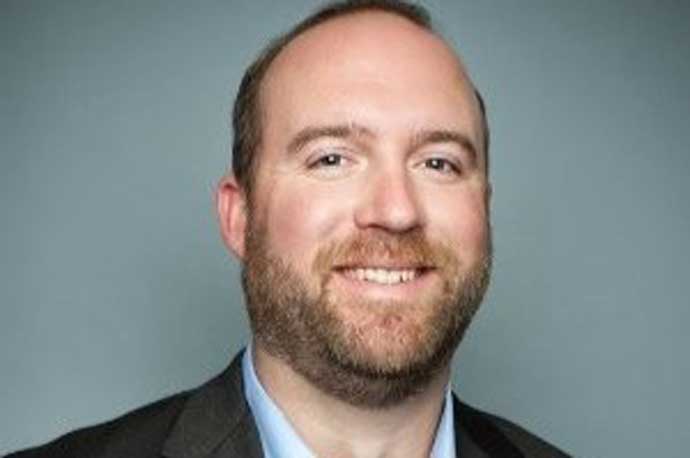
You said IMS CEO Brandon Myers (pictured) is coming in as General Informatics’ new CIO. So your company didn’t have a CIO In the past?
We did not. We had a CTO. And it was interesting, because sometimes people don’t know the difference between the two. We made sure we had a clear delineation between the two roles. We think of it as he is responsible for all of the information management that we deal with as an MSP, and anybody who owns an MSP can tell you that’s a boatload of information, and taking care of all of tool sets and, for that matter, vendor relationships that we have with those tool sets that we use, that they’re all in alignment with how we want to go to market. And so it’s been good to have him involved. There’s a lot of things that I’m still involved tactically, and he is definitely helping me with that part of the business. So he’s getting engaged.
I was the one who drove the innovation around artificial intelligence because I had some background in neural networks before I even came to General Informatics, and so I’ve been very engaged in that process. And as our business has grown and we’ve done these acquisitions—this will be our ninth acquisition—we’ve gotten to be a fairly large organization approaching $50 million in top line revenue. We’re right at 200 employees and really starting to strengthen what we’re doing in the southeast. And we had a location Birmingham, Alabama, and one in Charlotte, North Carolina. So there was a gap in between our geographies, and Greenville was perfect. IMS is right there in the middle. We’re looking forward to growing organically inside those markets, and I really do think this is one of those opportunities where one and one truly does equal three or five even.
Is the deal already closed?
It is. We closed about five weeks ago. We wanted to take some time to communicate with our customers so they are aware of it. Our approach to all acquisitions, especially this one because I feel there are so many things that are complementary between the two businesses, I always say the best idea wins. It doesn’t matter whose idea was. This is not General Informatics rubber stamping everything that we do over the top of IMS. In fact, we are embracing some of the automation they already have built into their business, so we’re excited about bringing that into our business as well. That’s usually not the case when a larger organization acquires a smaller one. But we know that we’ve all got a lot to learn, and they’ve made some strides in areas where we haven’t, and vice versa. So it’s been a really good move. We’ve already had about three migration meetings, and those have gone really well. I say all the time we need to listen twice as much as we talk on the General Informatics side, and they definitely witnessed that and recognized that. Together, I think we can take our AI work much further than where we’ve gotten individually because, again, they’ve excelled in one area, and we’ve excelled in another. When you bring those two together, I feel the synergies between the two organizations are definitely there.
Just to be clear, when you say they excelled in one area and you excelled in another, what were those areas?
Good question. General Informatics was doing a lot of maintenance contracts where we were engaged in the customers’ environments and helping them with workflow, doing some dev work where we were creating automation within their businesses. And IMS was doing a really good job of just selling platforms. They’ve embraced the Hatz AI platform. They were early adopters of that, but they weren’t doing as much maintenance. They were just doing training and making sure that customers knew how to use the platform. But because we had an advisory services division and we had some AI engineers on staff that were in our data analytics division and starting to play around with what we were doing in AI, it just made sense for us to be involved in maintenance and support of the platforms themselves. I think together their go-to-market strategy on how they sold platforms and our go-to-market strategy on selling post platform install, support, and maintenance really plugs together incredibly well. And we’ve already adjusted their pricing to adhere to more of a recurring revenue model because a lot of people don’t recognize that.
The bigger part of the reason why some AI projects don’t return the expected value is because you’ve got to truly evangelize that you have the platform and you’ve got to train your people accordingly. Otherwise, they revert to some of the other tools that they may have used like ChatGPT or Copilot or whatever. We have a very strong Copilot business. We’re very agnostic when it comes to tool sets. We’re just going to drive for security. We’re going to focus on making sure that corporate data is not being shared in public LLMs and public AI platforms that don’t address things like multi-factor authentication, encryption at rest, all of those things that are important to us. We have a lot of customers who are very focused on the various regulations and requirements that their businesses have to meet. We have a lot of business in healthcare, in legal, and in banking, so we can’t just roll out anything that hasn’t been fully tested and doesn’t meet our SOC 2 requirements as well.