Salesforce Q1 Earnings: 5 Channel Takeaways On Agentforce Growth, Monetization, Weak Cloud Segments
A growing AI business but weakening in parts of the core cloud-based product portfolio are trends Salesforce solution providers should watch entering the vendor’s 2027 fiscal year.

The earliest days of the new fiscal year for Salesforce and its solution providers showed a surge in artificial intelligence-driven opportunity through products including Agentforce and Slack, but growing pressure on some of the ecosystem’s legacy revenue streams.
These are some of the big takeaways for solution providers partnered with the San Francisco-based enterprise application vendor based on its most recent quarterly performance, disclosed Wednesday on a conference call with analysts.
Salesforce and its partners have faced industry concerns around whether AI chatbots and platforms make the Software-as-a-Service business irrelevant. Should AI agents prove that workplaces can accomplish the same tasks—or more—with fewer humans, Salesforce and its ecosystem also need to adapt to consumption pricing if workplaces no longer need to buy as many software licenses.
[RELATED: Salesforce CEO Says $8B Informatica Buy Will Create ‘Most Complete’ AI Data Platform In The Industry]
Salesforce First Fiscal Quarter Results
Shub Bhowmick, CEO of San Jose, Calif.-based Salesforce partner Tredence, told CRN in an interview that Salesforce’s investments in Agentforce have created new excitement for the vendor’s portfolio and Tredence’s practice.
“With the Agentforce work that they’re doing, it’s exciting, it’s interesting,” Bhowmick said. “Over time, as the technology grows, we’re going to lean in. … We see our role as deployment ninjas. We will do whatever it takes to deploy those agents across verticals, across horizontals.”
Growth reported by Salesforce and data analytics vendor Snowflake, which also reported quarterly results on Wednesday, show that enterprises aren’t cannibalizing software spending with AI initiatives, Wedbush said in a report after both companies’ analyst conference calls. AI demand is turning into greater benefits for software companies instead of putting them out to pasture.
Here’s more of what solution providers need to know in Salesforce’s new fiscal year and how the vendor’s AI products and core cloud offers are performing.
Agentforce Adoption Surges, Enterprise AI Agent Demand Grows
Salesforce’s AI product portfolio hit multiple new growth, usage and adoption milestones in the quarter.
Agentforce now has $1.2 billion in annual recurring revenue, more than tripling year over year and growing $400 million quarter over quarter. Agentforce sales have outperformed each of the last five quarters. Agentforce Sales also created 220,000 leads fully autonomously.
That $1.2 billion beat the $900 million estimate investment firm TD Cowen had for the quarter. And the net-new ARR of $400 million marked an acceleration from $260 million the prior quarter and $100 million the quarter before that.
Agentforce’s 205 percent growth year on year also marked an acceleration from 169 percent in the prior quarter. Agentforce and Data 360 ARR hit almost $3.4 billion, more than triple year on year, and Agentforce customers in production grew 50 percent.
Salesforce has 28.6 trillion tokens to date, more than double quarter on quarter, and nearly 1 trillion API calls across core products in the first quarter.
Salesforce has processed 3.8 billion agentic work units for customers to date across Agentforce and Slack, more than double quarter on quarter. Salesforce defines AWUs as a discrete task accomplished by an AI agent, including updating a record, triggering a workflow and making a decision.
That also means 1.6 billion AWUs consumed from the prior quarter, more than double the 771 million previously disclosed. Still, without historical information for AWUs, the data didn’t hit as hard as maybe it should, KeyBanc said in its report after the call.
Salesforce saw acceleration in AWU consumption growth quarter on quarter. Last quarter, AWUs grew 57 percent quarter on quarter, down from 62 percent in the prior quarter. Before that AWUs grew 34 percent quarter on quarter and 21 percent before that, according to TD Cowen.
During the quarter, Salesforce’s Data 360 ingested 52 trillion records, more than double year on year, and processed 12 terabytes of unstructured data. Those records include 35 trillion ingested through Salesforce’s zero copy data federation technology, more than triple year on year.
High usage translates into higher spend. On average, the vendor’s top 10 customers by first quarter AWU usage increased their total Salesforce spend by 1.5 times in the last year, Robin Washington, Salesforce president and chief operating and financial officer, said on the call.
Salesforce showed evidence that AI expands customer seat demand and consumption across the portfolio, with a record 98 deals valued at more than $1 million in new annual contract value (ACV) during the quarter.
Despite Rising AI Usage, Monetization Questions Persist
Despite all the increased usage and adoption in Salesforce’s AI portfolio, monetization remained a question mark.
Agentforce only contributed about 2 points of growth to the quarter, showing that adoption is still too to drive near-term reacceleration for Salesforce, Bernstein said in a report after the call.
Agentforce might take longer than expected for consumption-driven monetization and Salesforce executives should be transparent in reporting when Agentforce revenue comes from Agentforce stand-alone, Agentforce embedded in existing cloud products or through unlimited consumption of Agentforce credits in certain customer tiers, according to Bernstein.
The platform might be most successful in Salesforce’s core CRM software market and not in other workplace software verticals due to other enterprise software vendors offering their own AI capabilities, according to Bernstein.
Salesforce needs to continue to show that AI either doesn’t hurt its seat-based software sales model or that AI consumption and specialized module sales make up for the loss of revenue from customers needing fewer licenses, according to the investment firm. In the quarter, Salesforce’s seat-based Sales and Service clouds saw seats increase in a good sign for the vendor’s traditional business model. Agentforce contributed about 2 points of growth to Service Cloud, which grew 5 percent without it. Sales Cloud grew 10 percent.
Bookings came in weaker than hoped for a second straight quarter, according to Morgan Stanley’s report after the call. The current remaining performance obligation of $33.6 billion for the quarter came close to expectations—even though it marked an increase year on year of 13 percent ignoring foreign exchange. CRPO is considered a key forward-looking metric for overall Salesforce business growth.
Wall Street predicted $33.7 billion, Wedbush said in its report after the call. TD Cowen added that it estimated cRPO-based subscription bookings came in at about $9 billion, up 3 percent year on year but down from the 21 percent growth Salesforce reported last quarter.
Salesforce saw a deceleration to mid-single-digit booking growth in the quarter, with a lack of RPO upside “troubling,” Morgan Stanley said in its report. Salesforce, however, did report a strong showing in new annual order value in the quarter, outpacing AOV growth and a good signal for future performance.
The vendor’s executives maintained the 8 percent organic growth year on year ignoring the foreign exchange subscription revenue target for the year, showing confidence in improved growth in the second half of the fiscal year.
But the organic subscription revenue growth ignoring foreign exchange of 7 percent year on year has been falling in recent quarters, TD Cowen noted. The rate was 7 percent last quarter and 9 percent both quarters before that.
The vendor also increased the midpoint of the revenue it expects for the 2027 fiscal year, forecasting $45.9 billion to $46.2 billion. That would mark 10 percent to 11 percent growth year on year ignoring foreign exchange.
As Salesforce and its ecosystem shift from seat-based sales to consumption pricing, some good signals emerged from the vendor’s “flex credits” offer. Six of the top 10 deals from the quarter included these flex credits, according to William Blair’s report after the call.
Lag In Tableau, Marketing, Commerce Clouds
Although Salesforce’s Washington said to expect continued momentum in Agentforce, Data 360 and Slack throughout the fiscal year, she predicts “ongoing weakness” in its Marketing and Commerce clouds plus “increased softness” in Tableau bookings and renewals.
Those business segments proved a drag on sales during the quarter. Marketing and Commerce clouds decelerated to a 2 percent decline year on year, down from a 1 percent decline last quarter, KeyBanc said in a report after the call.
Without Informatica, Salesforce's organic subscription and support revenue came in at about $10.2 billion, marking a third quarter in a row with that growth coming down.
Degradation in these businesses’ subscription growth was “concerning” for Morgan Stanley, the investment firm said in its report after the call.
Salesforce executives need to say how they planned to turn those businesses around. The firm still maintained its opinion that Salesforce is in a strong position to benefit from the generative AI market and the overstatement of AI potentially replacing Salesforce’s traditional Software-as-a-Service business, according to Morgan Stanley.
Salesforce’s core business contributed 6 points of growth, with Data 360 only contributing a point, a sign of deceleration in that part of the vendor, according to Bernstein’s report after the call.
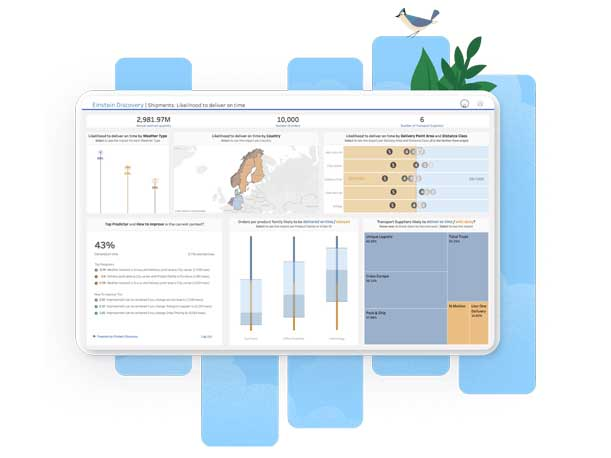
Signs of weakness in some parts of Salesforce’s traditional products could mean AI tools are providing a better interface for custom reports for nontechnical users compared with Tableau and Salesforce's analytics business, according to Bernstein. Tableau plus MuleSoft grew 1 percent, down from 3 percent in the prior quarter.
The vendor and its ecosystem could also be hitting high penetration for cloud migrations, with about 70 percent of Salesforce’s CRM market transitioned to the cloud by now, according to Bernstein.
Salesforce also faces increased competition on multiple fronts, according to the investment firm. Oracle and SAP now bundle salesforce automation with their cloud ERP products.
Microsoft has its Dynamics 365 CRM offer and beat Salesforce to market with GenAI agents, competing aggressively with its Copilot products, according to Bernstein. ServiceNow is also invading Salesforce’s space with its own CRM product.
Slack Emerges As AI Interface, Headless 360 Marks Architecture Shift
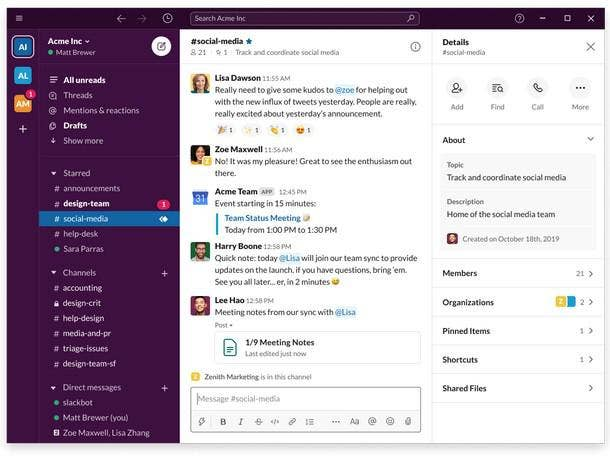
The AI era appears to have put renewed interest in Salesforce’s Slack collaboration application, a competitor to Microsoft’s Teams as an interaction layer for workplaces. For solution providers, applications like Slack and Teams serve as simple interfaces for unlocking early AI use cases, especially with nontechnical users.
In an example of growing Slack usage, its version of Model Context Protocol (MCP) surpassed 1 million active users within six weeks of launch. Slack accounted for nearly half of Salesforce’s $1 million-plus wins in the quarter, up 80 percent year on year, according to Morgan Stanley’s report after the call. Slack alongside Salesforce’s Headless 360 option could represent ways to monetize AI for Salesforce and solution providers.
Since its April launch, Salesforce’s Headless 360 platform has processed 4.5 million MCP calls into the platform, according to the vendor. Slack AWUs grew about fourfold quarter over quarter, and custom Slack applications reached 3 million in the quarter, up eightfold quarter on quarter, according to TD Cowen.
Users built 250,000 AI agents on Slack in the first quarter, more than double quarter on quarter and more than eightfold year over year, according to the investment firm.
Headless 360 marks a major architectural shift for Salesforce, decoupling its platform from its traditional interface through APIs and Model Context Protocol so that Salesforce data can reach broader enterprise workflows and third-party surfaces and AI agents, William Blair said in a report after the call.
Salesforce executives still need to detail how Headless 360 makes money, but the platform will likely be consumption based, according to the investment firm.
Other software vendors are also expected to pursue “headless” strategies to appease customers looking for flexibility with AI agents, not wanting lock-in based on which platform the user leveraged to build the agent. Plus, users will pay to access the data each software platform manages to power agents and give them context for better AI results, according to William Blair.
Slackbot is the fastest adopted AI tool in Salesforce’s history, driving 3.8 million hours of annualized productivity gains for its 80,000-plus employees. Slackbot has increased Salesforce’s productivity by around 3 percent.
“In two years, there’ll be more agents using Slack than people,” Salesforce co-founder, Chair and CEO Marc Benioff said on the call. “Every one of those agents needs the context and the data and the insights directly from Slack. Every workflow needs the data. Every action needs the integration. And every customer needs to see what’s happening across the entire business.”

Informatica Acquisition Boosts Revenue, Adds Volatility
Part of the fuel for Salesforce’s outperformance in the quarter was the on-premises and professional services businesses of recent acquisition Informatica, Washington said on the call.
First-quarter subscription and support revenue grew 12 percent year on year ignoring foreign exchange, reaching $10.6 billion. Recently acquired Informatica contributed about $428 million during the quarter.
In total first-quarter revenue, Salesforce reported $11.1 billion, up 12 percent ignoring foreign exchange—more than the $11 billion Wall Street expected, Wedbush said in its report after the call. Informatica contributed $444 million. Informatica Cloud ARR reached $1.1 billion.
Salesforce President and CRO Miguel Milano said on the call that thanks to the vendor, Informatica has significantly reaccelerated bookings after growing single digits in bookings and revenue. “We are obviously subject to the timing of some of the on-prem renewals, but we are in double-digit growth” in the Informatica business, he said.
Revenue from Informatica’s on-premises business could also create “greater license revenue volatility,” Washington said, as Salesforce migrates the company to its cloud business model.
Salesforce expects Informatica to contribute about 4 points to its second-quarter revenue growth, 3 points to its 2027 fiscal year revenue growth and 3 points to subscription and support revenue growth for the year.