Supermicro Co-Founder, Two Others Charged In Alleged Nvidia AI Chip Smuggling Operation
In a statement, Supermicro says it was informed of the indictment of the three individuals, and that the company itself was not named as a defendant in the indictment.
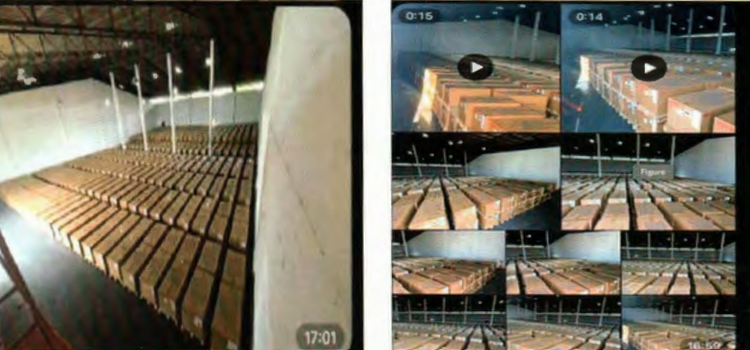
A co-founder of server and storage giant Supermicro, along with an employee and a contractor of the company, this week were indicted for allegedly shipping $2.5 billion worth of servers assembled in the U.S. with Nvidia GPUs via Taiwan to another company where they were repackaged prior to shipping to their final destinations in China.
The U.S. Department of Justice Thursday unsealed an indictment against the three, charging them for violating U.S. export control laws.
San Jose, Calif.-based Supermicro itself was not charged in relation to the case.
[Related: Accelerating AI Boom Drives Supermicro to Record Q2 Revenue Growth]
The U.S. manufacturer was described by the DOJ as a publicly traded IT company headquartered in San Jose, Calif., with the ability to integrate Nvidia GPUs into its servers for customers looking to build or expand large-scale AI computing infrastructures.
Given the ties of the executives to Supermicro, and the DOJ’s description of the U.S.-based manufacturer, Supermicro’s shares plummeted to about $21.60 per share on Friday from its Thursday close of $30.73 per share as a result of the indictment.
The three named defendants are Yih-Shyan “Wally” Liaw, a co-founder, board member, and senior vice president of business development at Supermicro; Ruei-Tsang “Steven” Chang, a general manager for Supermicro’s Taiwan office; and Ting-Wei “Willy” Sun, a third-party broker.
Liaw is a U.S. citizen, while Chang and Sun are citizens of Taiwan. Liaw and Sun were arrested Thursday, while Chang remains a fugitive.
Liaw resigned from Supermicro’s board of directors Friday, effective immediately. CRN has reached out to Liaw for additional comment.
Supermicro declined to comment on the criminal charges beyond a statement the firm issued Thursday. In that statement, Supermicro said it was informed of the indictment of the three individuals, and that the company itself was not named as a defendant in the indictment.
Supermicro said it had placed Liaw and Chang on administrative leave and terminated its relationship with Sun, effective immediately.
“The conduct by these individuals alleged in the indictment is a contravention of the Company’s policies and compliance controls, including efforts to circumvent applicable export control laws and regulations. Supermicro maintains a robust compliance program and is committed to full adherence to all applicable U.S. export and re-export control laws and regulations,” Supermicro said in the statement.
The company said Friday that it had appointed DeAnna Luna as its acting chief compliance officer, effective immediately. Luna has served as the company’s vice president of global trade & sanctions compliance since 2024.
In a statement, an Nvidia spokesperson said: “Strict compliance is a top priority for NVIDIA. We continue to work closely with our customers and the government on compliance programs as export regulations have expanded. Unlawful diversion of controlled U.S. computers to China is a losing proposition across the board—NVIDIA does not provide any service or support for such systems, and the enforcement mechanisms are rigorous and effective.”
The DOJ, in a statement, said that an FBI investigation found that Liaw, Chang, and Sun allegedly conspired to sell billions of dollars’ worth of servers integrating sensitive, controlled graphics processing units to buyers in China, in violation of U.S. export control laws.
“The indictment unsealed today details alleged efforts to evade U.S. export laws through false documents, staged dummy servers to mislead inspectors, and convoluted transshipment schemes, in order to obfuscate the true destination of restricted AI technology—China. These chips are the product of American ingenuity, and NSD (the National Security Division of the DOJ) will continue to enforce our export-control laws to protect that advantage,” said John A. Eisenberg, assistant attorney general for national security, in a statement.
In the actual indictment, which was filed Tuesday but officially unsealed Thursday, the DOJ alleges that Liaw, Chang, and Sun conspired to divert billions of dollars’ worth of an unnamed U.S. manufacturer’s servers to China that were integrated with Nvidia GPUs, including Nvidia B200 chips, which are subject to strict U.S. export controls barring their unlicensed sale to China.
The three allegedly used an unnamed company based in Southeast Asia as a pass-through entity to give the U.S. manufacturer’s transactions that they arranged the appearance of legitimate commercial activity and to obscure their China-based end customers.
The three defendants worked with executives of that company, referred to as “Company-1” in the indictment, to “submit purchase orders to the U.S. Manufacturer to reserve and purchase large allocations of the servers from the U.S. Manufacturer containing Nvidia GPUs and coordinate their onward transshipment to China. To ensure that the allocations were approved internally at the U.S. Manufacturer, the defendants and executives at Company-I prepared false documents and records, and transmitted false communications, purporting to show that Company-I was the end user of the servers,” the DOJ alleged.
Once “Company-I” received the servers, it used a separate shipping and logistic company to repackage the servers in unmarked boxes to conceal their content before sending them on to their final destinations in China, all at the direction of and in coordination with the defendants and others, the DOJ alleged.
The DOJ also alleged that the defendants and their co-conspirators took extensive measures to conceal their scheme.
“For example, to deceive the U.S. Manufacturer’s compliance team, which was responsible for conducting audits of Company-1’s purchases of servers to ensure adherence to U.S. export control laws, the defendants staged ‘dummy’ servers—non-working, physical replicas of the U.S. Manufacturer’s servers—for inspection at the locations where Company-1 was purportedly storing the servers it had purchased from the U.S. Manufacturer. However, the actual servers from the U.S. Manufacturer had already been unlawfully shipped to China. When questions were raised about Company-1’s purchases of the U.S. Manufacturer’s servers, the defendants used encrypted messaging applications to exchange draft responses containing false information about Company1’s sales and operations. Notwithstanding those questions, the defendants pressured certain of the U.S. Manufacturer’s compliance team members to authorize the shipment of servers to Company-I, knowing that the servers would then be secretly diverted to China,” the DOJ alleged.
According to the DOJ, “Company-1” by the fourth fiscal quarter 2024 was ranked as the U.S. manufacturer’s eleventh most profitable customer worldwide, accounting for about $99.7 million in revenue for the quarter.
David Harris contributed to this report.