TCS Bets Big On SAP AI Push With Crystallus Expansion
TCS’ SAP-focused Crystallus services are aimed at speeding digital transformation and AI-enabled enterprise software deployments by leveraging preconfigured industry solutions, SAP expertise, and multi-vendor integration to reduce design, testing, and rework for customers.
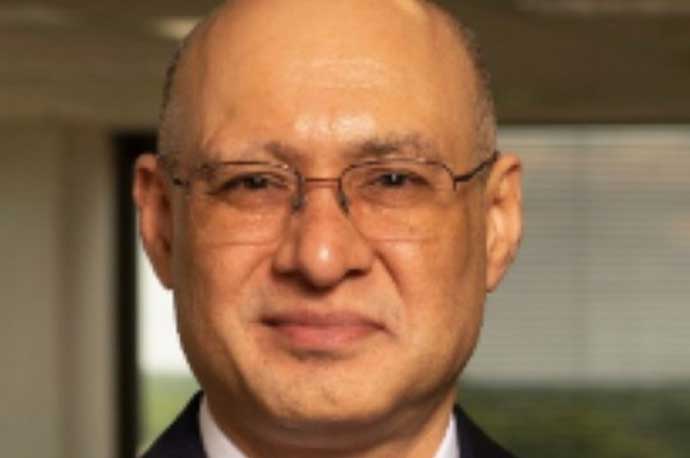
Global solution provider Tata Consultancy Services has launched new SAP-based services targeting a wide range of industries.
Those services, launched under TCS’ Crystallus brand, aim to help accelerate customers’ digital transformation plans, said Vikram Karakoti, global head of TCS’s enterprise solution unit.
TCS Crystallus is a suite of pre-configured, industry-specific business solutions designed to accelerate digital transformation by helping enterprises quickly implement cloud and ERP systems. It does so by combining pre-built assets, AI integration, and best practices across platforms like SAP, AWS, Oracle, and Salesforce, according to the company.
[Related: TCS Introduces New Agentic AI Solutions For Microsoft Azure]
Karakoti, a 22-year TCS veteran who previously managed the company’s life sciences business unit and who in the past ran TCS’ SAP practice, told CRN that SAP is the biggest portfolio in his unit, with about 30,000 out of his unit’s 55,000 employees involved with the technology.
TCS, ranked No. 2 on CRN’s 2026 Solution Provider 500, previously launched Crystallus services for applications such as Oracle and Salesforce, Karakoti said. Oracle has launched 600 AI agents under Crystallus, while TCS itself has already activated 400 agents, he said.
TCS Crystallus is already being used in multiple deployments in a variety of industries including transportation, Karakoti said.
“We have more than 170 sub-industry specific solutions on Crystallus,” he said. “It helps give us a head start and helps us make sure that the design validation from the users happen quite early, and the sign-off happens early as well. And on top of that, our ability to demonstrate the AI helps us.”
With Crystallus, TCS is more quickly able to build multi-vendor AI solutions, Karakoti said.
“I think whenever customers are looking for a partner today for any transformation program at the business layer, it may be dominated by or enabled by one large ERP, let’s say SAP, but it is never about one product,” he said. “It is about all the surrounding applications and ERPs which should go along with that, because lots of interim architecture evolves. If we want to give one unified experience to the customer, it is very important that we bring it under one umbrella.”
Furthermore, Karakoti said, these companies have evolved in different ways as the cloud and now AI have come into prominence.
“The way the whole architecture is evolving, the way these products are being taken to the customer, is very different than what it has been ever in the past,” he said. “We [recently] spent two full days with the entire SAP leadership team including the COO Sebastian Steinhaeuser and the people who are leading AI. The whole purpose of that meeting was to look at it from a 360-degree point of view [including] how we can bring an AI-first approach to servicing our enterprise customers.”
Internally, Karakoti said, TCS has taken an AI-first approach to SAP from functional and technical specifications to end-user documentation and training, all of which is table stakes today.
The next phase, Karakoti said, is using AI to speed enterprise software implementation work, particularly by converting user stories into functional designs, functional specifications and technical specifications with less manual effort, lower rework, and improved quality.
“We want to start off with, is the output correct,” he said. “We want to validate and then calibrate and then calibrate it further and do the sign off. That is what we are looking for. This reduces the business involvement when you fit to design by 50 percent because of this intervention. In terms of testing and coding, we are probably using AI already for 50 [percent] to 60 percent when it comes to design validation. It brings good results. It is already showing gaps in terms of the design. And when you go through the whole cycle, it helps reduce rework. That itself is a big savings.”
SAP has come out with a big agentic AI play, and TCS will play a big role there, Karakoti said.
“SAP is moving in that direction, definitely with the core foundation of SAP S/4HANA and SAP BTP (Business Technology Platform), along with data foundation in partnership with Databricks and Snowflake,” he said. “And on top of that, SAP Joule is its orchestration layer to not only create agents but orchestrate even the agents coming from other applications. So that is the whole focus now on the platform journey, and we are one of their good partners.”
Karakoti also discussed SAP’s recent moves around database access and autonomous agents, arguing that customers should view the changes as a governance, data sovereignty, and security initiative rather than a restriction on AI innovation.
“Some of have reached out to us,” he said. “We are helping them to connect with SAP to explain to them it is not about restrictions. It’s about better governance for their benefit, for the sovereignty of their data.”
With ServiceNow, Karakoti said TCS has a 360-degree partnership similar to its SAP relationship, spanning go-to-market work, internal adoption, and customer success. TCS is “customer zero” for ServiceNow internally. It is using the platform for its own asset management and IT operations even as it expands its role as an extension of ServiceNow’s customer success organization from about 50 people to an expected 300, he said.