5 Companies That Came To Win This Week
For the week ending Nov. 21, CRN takes a look at the companies that brought their ‘A’ game to the channel, including Palo Alto Networks, Huntress, Schneider Electric, Pia, Lumen Technologies and HPE.

The Week Ending Nov. 21
Topping this week’s 5 Companies that Came to Win list is Palo Alto Networks for its blockbuster, multibillion-dollar acquisition deal that will bolster its AI observability capabilities.
Cybersecurity company Huntress makes the list for its own strategic acquisition in the identity security management space. Schneider Electric wins applause for launching an AI-powered version of its popular EcoStruxure platform for managing energy, power and building systems.
Pia makes the list for launching Automation Hub, a centralized marketplace designed to change how MSPs discover, deploy and share automation without adding new costs. And Lumen Technologies and HPE win applause for striking an alliance with the goal of helping businesses and organizations more quickly deploy secure AI capabilities at the edge of corporate networks.
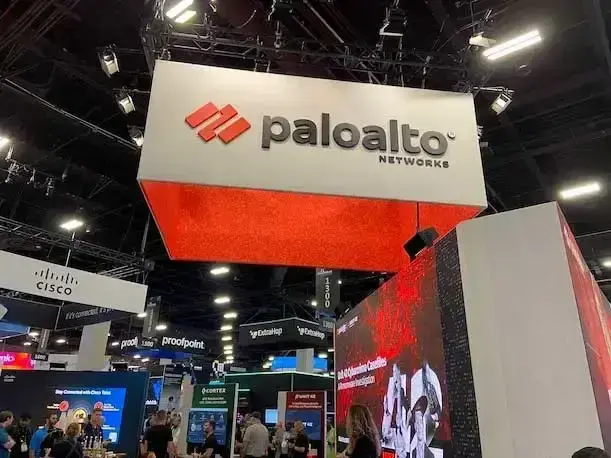
Palo Alto Networks To Acquire Chronosphere For $3.3B, Boosting AI Observability
Palo Alto Networks tops this week’s Came to Win list with its blockbuster $3.35 billion deal to acquire observability platform provider Chronosphere, with an eye toward addressing major challenges in the category due to the growth of AI adoption.
The deal is targeted at helping customers and partners meet observability needs in the era of AI, Palo Alto Networks CEO Nikesh Arora said during the vendor’s quarterly call with analysts this week.
“The 17-year-old observability industry was not designed for the AI era,” Arora said, adding that Chronosphere is a provider of “next-generation observability” with a platform that is “always-on.”
This is the second multibillion-dollar acquisition deal unveiled by Palo Alto Networks in 2025, following the cybersecurity giant’s $25 billion deal to acquire identity security vendor CyberArk, announced in July.
With the planned acquisition of Chronosphere—which is expected to close during the second half of Palo Alto Networks’ fiscal 2026, which ends July 31—Chronosphere will be combined with the vendor’s AgentiX platform, which enables building and governing of AI agents.
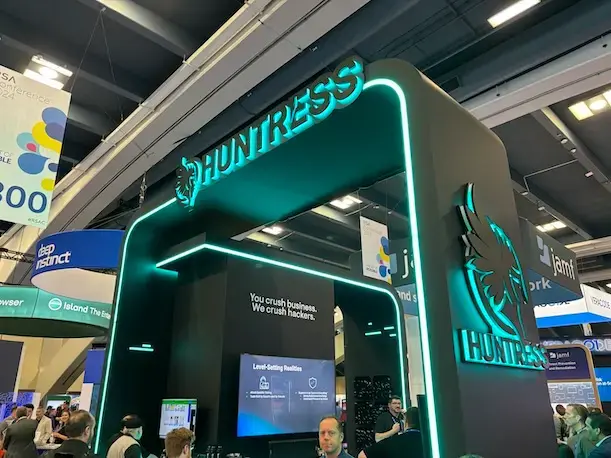
Huntress Doubles Down On Identity Security With Acquisition Of Inside Agent
Staying with the topic of savvy acquisitions, Huntress this week mapped out the next major step of its identity protection strategy with the acquisition of Inside Agent, a startup that develops technology for identity security posture management.
The acquisition brings additional capabilities for protecting against identity-related threats in Microsoft 365 environments to the Huntress managed cybersecurity platform, the company said.
Huntress plans to roll out Huntress Identity Security Posture Management, based upon the Inside Agent technology, which “will assess over 100 checks and balances across environments based on industry-recognized standards.”
Key capabilities include continuous monitoring for misconfigurations and excess privileges as well as for unused accounts, all of which are issues often exploited in cyberattacks.
Huntress has been increasingly focused on identity in recent years, including through its identity threat detection and response offering, which currently protects more than 8 million identities, according to the company.
The addition of identity security posture management will enable Huntress to make “full-spectrum identity security accessible to organizations of all sizes,” the company said.

Schneider Electric Unveils AI-Powered EcoStruxure To Unify Energy, Power And Building Systems
Schneider Electric wins applause this week for its introduction of a new AI-powered version of its popular EcoStruxure platform that’s designed to manage energy, power and building systems.
The new EcoStruxure Foresight Operation platform was introduced on the first day of the company’s Innovation Summit North America in Las Vegas.
The $38 billion energy, power and cooling behemoth is touting the new platform—which will be available to early adopter customers in the third quarter next year—as a “transformative leap” forward in managing energy, power and building systems in the AI era.
Through AI and what the company calls “built-in multi-domain applications,” Schneider Electric said EcoStruxure Foresight Operation continuously learns, adapts and proactively resolves power and energy challenges before they arise.
Schneider Electric also said the new platform boosts operational efficiency by up to 50 percent by taking a unified approach to managing energy, power and building systems. That capability provides what the company calls “unprecedented control, visibility and predictive insight.”
Schneider Electric Vice President of U.S. Channels Gordon Lord said the new EcoStruxure Foresight Operation platform is an example of the software prowess the company is bringing to partners as it transforms into an energy technology provider.
“As Schneider transforms into an energy technology provider, we have to be software-defined,” he said. “Software is what’s going to get us to where we need to be with our customers.”

Lumen Technologies, HPE Team To Tackle AI At The Edge
Lumen Technologies and HPE struck an alliance this week with the goal of helping businesses and organizations more quickly deploy secure AI capabilities at the edge of corporate networks.
Under the partnership the two companies will integrate Lumen’s edge infrastructure offerings with HPE Networking—now including Juniper Networks technology—to give enterprises smarter, more secure edge AI operations that can be launched quickly and cost-effectively, the two companies said. The new partnership will empower edge AI use cases such as those in retail, health care and manufacturing.
Lumen’s edge infrastructure lets enterprises deploy AI services close to where data is created and consumed, while reducing latency and making it easy to scale across hybrid environments, the telecom said. In July Lumen introduced the Lumen Connected Ecosystem that customers can use to purchase, provision and manage their network services as easily as they do their cloud solutions.
HPE is a Lumen technology partner and part of the Lumen Connected Ecosystem, a spokesperson for Lumen confirmed. The HPE-owned Juniper Networks MX Series Universal Routers, deployed across the Lumen Network, are optimized for ultra-low latency and high throughput, ideal for powering real-time AI applications, the companies said.
“We’re helping businesses turn ideas into action, quickly and securely,” said Dave Ward, chief technology and product officer for Lumen, in a statement on the partnership. “By combining HPE Networking’s programmable networking with Lumen’s edge capabilities, we’re making it easy for companies to launch AI services that respond in real time, scale effortlessly and stay protected.”
Lumen this week also announced a partnership with NaaS specialist Meter to provide a unified WAN and LAN connectivity offering, the Lumen x Meter service, in a convenient “click-to-buy" model for enterprises. That was unveiled at the MeterUp 2025 event in San Francisco.

Pia Debuts Automation Hub, A Centralized Marketplace For MSPs.
Pia this week launched Automation Hub, a centralized marketplace designed to change how MSPs discover, deploy and share automation without adding new costs.
Automation Hub brings together prebuilt automations from Pia, MSPs and select vendors, consolidating chatbot flows, SmartForms, extensions and code samples in one place. The goal, according to CEO David Schwartz (pictured), is to let MSPs quickly expand automation across clients without rebuilding workflows from the ground up.
“We’re trying to deliver things that work immediately and drive efficiency as soon as possible,” Schwartz told CRN in an exclusive interview. “A lot of MSPs have great ideas but not the internal resources to bring them to life. This gives them a space where those solutions already exist.”
The timing reflects a surge in demand, he said. Partners have been asking for deeper capabilities, more ways to share automations across the MSP community, and closer integration with other vendors.
Vendor participation will be highly curated. Pia will work directly with chosen vendors, based on MSP demand, to co-develop “automation packs,” rather than letting vendors upload freely. Schwartz said the Tampa, Fla.-based company wants to ensure the packs quickly drive value because “adoption suffers when tools don’t deliver immediate impact.”