ServiceNow Partner Cask NX Rebrands As Ondaro, Names New CEO
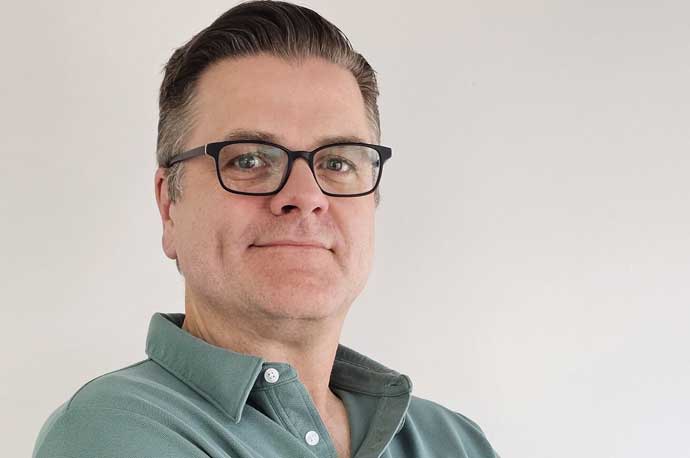
‘We’re looking forward to a new chapter of how we’re continuing to grow. We felt that this was the right time to take on a little bit [of a] newer persona and drive into the future with it. ‘ Onda ’ means ‘wave’ [in Spanish and Portuguese], and we’re going with the waves of change,’ new Ondaro CEO Jeffrey Gregory tells CRN.
The ServiceNow ecosystem is a dynamic space with new channel partners just starting, longtime channel partners merging or acquiring each other, new waves of private equity investments coming, and now with a partner going through a complete rebranding.
That company is Ondaro, a San Diego-based ServiceNow solution provider that until mid-August was known as Cask NX. Ondaro also just brought on Jeff Gregory as its new CEO as of Aug. 1.
Gregory, in an exclusive conversation with CRN, said the name “Ondaro” stems from the word “onda,” which in Spanish and Portuguese means “wave.”
[Related: ServiceNow Partner 8Flow Bags $10M For AI Agent Workflow Mapping]
“We’re adapting, as everybody’s adapting, to big shifts going on in the world with all the new technologies, AI and other things,” he said. “We’re looking forward to a new chapter of how we’re continuing to grow. We felt that this was the right time to take on a little bit newer persona and drive into the future with it.”
Ondaro is a bit unusual for a solution provider today in that it has years of solid growth without ever taking outside investor money or making acquisitions, Gregory said.
“We don’t have any plans for outside investment today, but we keep our eyes open to understand where the market is and what we need to do,” he said. “I think there’s going to be certain investments in the future that all companies are going to have to make, and we’re going to have to evaluate that.”
There’s a lot going on with Ondaro as it looks to its future and the future of the ServiceNow ecosystem. Here is more of CRN’s conversation with Gregory.
How do you describe Ondaro?
I describe Ondaro as the premier pure-play ServiceNow partner, and we are never ending in our pursuit to make ServiceNow better for our customers and deliver value. We’re a people-first company. Everything is around our people, making sure that we do what’s best for our employees, which therefore is what’s best for our customers. That’s how we’re focused and driven.
The big news around Ondaro is the company’s rebranding. What’s behind the name change?
With the name change, there are a couple of things that we’ve looked at. We’re adapting, as everybody’s adapting, to big shifts going on in the world with all the new technologies, AI and other things. We’re looking forward to a new chapter of how we’re continuing to grow. We felt that this was the right time to take on a little bit [of a] newer persona and drive into the future with it. ‘Onda’ means ‘wave’ [in Spanish and Portuguese], and we’re going with the waves of change. And we think that’s a strong mission for us, and a strong value that we can take forward.
You recently joined the company, right?
Officially, Aug. 1. And then we did the handover around Aug. 6.
What has been your involvement with ServiceNow?
My involvement goes back to 2012 with a couple of different companies. I was at [ServiceNow partner] Fruition Partners for several years as COO. We sold Fruition Partners to DXC in 2015. I was at DXC for a year, and then I went to NovoScale, all in the ServiceNow ecosystem. NovoScale was a near-shore provider with about 150 people. I was CEO there for just over four and a half years. NovoScale was approached by Sunstone Partners, which merged us with two others to create Thirdera in 2021. At Thirdera, I took on the role of global CIO, while two of the other CEOs exited. At that time, we brought in a new CEO, and then we built the company up from about 220 people at the time when we merged to over 1,000 in just under three years. Thirdera was then sold in January of 2024 to Cognizant. I’ve done the whole gamut from the start: managing partners, doing sales, doing delivery, building the platform, building on the platform, over the last 12 or 13 years. It’s really been a great experience. And I love the platform. I love working with customers. It’s been something.
Were you involved with the rebranding to Ondaro, or was that done before you joined?
I was involved just toward the tail end. It had started prior to me.
Does Ondaro, and before that Cask NX, have a history of acquisitions? And did the company take any outside investment?
We’ve organically grown since the founding and have grown over the years. No acquisitions.
Ondaro is a boot-strapped company all the way.
That’s actually more and more unusual in this space. Is that something you could see changing?
I would agree it is highly unusual. We’re absolutely looking at all alternatives as we’re continuing to grow. If there’s something that would make sense for us, we would look at it. We don’t have any plans for outside investment today, but we keep our eyes open to understand where the market is and what we need to do. I think there’s going to be certain investments in the future that all companies are going to have to make, and we’re going to have to evaluate that.
No equity stake from ServiceNow? ServiceNow sometimes takes equity stakes in some of its channel partners.
They do. There are some things that they offer there. ... I think they do some investments. They do co-investment more with a services partner versus a product-based partner. We have a lot of IP and strong deliverables and products that we put together. But we’re not a SaaS or another product company, where they would take more of an equity stake. It’s really clear it would be more of a co-investment in a solution or solution set, if you will. So we definitely work with them from a partner perspective.
What’s Ondaro’s focus in the ServiceNow environment in terms of either geography or verticals?
Our company is based in North America and Latin America. We have 200-plus employees in the U.S. and Canada and about 190 or so in Brazil and a few in Mexico, and we’ve been growing those areas out as well. So from a geography standpoint, we cover all of North and South America. We don’t have anything outside of these regions at this point from a geography standpoint.
From an offering standpoint, we focus across the board on end-to-end solutions. I’ve worked with Ondaro in the past when I was at other companies, so I’m very familiar with the capabilities and the people, which is the reason I came. We’re looking to put together a very clear path of what our offerings are. Right now we do offer across-the-board solutions. I think we’re going to start to look at how we highlight and specialize some of these opportunities, especially around AI. So right now we do full service, and I think we’re going to continue to do full service, but we’re going to look to specialize in a few areas. This is one of the things that I’d love to talk to you [about] in another three months. I’d love to let you know exactly where I’m shifting things going forward. But we’ve started quite a few AI projects that I think are going to deliver us some very concrete results that we’ll then be able to expand on.
Do you see Ondaro someday making acquisitions, growing inorganically as well as organically, or is that not on your radar?
It’s always on the radar. As we’re growing, if there is an opportunity that makes sense to acquire a particular group or specialty, we would absolutely look at that. I think you have to. I don’t think there’s an option anymore to just completely grow organically forever. I think there may be some delivery areas that we would like to enhance, or some solutions [where] we may want to go even deeper. There are some great smaller, midsized companies out there that we would definitely entertain acquiring.
Does Ondaro have any particular solution or vertical focuses?
So we’ve done a couple different key [areas]. I think we’re really digging into the AI components across the board. I think the challenge that you probably come across is, what does that actually mean? Everybody says ‘AI.’ We’ve got a couple of big projects in the works that will show some demonstrative results that we’re able to achieve—workflows working, development coming through—and seeing results and metrics coming out of these projects. I’m looking forward to talking about those in the next couple of months. But from a verticals standpoint, we’ve looked across the board at several different industries. We have a lot in federal where we’re in SLED, and we’re working on transformation. Everybody does transformation, but as we look into these areas, we’ve hit a whole bunch of things, including developing custom applications for insurance and health care. We’ll continue to do that.
The verticalization question can be an interesting challenge because everybody looks at it a little bit differently. ServiceNow has their vertical nature, but that may not actually work with every services company and how they deliver. We’re trying to match the vertical nature of how ServiceNow sells within reason. I’m going to keep digging into that a little bit. But I think the key is, what can we deliver from a performance perspective as well as customized solutions? Insurance is very specific. It’s very different from health care. It’s going to be very different from financial or HR.
Has your federal business shifted at all with changes in the administration”
A little bit. It’s actually a little bit better in terms of what we’re doing. The kinds of mission-critical areas that we are in have stayed in play and focus. The challenge is the unknown. Like tomorrow, is it going to change? Quite possibly. But overall, it’s been fairly stable. So I feel pretty good about that. The ServiceNow platform is a platform that is pretty substantial with the solutions that it provides, which are critical.
Is there anything else that you think we need to know about Ondaro?
I think the biggest thing is that we are a company that is excited to work in this area. We’re excited to work on this platform. What we really want to do is focus on delivering value to companies. And that is one of the things that I’ve done over all my years. This always doesn’t happen, right? Some people might say, ‘Oh, I just did a million-and-a-half-dollar project, but I don’t know what it did for me.’ Those are big challenges. It’s the big challenge we have today with AI, where maybe 60 [percent], 75 [percent], 85 percent of these projects that companies are working on don’t see value and fail. So one of the things that I want to make sure that people know about us is we go in as people-led, value-led, and we show demonstrable results at the end of every project. Otherwise, it isn’t a successful project, right? We never want anybody to walk away thinking, ‘I don’t know why we just spent money with so and so.’ I want them to come out saying, ‘Hey, we’re now able to on-board somebody in an hour. It used to take six weeks. I’m now able to get my documents approved or updated immediately, where it used to take us weeks and months, or it would never happen at all.’ Those are results.