N-able CMO On Business Resilience: ‘We’re Positioned To Cover The Full Lifecycle’
‘We’re positioned to cover the full lifecycle an MSP needs to deliver business resilience. Operationally, we’re seeing more MSPs offer resilience as a service so they can talk in outcomes, not just, ‘Here’s an EDR, here’s a backup.’ They can talk about keeping the business running and profitable,’ says N-able CMO Vikram Ramesh.
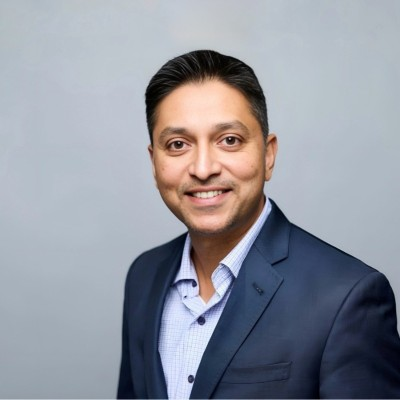
Vikram Ramesh believes resilience has become a popular word in the cybersecurity market, but he said N-able is working to make it concrete for the MSP community by tying it to outcomes.
The chief marketing officer at Burlington, Mass.-based N-able said the vendor’s focus is broader than cyber resilience. It’s showing up for partners as a “true business continuity ally” when an incident threatens revenue, reputation and day-to-day operations.
“We’re positioned to cover the full lifecycle an MSP needs to deliver business resilience,” Ramesh told CRN. “Operationally, we’re seeing more MSPs offer resilience as a service so they can talk in outcomes, not just, ‘Here’s an EDR, here’s a backup.’ They can talk about keeping the business running and profitable.”
While N-able has long operated through MSPs, the company is broadening routes to market to reflect how different customer segments buy without abandoning its channel-first model. The emphasis, the CMO said, is on meeting partners where they are, enabling them with repeatable programs and keeping the message consistent across MSP and VAR partners, “Our official focus is SMB, 2,500 and lower, but we do get pulled into enterprise.”
A piece of that resilience channel strategy also centers around AI and how N-able is helping partners sell, deploy and monetize it.
“A big focus is AI, but from a channel perspective we’re making sure it’s an actionable product partners can sell and deploy, not just ‘AI-powered’ messaging,” he said. “From a go-to-market standpoint, it’s about telling the right story: how does AI apply in the product right now?”
CRN spoke further with Ramesh to discuss N-able’s AI-forward channel strategy, partner constraints and how N-able is building to become the “vendor that covers the breadth of the threat lifecycle.”
N-able has transitioned itself into a business resilience partner for MSPs. What does that look like in practice?
Resilience is kind of the flavor of the year. Everyone talks about it and defines it a little differently. From an N-able perspective, we serve the SMB market through MSPs and MSSPs that protect everyday businesses. And at the end of the day, if there’s a breach or an event that’s business-ending, we need to help the MSP keep that business up and running. For us, there are three parts to that. One is endpoint management and protection—endpoint resilience. Then there’s the security operations piece. If there’s an attack, how do you respond—cyber resilience. And then there’s data protection, making sure data resilience is covered too. That’s where we’re different.
A lot of competitors might have backup but not endpoint or SecOps, or they have one piece and have to partner for the rest. We’re positioned to cover the full lifecycle an MSP needs to deliver business resilience. Operationally, we’re seeing more MSPs offer resilience as a service so they can talk in outcomes, not just, ‘Here’s an EDR, here’s a backup.’ They can talk about keeping the business running and profitable.
You’ve been with N-able a little over a year now. What was your channel strategy when you came in and how has it evolved?
N-able has always been a channel-first company. I came in through the Adlumin acquisition. Before that, N-able primarily sold through MSPs and Adlumin sold through VARs and distribution, further up-market. So the strategy evolved, but the focus didn’t change. We still sell to SMB, customers who want to consume through an MSP can keep doing that. But now we also support VAR and distribution routes. On the enablement side, we’re recruiting partners and giving them the right toolkits. From a marketing standpoint, it’s not just messaging, we’re helping them sell more efficiently with campaign in a box programs, consistent storytelling and tools that support execution.
Our value prop is one vendor that covers the breadth of the threat lifecycle. Platformization was the buzzword last year, but the idea still resonates. Partners like a single provider that can cover the full lifecycle.
How are you trying to differentiate your channel strategy from competitors?
From a channel perspective, what’s been unique, and what’s resonating, is that we’re going with a portfolio of solutions that’s best-of-breed. In the past we might have said, ‘You have to consume N-central to work with N-able.’ Now we’re saying: if you already have an RMM (remote monitoring and management) and you’re looking for XDR (extended detection and response) and MDR (managed detection and response), you can work with us in an open way, and then add on Cove. That said, the way a lot of customers come in is they start with N-central and then there’s a natural path for them to consume more security and more data protection.
So for this year, what are some of the top priorities when it comes to channel strategy?
A big focus is AI, but from a channel perspective we’re making sure it’s an actionable product partners can sell and deploy, not just ‘AI-powered’ messaging. We announced N-zo as an AI assistant for UEM (unified endpoint management) and over time that will extend into SecOps (security operations) and data protection. We also announced our MCP (model context protocol) server so partners can build agents themselves, or support customers who want to build agents leveraging our MCP server. And we’re talking with more tech-savvy partners about building value-added services on top of what we offer. That’s a big part of how we’re approaching the channel.
Are you going upstream at all to enterprise? Or are you staying with MSPs? What’s the strategy there?
Our official focus is SMB, 2,500 and lower, but we do get pulled into enterprise. We just signed a partnership with [Premier League] Manchester City [Football Club], we’re the official cybersecurity partner, and they’re leveraging our tech. And we also have deployments with 15,000 to 20,000 endpoints, which isn’t your typical SMB profile.
With AI in everything now, and more and more agents coming, how does that impact how you’re helping partners from an enablement standpoint?
From a go-to-market standpoint, it’s about telling the right story: how does AI apply in the product right now? On the UEM side, that’s N-zo and the MCP server. On the SecOps side, we’ve been leveraging AI for a while…about 90 percent of our Tier 1 tickets are automated.
And with Cove, what’s interesting is recoverability. With a lot of backups, you don’t really know if the data can be restored until you need it. With Cove, there’s always-on recoverability testing using AI, so we can guarantee over 99 percent that the data you’ve backed up can be recovered and restored. We’ll add more AI capabilities over the coming months, which gives the channel more opportunities to sell new products.
Are you seeing partners demand different types of support, or is it more about messaging as they start adopting AI-driven services? What are they having the most trouble with?
It’s not really the messaging, everyone has AI messaging. Where partners need support is how to actually consume AI: what it’s doing, how to use it and how to build on it. Until last year, we were using AI to write emails. Now we’re building agents. Things moved fast, so partners are asking, ‘Can I build AI coworkers that help me scale?’ A 10-person MSP can start operating more like a 50-person MSP by using agents to move faster. They’re looking for tools we build, tools we build together and frameworks they can build on top of so they can layer services and new offerings on top of our solutions.
Everyone is having the ‘I need an agent’ conversation. It’s, ‘How do I build one?’ or ‘What are you doing to help me?’ But to productize agents in a meaningful way, you need a true system of record. The data we have is what makes it valuable. You can build an agent, but without the right data behind it, it’s not going to deliver the same outcomes. With the MCP server, it’s getting more real: an agent can talk to the system. Then the question becomes what you can do on top of that.
So when you’re talking to partners about AI, what’s their biggest bottleneck? Is it monetizing it? Deploying it? Selling it? What’s their biggest constraint?
It depends on what stage they’re in. Stage one is, ‘What do I build, and how do I monetize it?’ They’re just starting. I met a two-person MSP recently, a family business, and they said, ‘When we retire, we don’t want this business to die. Can we leverage AI? We just don’t know how.’
Stage two is experimentation and shadow AI: they’re using tools internally, building things and sometimes putting sensitive information into public models while they figure it out. Stage three is cost reality. They’ve got engineers using tokens and then the first bill hits. It’s similar to what happened when cloud arrived and the first cloud bill surprised people.
What’s your biggest challenge when talking to partners and trying to help them get to AI maturity?
Over the last year, we brought partners along the transformation we were on, going from an IT management company to a cybersecurity company. That’s worked well, and now people look at us as a cybersecurity company delivering cybersecurity-focused products. With AI, partners are looking to us and asking, ‘How do you see this evolving, and how do we come along?’
As partners start leveraging AI, a big question is, ‘How do I do this safely?’ At the end of the day, an agent is an asset with an identity, like another server or another identity. But now you could have thousands of them. How do you manage them, and what permissions do they have? So they’re looking to us for guidance. And from a marketing standpoint, my challenge, and opportunity, is to educate partners on how we can do this together. We’re learning in the process too, because it’s evolving quickly. Messaging and go-to-market can change weekly, if not daily.
So where do you see the biggest growth opportunities for MSPs in the next 12 months?
A year from now, I think we’ll be talking about agents and sets of agents working together. An MSP could evolve into a managed intelligence provider. The workforce will look different too. I’m building agents internally to help my team scale faster. We’ll also have better security and governance boundaries, because right now we don’t have a proper harness for what an agent can and can’t do. It’s a bit of the wild, wild west. I think by next year, we’ll see better controls.
Lastly, what’s your message to partners on what they can expect from N-able, in terms of partner experience, especially from an AI perspective?
N-able is focused on being that business resilience partner with AI-forward products. You’ll see AI embedded across everything we’re doing, in a way that helps partners scale faster, drive more profitability and accelerate growth with N-able.