Qlik Channel Chief Michael Gray: Partners Are ‘A Strategic Growth Engine’
Gray, who took over as Qlik’s new top channel executive in early March, calls the company’s partner program “rock solid” and emphasized his plans to leverage ‘the power of three’ as Qlik combines its software with the capabilities of its channel and technology partners to develop comprehensive AI solutions.
While Qlik’s roots are in the business intelligence software space, the company—thanks to a number of strategic acquisitions and savvy management moves in recent years—has become an industry powerhouse in data analytics, data integration, data governance and AI technologies.
With the rapid proliferation of AI applications and agents, the need for huge volumes of high-quality data is spurring demand for Qlik’s technologies that provide businesses and organizations with a trusted data foundation for their AI initiatives.
And that’s creating opportunities for the hundreds of VARs, systems integrators, MSPs, consultants and other channel companies that work with Qlik, including participating in the Qlik Partner Program.
So it was big news earlier this year when Qlik hired former Arctera and Veritas channel executive Michael Gray to become the company’s new channel chief, replacing David Zember who left in January to take a job with iManage.
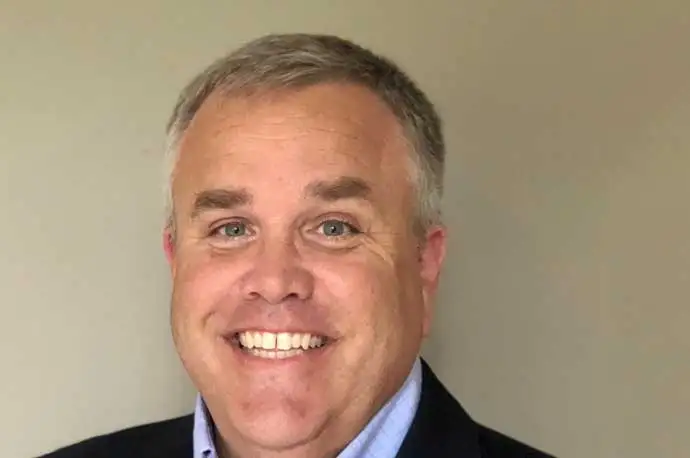
Gray (pictured) started in his new post in early March, a little more than a month before Qlik Connect, the company’s annual customer and partner event in Orlando where he had the opportunity to meet with dozens of the company’s channel partners (as well as briefly meeting with this CRN editor).
Gray’s assumption of the channel chief job came just a couple of months before Qlik announced on May 26 that Mike Capone, the company’s CEO for eight years, had stepped down from his role. Qlik has hired Saugata Saha, most recently president of S&P Global Market Intelligence and chief enterprise data officer, as Qlik’s new CEO starting July 31.
CRN recently spoke with Gray to talk about his first few months at Qlik and how his background and business experiences make him well-suited for the role. (His formal title is Qlik senior vice president, global channels and alliances.)
Gray also spoke about his vision of leveraging the “power of three” to provide AI-powered solutions —combining Qlik’s product portfolio; technology and products from the company’s technology partners and the major hyperscalers; and the services, solutions and expertise of Qlik’s channel partners.
“Our partner business, our solution provider business, they’re doing great, they’re doing their thing,” Gray said. “And then I see our tech alliances businesses thriving. Bringing that all together is a big, big thing for me in terms of when I say ‘tapping into the power of three’ when you look at the AI opportunities and projects that are being worked on.”
Gray also hinted at plans to upgrade the Qlik channel program with more incentives and additional enablement capabilities for partners while also making it simpler and more predictable for partners to work with the vendor.
“Our channel program is rock solid, you know, it’s not broken. It’s a great ecosystem that we have. What we want to do is make it a practice that we [and] our partners can keep building on,” Gray told CRN.
The following is a transcript of Gray’s conversation with CRN. The text has been lightly edited for clarity and length.
What attracted you to the position at Qlik? I believe you knew Qlik Chief Revenue Officer Brian Hamel?
Certainly, I’ve got a connection there with Brian Hamel, our CRO. But for me, it’s this point in time that we’re at right now, with the intersection of AI and data, and just what’s happening. Qlik is a company that’s very well positioned. I think that was a big attraction.
The other thing is, you know, I’ve come from larger companies, IBM and Oracle, and then I spent some time running the cloud business at Veritas—that’s where I worked with Brian. And then when Veritas [was bought by] Cohesity, we spun out a new company called Arctera. I was one of the founding executives there when I got the opportunity to stand up the channel and alliances organization at Arctera. Now, Arctera was a little bit smaller, we had about 1500 employees, and it was around $500 million ARR after coming from those larger companies. But what I really loved about it was the opportunity to really transform something, and we kind of did a lift and shift from the Veritas channel program, and then we got the opportunity to kind of work from a clean slate and say, ‘OK, I want to build something great.’
For that we had a successful exit in December [Arctera was acquired by Cloud Software Group]. And the timing was great. When I learned [about the Qlik position] and really dug into what Qlik is doing, I just thought, with what’s happening right now on moving, trusting, and taking action on data, I just feel like we are so well positioned. I think it’s a great technology stack and I love the people, you know, through the interview process, getting to know Qlik, our leadership, our teams are fantastic people doing great work. And I just looked at this and said, ‘Here’s an opportunity to come into a company that’s very established, been around for a long time, with a great legacy, who is transforming what they are around AI,’ and I just thought I could help drive that. And I see some great opportunities in the channel to really make it a very big driver of growth for the company as we move forward.
What aspects of your previous positions at Arctera, Veritas, Oracle, and IBM prepared you for this role at Qlik?
Well, a couple things, I think. Number one, I mentioned before about having that opportunity to launch a channel and think about, like, if you were a brand-new company, how would you do it today?...Being able to come in and take a look at something and think about it through a different lens at Arctera helped prepare me very well for this, and made this attractive.
And I think the second thing is the mix of large and smaller companies [where Gray has worked] is really something that, you know, this is the size of company where I feel that I can be extremely effective as a leader and where we’re trying to drive this business above $2 billion. I want to be a big part of that.
I would also add that my background is not just channels and alliances. If you think back to IBM where I started, I had the opportunity to have a very well-rounded opportunity there, experience there. I worked in servers, data storage, then I moved to software. For a while I had a global responsibility in our global financing business.
So I feel like I’ve come into these channel alliance roles with a perspective of field sales and channels and alliances. And I kind of meld that together, and I’ve always felt like that really has helped help be a differentiator in these roles.
Talk about the scope of your duties there at the company. And what is your job mandate, so to speak?
I lead our global organization, channels and alliances. And when you think about that, underneath that, is our solution provider network, our QPP, our Qlik Partner Program, and that whole group of partners. And then, in addition to that, our global systems integrators and our tech alliances. You know, we’ve got some very good established partnerships with AWS, with Databricks, and some really exciting new ones now with ServiceNow and Snowflake that have just started to come into play.
When I think about my remit, it’s really twofold. I really came in here, I think, to reshape how Qlik shows up for partners. I think the channel is probably the most important lever Qlik has for its next growth chapter, not just a distribution mechanism, but a strategic growth engine.
So I’m working on, I would say, almost a 50-50 mix. I would say 50 percent of my time I’m thinking about the transformation and working on a vision and strategy and go-to-market for our channel that has better economics for partners, a program that’s designed to reward partners and build real practices around Qlik—not just being transactional. That’s a big, big, big focus for me. It might even be more than 50 percent—spending a lot of time on that transformation of the channel in a very positive way that makes it more rewarding for our partners.
I think that our partners deserve predictability. They need to know that when they invest in building a Qlik practice, we’re going to protect and reward that investment and invest back in them. I think that’s a huge part of what I’m doing.
And then also just leading the team, you know, on a day-to-day basis, our channels and alliances business, and looking for places [where] we can improve processes, streamline things and accelerate the way we do business.
So I would say those are, when I think about my mission every day, when I get up, that’s what I’m thinking about and working on.
You mentioned transformation. When you were hired, were you given any specific tasks or mandates or goals as part of your job? It sounds like you were not brought in just to maintain the status quo.
I think that, clearly, I was not just brought in to manage the ecosystem. Our next chapter relies on partners, so I am looking at how I reshape the channels and alliances business.
As far as goals or missions, obviously we want to continue to grow. Our channel program is rock solid, you know, it’s not broken. It’s a great ecosystem that we have. What we want to do is make it a practice that we [and] our partners can keep building on. So I would say, thinking about the mission, obviously number one is we need to grow the business.
But I envision more. I’ll use the term co-selling, sell with, sell together with our partners. That’s a big part of what I’m aiming for, and that includes our tech alliance partners and ‘the power of three,’ I think, is another big focus for me. I think when you ask me, ‘What were some of the goals?’ driving more of that. Those are probably two big ones for me.
And then I think our program needs simplification, and that’s something that we’re working on, and it needs to be something our partners can easily tap into…How do we increase the trust with our partners to an even higher level, and how do we make that easier and more rewarding for our partners to do business with Qlik and build a practice around it?
So, co-selling is a big part of it. And the tech alliances are a big part of it?
Yeah, ‘the power of three.’ You know, when I got here, I saw some silos. Our partner business, our solution provider business, they’re doing great, they’re doing their thing. And then I see our tech alliances businesses thriving. Bringing that all together is a big, big thing for me in terms of when I say ‘tapping into the power of three’ when you look at the AI opportunities and projects that are being worked on. When I saw you at Qlik Connect, when we did the Partner Day, I think we heard the statistic [that] there’s an average of 6.5 partners on every deal on these projects. So I want to tap into that. We have some fantastic Technology Alliance partners, as well as our solution providers, and bringing them together to solve customers’ problems. ‘The power of three’ is how we cut through complexity, bring Qlik, our partners and our alliances together to deliver faster, more scalable results.
You have been there at Qlik for more than three months How have those first months gone? And what has been your focus since you started and how have you been devoting your time?
I’ve spent a lot of time listening to partners. Qlik Connect was a great forum to do that. I think I mentioned to you, I met with, I’d say, more than 50 partners by the time it was over. I had some formal meetings with, I think, 26 or something in the first two days. And they were from all over the world. So getting their perspective, listening to them, understanding what’s working for them, understanding where we need more focus—that has been a big part of it.
And then just learning internally the way the business is set up and looking at how we can make that more efficient as a company. And I would say, getting to know my teammates: We have a fantastic leadership team.
Obviously, our heritage with data analytics, and [with] the acquisition of Talend and other companies, you look at how the data integration and the data analytics come together. I’ve spent a lot of time just thinking about it holistically and ensuring there aren’t any silos within the company, within the Channel Alliances organization. So there’s been a big focus on listening so that we can set the direction and the tone moving forward.
And I’d say the second thing is, I’ve already started with the team preliminarily [planning] our FY 27 program, where we will have significant improvements, and the way we reward our partners, and the partners that build practices around Qlik, what we do and how we integrate and build pipelines for data, and the work we’re doing around data, moving it, trusting it, acting on it. The partners that invest there, I think, are going to be extremely excited when they see what we plan to do at the beginning of our next fiscal year. In FY ‘27 we plan to launch a program that is even more rewarding than it is today. So that’s been a big focus for me.
A new program or program update in 2027?
Programs evolve every year, you know, and I see this one as being evolutionary in the respect that I think we’re really going to invest more than we ever have in terms of making it more rewarding for partners, simpler for them to work with us.
And that also includes enablement, which is very important. One of the things I’m working on is around enablement of our partners. We’re entering this new world of AI, and it’s moving very quickly, and I want to make sure that all of our global partners are armed. We serve over 30,000 customer global customers today, 75 percent of the Fortune 500. We’re the only vendor recognized in the [Gartner] magic quadrants as a leader across data integration, augmented data quality, and analytics and business intelligence. We’re not just a BI tool, it’s complicated, right? We’re the data pipeline, the [data] quality layer, the intelligence layer. And I think that because of that stack, we have to make sure our partners show up every day and feel well prepared and energized around this business.
So that’s what I mean when I say, “a new program.” I think we’re really homing in on what matters to make sure they’re activated, enabled, and able to go out and help their customers with the Qlik solutions.
In addition to these changes within the partner program, are there other things on your agenda for the next six months?
I would say, making sure, internally, just looking at the way we’re organized. You know, nothing major, but just making sure that we are focused on the partners that we can go build with. And that goes across my entire organization. More focus, a simple rewarding program, and making sure that our partners can show up every day and feel confident in helping their clients with Qlik solutions. Those are the three key areas over the next six months. That is the majority of where our energy is going, and my team, my leadership, so we can continue to grow this business,
There has been a change in the top management there at Qlik with a new CEO. Does this change your situation or the company’s direction overall in any way regarding the channel and your plans going forward.
No. Mike Capone, who had led us for eight years—I know you’ve had an opportunity to spend some time with Mike—his legacy is unheralded. He led this company for eight years through a major transition to the cloud and really built us to where we are today, so we can pivot forward.
We’re now in an exciting moment where I think Saugata [new CEO Saugata Saha] brings deep expertise, deep enterprise data platform experience. I don’t think anything changes. I think we’re in a place where this isn’t a reset, it’s an acceleration of what we’re already working on. I think he’s even said himself, our defining challenge is to make enterprise data trusted, connected, and adaptable enough to work across any environment.
And that’s really what our partners help deliver. So I don’t see a change there, just an acceleration of what we’re doing.
Just to wrap up, what would be your message for Qlik’s channel ecosystem at this point?
I think that, let’s see, my message for them is probably that partners deserve to know that when they invest in building a Qlik practice, we’re going to be with them every step of the way, we’re going to help them build the business, we’re going to protect and reward their investment with us, and we’re going to show up together with them every day.
I think that’s probably my biggest message for them. Like I said earlier, I think they deserve predictability and they need to know that when they invest in a Qlik practice that we’re with them. That’s my message for them.