ScanSource’s New Specialty Technologies President: We Can Help Partners ‘Sell The Way They Want To Sell’
‘I think we have an opportunity to help our partners regardless of whether they focus on enterprise, midmarket or SMB. We can help them sell the way they want to sell and support their end customers in the way the end customers want to consume. And so the key priority is to expand the team, align it around the success of our channel and partners and customers, and drive it for the long game’ says Mark Morgan, ScanSource’s new president of specialty technologies.
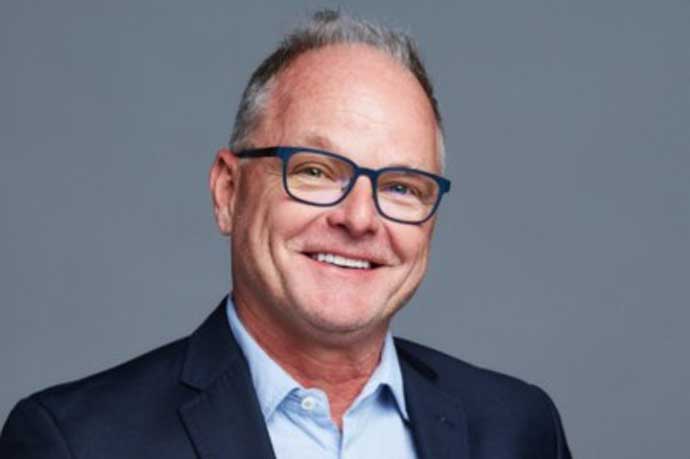
Mark Morgan, a 22-year-plus veteran of ScanSource, last month became president of technology solution distributor’s specialty technologies business with a mandate to get the company’s IT solution providers and communications agents to expand their capabilities beyond their legacy focuses.
That strategic initiative, which ScanSource CEO Mike Baur outlined last year in an exclusive meeting with CRN, is still a work in process, but the progress is evident, Morgan told CRN.
“I would say we’re successful, but we’ve never really published our success around it,” he said. “We’re collaborating. We’re helping agents sell hardware. We’ve enabled a number of trusted advisers or agents or whatever their label is not only to sell hardware, but in some cases acquire smaller VARs to help them round out their business. I’m in this position today to accelerate that. It’s all about selling more technologies and enabling our partners to use the sales mode they want to sell in.”
[Related: ScanSource Exec: ‘The Age Of Convergence Is Truly Upon Us’]
Morgan, who previously headed ScanSource’s Intelisys voice, data and cloud services business, said convergence of partners regardless of how they worked with ScanSource in the past is happening, but there is more to do.
“When Mike asked me to come back into this role, the reason I took it is because I feel we have unfinished business,” he said. “We’ve made some transformational acquisitions over the past 11 years, and it’s time to put the full effort and scale of ScanSource behind 100 percent of it. That’s why I took this role. My wife thought I was easing into retirement. So did I. But I still believe in the opportunity in the channel.”
There’s a lot going on as ScanSource moves to converge its different channel partner motions. To learn more, here is more of CRN’s conversation with Morgan.
How do you define ScanSource’s specialty technologies business?
I started at ScanSource in 2003, and we were a specialty technology distributor. We’re not a broadline distributor. Never have been. We’ve always been an inch wide and a mile deep in the technologies that we sell and the industries or vertical markets that our customers sell into. And so that’s really the definition of it. If you go back to the history of ScanSource, our founding business unit was barcoding, and then it migrated to the next closest thing. We always had a philosophy of, ‘OK, what’s our core business, and what are the adjacent markets we can play in?’ The obvious thing was scanners and retail. Then what else? Point of sale. And then we made a number of acquisitions around adjacent distribution opportunities. We had point of sale and barcoding. We had ScanSource Catalyst, which was predominantly an Avaya distributor, and adjacent technologies around Avaya. We had Paracon, which was a parallel communications division that existed because our sales teams were exclusive with Avaya, so Paracon sold other brands like ShoreTel, Mitel and Poly. We also had physical security. So the word ‘specialty’ comes in because of the specialty technologies that we sell today and have sold over time. It’s all tied to the fact that we’ve always believed that we’re an inch wide and a mile deep in the technologies we sell and the markets that our customers serve.
Who are your primary vendors right now?
Zebra, Cisco, Poly, still Avaya. If you look across not just the specialty business, it’s also a combination of our cloud products. I spent the past 11 years focused on strategy and M&A, and I led ScanSource’s Intelisys acquisition. So I think about everything. We’re somewhat a company of brands to a lot of people, but I look at the sum of all parts. So when I think of our business, we’re the leader on the CX side with Zoom and Ring and companies like Dialpad, etc. We’re leaders in CCaaS [Contact Center as a Service]. And network with companies like Lumen, etc. So that’s a pretty broad question because I look at the entire business.
Last year when I talked with CEO Mike Baur at the ScanSource Partner First conference, he said one of his biggest focuses was trying to get all the different parts of ScanSource to start working together to come up with broader solutions for partners. How far is ScanSource on that goal?
From when we acquired Intelisys in 2016, we quadrupled its size in terms of top-line billings and so forth. But a majority of that growth came from our core VAR partners. The word ‘convergence’ comes up a lot. Mike has talked about it, and we’ve created a convergence team to help accelerate additional growth in the VAR channel. I would say we’re successful, but we’ve never really published our success around it. We’re collaborating. We’re helping agents sell hardware. We’ve enabled a number of trusted advisers or agents or whatever their label is not only to sell hardware, but in some cases acquire smaller VARs to help them round out their business. I’m in this position today to accelerate that. It’s all about selling more technologies and enabling our partners to use the sales mode they want to sell in.
When I moved into strategy and M&A in 2015, we had a project called ‘Interstellar.’ Have you seen that movie? It was a sci-fi movie in which the Earth can no longer sustain life as we know it, and we have to find somewhere else to go. I felt being a specialty technology distributor was impacting our communications business. The big on-prem stuff was declining, but voice-over-IP stuff was skyrocketing. Back in the day, if you asked a distributor what their cloud strategy was, we’d say, ‘We’re waiting on Zebra and Cisco to tell us.’ Distributors execute a lot of vendor strategies, right? But I felt the channel was changing. It was obvious that the telecom VARs needed to change their business. Remember, back in 2014, 2015, and 2016, a number of consultants showed up at events saying, ‘Hey, the channel is dead. If these businesses don’t learn to move from an OpEx to a CapEx model, it’s over.’ And while I didn’t necessarily believe it, I think I was a bit naïve. With Project Interstellar, I wrote on a whiteboard, and it stayed there for two years, and that I wanted to enable our core VAR partners to transition to a recurring revenue model without disrupting their current core business. And me being naïve, I believed you had to transition or transform into something new. That was completely wrong because the truth is, the old enhances the new, and the new enhances the old, and that’s what we’re seeing.
When we acquired Intelisys, did the VARs immediately buy into that model? The model is different. The VARs owned the customer relationship. They owned the contract. They owned the support mechanisms. They sell maintenance and support services contracts. It was a CapEx model. It was hard to move to OpEx, but I was thinking at the time it would be a high percentage of one or the other. But it’s not. It’s not an ‘and/or.’ It’s an ‘and.’ Where we’ve been successful is enabling not only our core community but also our agents to do more. There’s no doubt that the channel today is in transformation. It doesn’t matter what acronym partners use, whether it’s VAR, IT integrator, MSP, agent, or trusted adviser. Suppliers have higher operational and performance expectations from channel partners. And a lot of suppliers know they need help to drive growth. The buzzword ‘orchestration’ means so many different things. But end users are seeking partners that can help them manage multiple suppliers to get the outcomes they’re looking for. The acquisitions we’ve made over the past 11 years were purpose-driven, based on our vision that distribution is going to have to play a bigger role and get closer to the end user, not selling direct to the end user, but playing a bigger role in enabling partners in how they sell and support end customers. We’re in the best position of any technology distributor to support multiple sales models. I believe the newer sellers coming in want an asset-light sales model. They are looking for us to do more with them and for them. There’s a lot of specializations and skills they don’t want to obtain that we have the capability to provide them and on behalf of them that make them stronger.
You said this is something you've been working on since around 2015 or 2016.
Back around 1999, you had analog phone lines and Avaya and any of those other products that were all copper, right? What happened when networking became more and more important and Voice-over-IP started showing up? That was the point at which I heard the word ‘convergence’ in the tech space for the first time, I think.
What our ScanSource specialty sales team has done over the years is, as on-prem business has declined, not only have they helped partners that were ready to make the migration to selling both cloud products and the on-prem physical devices, they’ve also helped them expand their line cards by selling more than just key telecom products. So the idea for us of having a converged communications team is to bring it all together in one place. If you look at the Intelisys products, that means selling network. Network is the foundation for pretty much all of IT, right? …
[Convergence is] in the long term about being one ScanSource and enabling you, regardless of how you define yourself as a partner, to sell the way you want to sell and support your end customers the way they need you to support them. It is working. We’ve proven it quietly over the years. When Mike asked me to come back into this role, the reason I took it is because I feel we have unfinished business. We’ve made some transformational acquisitions over the past 11 years, and it’s time to put the full effort and scale of ScanSource behind 100 percent of it. That’s why I took this role. My wife thought I was easing into retirement. So did I. But I still believe in the opportunity in the channel. I believe in the opportunity for our partners. I looked at our suppliers. And I don’t think there's another distributor that can execute at scale the way we can on multiple sales and channel models. I think the channel is no longer linear. I think it takes so much more for suppliers to execute a strategy with our partners. That was part of our vision in Project Interstellar. I’m a very impatient person. I feel like we should have done this already a long time ago, but now we’re positioned to where you'll see accelerated growth from us in this.
How far along are you? In other words, what percentage of your partners have accepted this? Are you seeing any resistance?
ScanSource’s Intelisys top-line billings is around $3 billion today, and that market continues to accelerate. You see all the private equity money coming in. It wouldn’t be coming in if that model had not taken hold. But one thing that we can do, that none of the other TSDs can do, is support all of the agents in the channel that the suppliers are starting to move to. So if they are expecting more operational and performance expectations from the channel, we work with them or for them. And I think we’re at a point in the evolution of both of the traditional distribution model and the agent distribution model—we made a couple of hiccups on acquisitions over the years that took longer than we thought—but we’re definitely one of the only if not the only distributor that can help our partners not risk being sidelined as vendors consolidate around the people that can bring more value to their brand. Think about recurring revenue. The most important thing is to reduce churn and grow renewals. And so we’ve been doubling down on enablement to help our partners meet these demands. And as Mike likes to say, we always like to capture our unfair share of the market. I want to help partners capture their unfair share of the market because it’s rapidly changing, and the partners, if we can help them adapt to that change, are going to win, and we’re going to win along with them.
You started your new role in March. For the rest of 2026, what are your strategic priorities?
I want everyone in this company to understand and have a clear vision of who we are today, the sum of all parts. And because we’ve made a number of acquisitions over the years, ScanSource is a company with a lot of brands. We’re strengthening our sales coverage model. I will hire somewhere between 20 and 30 salespeople in the next 90 to 120 days. I see a big enough opportunity to continue to serve the channel in traditional and non-taditional ways. We have a lot of people who all they want to do is what they’ve been doing, and we want to support them. And we want to expand the coverage model by hiring more people.
Most importantly, I want the channel suppliers and partners to see the opportunities that we can bring them and drive our growth from there because the technology industry does not work if we don’t have a healthy channel. I think we have an opportunity to help our partners regardless of whether they focus on enterprise, midmarket or SMB. We can help them sell the way they want to sell and support their end customers in the way the end customers want to consume. And so the key priority is to expand the team, align it around the success of our channel and partners and customers, and drive it for the long game. We’ve got a five-year plan focused on doubling the size of the business, and I believe there’s plenty of opportunities to do that, and we’re going to do it through our people, our processes, and the tools we have. Most importantly, we’ll do it by helping the channel understand what we can do to help them not only grow sales of existing technologies but also expand into new technologies and new markets.
Are you seeing much resistance?
Not internally. I’ve got sales reps champing at the bit to sell more.
I was thinking more in terms of the channel partners, many of whom have been in their niches for a long time.
If you look at the accelerated growth today, we have well over 1,000 VARs that are selling in both models. They’re doing both the agency model and the traditional sales model where they’re billing and users, but a bigger and bigger part of their revenue is transacting in the agency model. And at the same time, we’re seeing a lot of demand from the agency channel to expand their business capabilities. So the timing is right. There’s a lot of great ideas, but often they are too early. We definitely weren’t too early when we acquired Intelisys. I remember when it was announced, it was the most press coverage that ScanSource had ever received from one single event. And one of the headlines was to the effect of, finally the convergence of the telecom and VAR businesses is going to happen because of us. For me, it was like, ‘Wow, somebody gets it.’ But it didn’t happen as quickly as I wanted it to. I think the time is right now and the demand we’re getting from both partner types to help them do more is very strong. So I would say we’re seeing little if any resistance.