Sherweb Co-CEO: First Outside Investment Signals A Bigger Push Into AI, Marketplace Expansion, And M&A
‘On the one hand, we see a huge opportunity and huge demand with cloud and AI, and we want to accelerate our geographical expansion beyond North America, beyond Ireland and the U.K. where we’ve done some investments recently. We also want to double down on our investments in our platform, in the addition of new vendors in our marketplace, adding new services and any value we can for our MSP partners. And lastly, we are looking to make strategic and targeted acquisitions,’ says Sherweb Co-CEO Matthew Cassar.
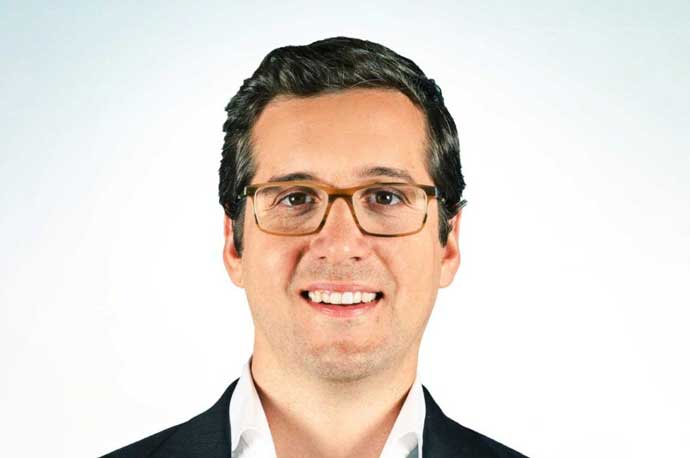
Sherweb, the Montreal, Quebec-based cloud distributor, Wednesday unveiled a huge equity investment in the company from Canada’s Investissement Québec.
Sherweb Co-CEO Matthew Cassar told CRN that this was the first outside investment that his company has taken, and that while Sherweb is already quite profitable, the new funds will be important for its future growth.
“On the one hand, we see a huge opportunity and huge demand with cloud and AI, and we want to accelerate our geographical expansion beyond North America, beyond Ireland and the U.K. where we’ve done some investments recently,” Cassar said. “We also want to double down on our investments in our platform, in the addition of new vendors in our marketplace, adding new services and any value we can for our MSP partners. And lastly, we are looking to make strategic and targeted acquisitions.”
Cassar said that Sherweb remains focused on MSPs serving the SMB market, and has no plans to expand its reach into the enterprise. The company also remains focused on Microsoft and its cloud and AI offerings, particularly around Microsoft Copilot, where the company saw revenue in 2025 grow by over 400 percent compared to the previous year.
“Most of what we offer is based on [Microsoft’s] technology and platform,” he said. “At the same time, they’re becoming more and more model-agnostic. They were very ChatGPT-centric, or OpenAI-centric. Now they’re working with Anthropic Claude, and I think it’s safe to say that they’re going to become model-agnostic, and then they may even develop their own. But we always start with.”
Cassar also discussed how the company is navigating U.S. trade disruptions, and said that, despite the political landscape and trade issues affecting cross-border business, the U.S. remains Sherweb’s largest market
“We’ve always had great relationships with partners, vendors, and clients there,” he said. “All in all, I think it’s important to separate business from politics, and I’d say that we see a great future for sure in the U.S. as well as in Canada, in Europe, and any geographies where we may invest next.”
There’s a lot going on with Sherweb and the SMB-focused MSP business. To learn more, read CRN’s complete conversation with Cassar, which has been lightly edited for clarity.
How do you define Sherweb?
The best way to define Sherweb is as a cloud distribution marketplace. SMBs in general get their IT services, cloud, and AI typically from managed service providers, MSPs. And the MSPs themselves are typically SMBs. In order to procure own cloud products, they typically go through distribution marketplaces such as Sherweb, and we basically help MSPs operationalize those technologies through enablement, services, and automation in order to help them scale their business. We’ve been around for a long time. We’ve gone through quite a few evolutions, but today Sherweb is how I just described it.
Does Sherweb compete with more traditional IT distributors, which are also moving to bring software and other technologies to MSPs?
Absolutely. Broadly speaking, the landscape of cloud and now even more AI technology distribution is comprised really of the traditional distributors such as Ingram Micro and TD Synnex. They are massive companies that are also trying to transform a significant part of their business into more modern, next-generation distribution. And then there’s companies like Sherweb who are more born-in-the-cloud and never really had significant businesses selling hardware or non-digital services and who are 100-percent focused on working with MSPs and helping them selling next-gen services. By that, I mean cloud cybersecurity, AI, and so on. So to answer your question, yes, our competitive landscape is comprised of more traditional distributors that are evolving to become more like Sherweb, and there are others, obviously, that are similar to us, born-in-the-cloud, and I’m sure you know quite well.
Does Sherweb have a competitive advantage over traditional distribution?
I think if you compare us to traditional distribution, we are different, on one hand, really by just being focused 100-percent on cloud and online services. So from a platform standpoint perspective, there is a lot of features, a lot of simplicity, that we believe
only Sherweb has and only Sherweb does a certain way, which our clients really appreciate. And then on the services side, we’re one of the few providers that truly believes in and is really making sure that we are putting everything in our marketplace even as services still remain very important for us. So if you’re looking more in terms of the marketplace, the platform, we differentiate by being highly focused on cloud.
Another aspect of our true value-add as a differentiator is really on the services side where we’ve put in the investments in helping our partners with presales and post-sales enablement and focusing on helping our partners build their practices around things like Microsoft, Microsoft cloud, cybersecurity, different vendors, AI, and so on.
You mentioned Microsoft. How about other hyperscalers like Google Cloud or AWS?
In our marketplace, we do have Google as well, but I would say that in terms of the hyperscalers, Microsoft is by far our main partner. It’s the one with whom we want to build most of our business. It’s the ecosystem that we look to serve first and foremost. And really, we think it’s the most channel-friendly of the hyperscalers especially as it pertains to the SMB space, which is our core end customer constituency. We think Microsoft has very little competition on that front. And the AI front, for the next five or 10 years, they’re also very well positioned. So in everything that we do, we try to make sure that we do Microsoft better than anyone else.
So what’s going on with a new private equity investment in Sherweb?
Sherweb has received a minority investment of 125 million Canadian dollars ($90.5 million) from Investissement Quebec. It’s not technically 100 percent a sovereign wealth fund, but it’s similar to that with a local mandate as well. But it’s the first time in our history that we have taken an investment from an outside party. Until now, we were bootstrapped as a business. And the reason why we’re doing this now is that, on the one hand, we see a huge opportunity and huge demand with cloud and AI, and we want to accelerate our geographical expansion beyond North America, beyond Ireland and the U.K. where we’ve done some investments recently. We also want to double down on our investments in our platform, in the addition of new vendors in our marketplace, adding new services and any value we can for our MSP partners. And lastly, we are looking to make strategic and targeted acquisitions to support our goals and our strategic endeavors. Those are really the reasons why we’ve decided at this point to raise funds.
You said this is the first time Sherweb has gone to private equity. How big a percent of the company did the investor get?
We don’t share that information. All we’re going to say is, it’s a minority investment. The leadership in place right now, my brother and myself, the founders, are still firmly in control. The investor is a minority investor, and they’re in line with us in terms of wanting to build a business for the long term. But yeah, we don’t divulge for competitive reasons and others.
Is Sherweb a profitable company?
Sherweb has been profitable for a very long time. We’ll keep being profitable.
Given that it’s a profitable company, why not just self-fund the kind of growth that you’re talking about?
A lot of the investments that we’ve been doing over the past few years have been self-funded, but like I mentioned a bit earlier, we’re looking to accelerate some of these initiatives. Look at geographic expansion, for example. We acquired, for example, a company in Ireland recently. We’ve financed that based on our profitability and our cash flow. That has been successful for us. Then we started to grow in the U.K., and it’s something that we want to accelerate elsewhere as well. So whether we want to do acquisitions or just keep on investing organically, that funding will come in handy and allow us to basically go faster. We obviously want to make sure that we remain disciplined.
Which company in Ireland did Sherweb acquire?
We acquired MicroWarehouse in December 2024. Just over a year ago. We’ve done a number of smaller acquisitions prior to that one, but that was our first international acquisition, and it was also by far our largest acquisition.
What kind of acquisitions would you like to make going forward?
Moving forward, we’re going to be looking at acquisitions that either expand our geographical reach, so new territories, new presences beyond markets where we currently are. And we’ll be looking at acquisitions that can really increase our capabilities or products and services or modules or cloud enablement or anything that we could add to our platform to basically increase our offerings to our core client constituency, our MSPs. With acquisitions, we look at the world in terms of, is their geographical expansion or new capabilities for Sherweb, or could it be a company that has a product or something else that we could add to our platform to add more value to
our MSPs.
One big issue today is, of course, the U.S. government’s disrupting of trade, including with our good friends in Canada. How has that impacted how Sherweb does business in the U.S.?
On the one hand, I’d say that being a services business, being a tech business, fortunately we haven’t been impacted by everything that’s going on politically. The United States has been our largest market for now quite a few years. I think close to 50 percent of our business worldwide comes from the United States, and we’ve always had great relationships with partners, vendors, and clients there. All in all, I think it’s important to separate business from politics, and I’d say that we see a great future for sure in the U.S. as well as in Canada, in Europe, and any geographies where we may invest next.
When you talked about your product offerings, you talked a lot about focus on SMB, and on Microsoft and its technologies, particularly cloud. How about AI? Has AI become a big part of your offering yet?
I’d say that it’s still not meaningful in the sense it’s not 20 percent of our revenue yet. But, for example, Copilot has grown in 2025 by more than 400 percent over 2024 for Sherweb, and that just keeps accelerating. What we’re seeing with AI is, I think, in general, B2B adoption most of the time is slower than what we see in terms of consumer adoption. But that being said, we’re seeing Copilot adoption going on at our partners and their customers very fast. This is just going to get quicker and quicker. Every month we sell more than the previous month. So adoption is there.
The next step is, how useful is it to SMBs, and how are they using it internally? The first phase, I think, is really for SMB to use Copilot as an assistant in their business, at least as their main tool. Then after that, the next phase is using it from an agentic perspective. I would say that’s where we’re at now. We’re really working hard to enable MSPs and train them to help them on their journeys to be able to help their clients with not only leveraging Copilot like most people are doing today, but really defining best use cases, to figure out where they can use agents for tasks, for automating back office processes one step at a time, and to try over time to gain on productivity and leverage the promise of the of AI in the SMB.
Given that the bulk of your business is in the SMB space, when it comes to AI, is Sherweb doing a lot of evangelization of AI opportunities to your channel partner community, or are you depending on Microsoft for the evangelization?
We do both. Obviously, everything is hand-in-hand. We develop our material hand-in-hand with Microsoft. Most of what we offer is based on their technology and platform. At the same time, they’re becoming more and more model-agnostic. They were very ChatGPT-centric, or OpenAI-centric. Now they’re working with Anthropic Claude, and I think it’s safe to say that they’re going to become model-agnostic, and then they may even develop their own. But we always start with Microsoft, which is quite ubiquitous in SMBs, and they’re making investments in AI. We’re doing what you just called ‘evangelizing,’ but we probably internally call enablement training, making sure we develop toolkits, best practice guides, and so on, normally for Microsoft technology.
Does Sherweb have plans to expand more into the enterprise in the future, or are you going to stick primarily focused on the SMB market?
Small and medium-sized business is really our core focus. We want to make sure we stay focused and keep serving MSPs and channel partners that service the SMBs very well. But we never say never. It’s not our plan in the short term to try to move into the enterprise space. There’s just so much to do, so much with MSPs and SMBs over the
next few years. It’s not on our roadmap.