Kyndryl CEO: Second Quarter 2026 Sets Company Up For Forward Growth
‘We see good momentum in the growth drivers in our business. The Kyndryl Consult business has had good momentum, but we see actually an acceleration in that in the second half driven by both the signings which have been great, but also by the capacity we've added within our Consult business. We have the demand, and we have the ability to meet it, so that will accelerate in the second half,’ says Kyndryl Chairman and CEO Martin Schroeter.
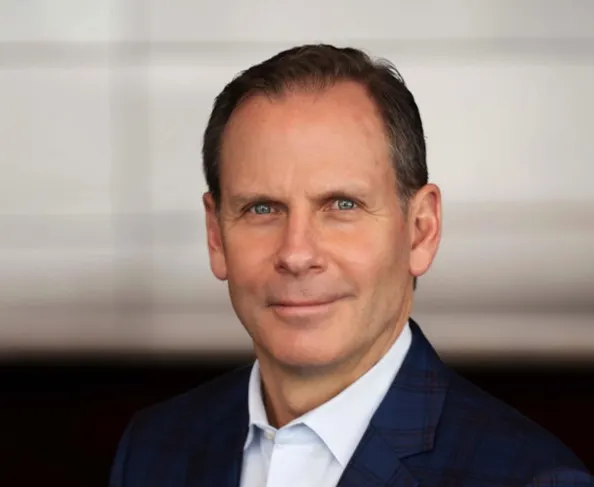
Global enterprise services provider Kyndryl is on the road to growth, according to Kyndryl Chairman and Chief Executive Officer Martin Schroeter.
Schroeter, talking to CRN just before the release of the company’s fiscal 2026 second quarter financials, noted that while revenue is down a slight 1.4 percent to $3.72 billion, most of the other financial markets for the quarter point to growth going forward.
Kyndryl’s adjusted pretax income grew more than two-and-a-half times over lone year earlier, the company enjoyed improved margins as it signed higher-yield managed services and consulting contracts, and the company’s backlog grew, he said.
[Related: Kyndryl CEO On Launch Of Advanced Agentic AI Initiative]
“We did finish revenue a little lighter than we would have liked in the first half [of fiscal 2026],” he said. “But as we enter the second half, we have a number of things that help us deliver the full-year revenue growth that we talked about. We've held across the board every element that we've guided on. We haven't changed.”
Schroeter also said Kyndryl has seen little to no impact from tariff and trade issues or from the massive hike in H1-B visa fees. He also said concerns by many in the channel over changes in how Broadcom works with the channel on VMware are a non-issue for Kyndryl and indeed are actually helping boost his company’s business.
There’s a lot going on at Kyndryl. For the details, read CRN’s conversation with Schroeter, which has been lightly edited for clarity.
How do you view Kyndryl’s fiscal 2026 second quarter results?
Another good order with lots of progress. I'll start on the bottom line. Our adjusted pretax income was more than two-and-a-half times what it was a year ago, which positions us well for the guidance we put out at the beginning of the year on profit. In fact, we got more done in the first half as a percentage of the full year than we did last year in the first half. So the profit is another great story.
Signings came in on a book-to-bill on a trailing 12-month basis north of one. That's a fifth consecutive quarter of a trailing 12-month book-to-build north of one, which is all about future growth. And those signings had good, healthy margins. We showed everybody what goes into the backlog every quarter. We had another quarter where what we put into the backlog is consistent with that high single-digit profit margin that we've talked about with our investors on our investor day, which is more about fiscal year 2028. So the margins look good.
I think shareholders should be excited because our confidence in our cash flow generation and on our [plans for] our fiscal 2028 targets have allowed the board to approve our second buyback authorization of $400 million this year. It was about a year ago where we held investor day and initiated the share repurchase program at $300 million. And then we we just added another $400 million to that, so good progress in profit. Cash flow is again positive, as we expected it would be. Signings going into the backlog are good with the kinds of profit we need. So the share repurchase, I think, should be generally well received by investors.
How about the dip in revenue?
We did finish revenue a little lighter than we would have liked in the first half [of fiscal 2026]. But as we enter the second half, we have a number of things that help us deliver the full-year revenue growth that we talked about. We've held across the board every element that we've guided on. We haven't changed.
As we go into the second half, a few things from a revenue momentum perspective to keep in mind. One is we enter with a better backlog than [in] the first half. The committed backlog is about a point better than what it was in the first half, and we've wrapped now on a divestiture we did a year ago. So between those two, between about a point for the better backlog position and about a point for the divestiture, our starting point now is already much better than in the first half.
And then we see good momentum in the growth drivers in our business. The Kyndryl Consult business has had good momentum, but we see actually an acceleration in that in the second half driven by both the signings, which have been great, but also by the capacity we've added within our consult business. We have the demand and we have the ability to meet it, so that will accelerate in the second half.
There’s also the work we do around the hyperscalers, what we call our alliance activity. We said at the start of the year it was going to grow from $1.2 billion to $1.8 billion, about a 50-percent increase. And we're actually kind of already on that path through the first half. So we expect that to add a couple of points of acceleration in the back half as well. And the pipeline that we're looking at in the second half is the best pipeline we've had. It's bigger than it was, stronger than it was, last year. And the deal content that sits within that pipeline has higher yielding deal content as well. So we have a better starting point and better momentum in a couple of the growth drivers, and a better pipeline to work with.
You mentioned a higher yield pipeline. What did you mean by that?
Depends on the nature of a deal. So let's say, for example, in a managed services contract that lasts five years, you will get, and this is a simplification, and no deals are like this, but you'll get anywhere from 18 [percent] to 22 percent of that five-year services contract in the first year. And then on a consulting contract, you tend to burn through it much faster. And so what we see in the pipeline are both managed services deals that have more upfront content and so they're at the higher end of the range, and more consult content that'll be realized faster as well. So it’s better yield from what's in the pipeline because of the nature of what these particular customers or prospects or some new customers as well want to consume what we offer just happens to be a little bit more front-loaded than it has been.
You also mentioned a divestiture. Which divestiture was that?
When we were spun out four years ago [from IBM], and by the way, today is our four-year anniversary, but we were spun out with a platform in Canada that was processing trade activity called SIS (Securities Industry Services). We sold SIS last year to one of our customers and we're still now running the systems, but they own the platform. So they get the revenue, but we got the consulting and the run business, because we know the system better than anybody. So obviously they did the right thing in letting us keep doing the work.
Does Kyndryl have much of a U.S. Federal business?
We really don't. We do some work in state governments, like in Arizona where we run the DMV and we modernized it, but we don't really have much of a U.S. federal government business to speak of. But I do think there is opportunity here. It's just that we haven't gotten that on our list of growth opportunities yet. So for us, it's minuscule. If you doubled it, it would still be minuscule.
Does Kyndryl take much advantage of H1-B visas? Any impact from the U.S. move to implement high fees to apply for them?
We have I'd call it a dozen or two, maybe a couple of dozen H1-Bs, and we have time to sort those out. But it's not going to be an issue for us at all.
Kyndryl is one of the largest partners of VMware. How has Broadcom’s acquisition of VMware impacted Kyndryl? There are a lot of people wringing their hands about it.
For us, they're a great partner. In fact, they keep asking us to do more and more because we're at scale globally. I'll say we're non-denominational. We don't have our own cloud. We've actually become one of the most appealing partners for VMware because we can run these workloads on a private cloud. And these are very sticky workloads. And obviously VMware wants to make sure it's delivering innovation and value, and since we're not a public cloud per se, we're not a hyperscaler, we're not trying to move the workloads somewhere else. Obviously, our customers own most of the architecture decisions, but we're viewed by VMware, I believe, as a trusted partner at scale globally who can manage these private cloud architectures better than anybody. So I think we're a great partner for VMware, and I think they view us that way.
Has your international business been impacted at all by the tariffs or other trade policies?
The discussion on trade has been very much about physical trade, which affects our customers, some of them very directly, but doesn't affect us directly. We are in the productivity business. We are in the managed complexity business. So it's turning into a little bit of a tailwind for us as companies rethink their supply chains and as they rethink where they put workloads. And we're seeing an increase in interest from some customers around making sure that they're landing and getting their cloud work done in the right spots or in spots that they think have good long-term potentials. So no direct impact because it's physical trade, not what we do, which is digital trade.
It's also nothing, nothing direct because we're ‘required.’ You have to run your infrastructure no matter what the environment is, no matter what the trade policies are. We're not a discretionary kind of a service. So no impact because we're digital, not physical, and no impact because we're required not discretionary. And, in fact, we get a bit of a tailwind given that the current environment adds complexity to our customers’ environments, and we can help them both get ready for that and help them save money. So I think we're in the right business for this.
Anything else we need to know about Kyndryl?
No. Like I said, we feel pretty good about how we enter the second half now, and we feel pretty good about our ability to deliver what we've talked about in the last year in terms of fiscal ’28, which for us starts in, like, 17 months because we have a non-calendar fiscal year. Yeah, we feel good about where we are, the progress we've made, and where we're going.