Broadcom Global Channel Chief On The Value Of Services: ‘The Light Bulb Has Clicked For Partners’
“[Partners are realizing], ‘Yes, there’s massive up-front services because clients are making big moves.’ But they also see the recurring, ongoing need for advisory, arvchitecture, implementation, strategy, modernization, support, all types of services—you name it. There’s a bunch of different paths to adding value to a client,” says Brian Moats, senior vice president of global commercial sales and partners.
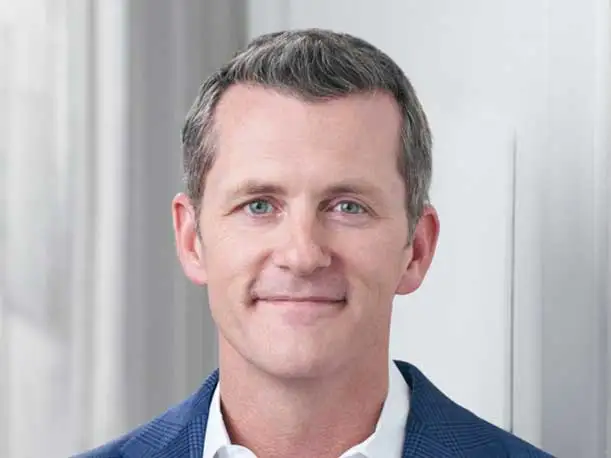
As the new VMware partner ecosystem takes shape, Broadcom’s global channel and sales leader, Brian Moats, is seeking partners that are willing to drive VMware Cloud Foundation with massive margin and services opportunities in store.
“My message to partners is, ‘Please lean in. The demand is greater than we can fulfill,’” said Moats, senior vice president of global commercial sales and partners.
“We need those partners who are willing to lean in. They will get the fulfillment. They will get the work,” he said.
There have been major changes to VMware’s channel strategy and partner programs since being acquired by Broadcom for $61 billion nearly two years ago.
Furthermore, there’s a plethora of upcoming changes happening in November, including a new VMware Cloud Service Provider (VCSP) program, official partner tiering inside the Broadcom Advantage Partner Program as well as new deal registration and incumbency protection for partners.
Moats: Partners Will Get ‘100 Percent’ Of Professional Services
Moats joined Broadcom from CA Technologies, following the IT giant’s acquisition of CA in 2018.
By 2019, he was named vice president of sales for Broadcom global systems integrators, responsible for GSI partnerships and go to market. In January 2025, Moats became senior vice president of global commercial sales and partners, tasked with driving global revenue for the $64 billion company.
One major initiative Moats is helping to spearhead is shifting all VMware professional services to channel partners.
“Partners have the ability to translate what the customer needs to some implemented outcome better than we will or could,” said Moats. “So [Broadcom CEO] Hock [Tan] has decided that we’re going, literally, all in with 100 percent of services to be delivered by partners—that’s 100 percent.”
In addition, Moats wants partners to attack the public cloud market with the new VMware Cloud Foundation (VCF) 9.0.
“The problem is customers want an alternative to public cloud but something that gives them an experience like a public cloud that’s more predictable on cost, has lower costs and is more secure,” Moats said. “That’s what VCF and what our platform is trying to solve.”
In an interview with CRN, Moats takes a deep dive into VMware’s channel strategy, VCF versus public cloud and much more.
Is VMware’s go-to-market strategy to have channel partners take over the majority of professional services?
It’s much more of a journey and an analysis up front than it would have been when you’re selling point products. So it’s not just about the implementation that ultimately occurs, it’s a bit of planning and calculating the economics around different paths to the endpoint of the cloud operating model.
So our services partners aren’t just doing services after the customer commits to the platform.
They’re talking to the customer many months before about the different economics and alternatives to different tech and organizational and process change routes that give them some future outcome, most likely in a private operating cloud.
So Broadcom is recognizing, ‘Wait, most of these customers trust two or three advisory, consulting and infrastructure partners who really know them.’
Those partners have the ability to translate what the customer needs to some implemented outcome better than we will or could.
So Hock has just decided that we’re going, literally, all in with 100 percent of services to be delivered by partners—that’s 100 percent.
So VMware will be completely hands off here?
It doesn’t mean that we won’t help the partners do some design and architecture and help validate designs, but we will not be delivering.
Many partners know this already, but kind of tested Hock by [saying], ‘Are you serious? We don’t see that very often.’
So many of the meetings that I’ve been at [at VMware Explore] have been leaders of these companies, many of the founders or CEOs just saying, ‘Hey, I want to just knock on wood here and just make sure I understand. Are you committed for the long haul on this?’
The answer is ‘yes’.
Can you give a scope of how many partners that are now VMware-certified partners that are looking to drive VCF versus how many certified VMware partners there were two years ago before the Broadcom acquisition? For example, is there about 20 percent or 30 percent fewer certified partners now compared with about two years ago?
Broad picture: As the partners see the demand, many of them are showing up in ways that we haven’t seen them show up before on the services capability and the architecture capability.
So as we see them deliver, and we hear from the customer about what that was like, we begin to elevate our view of these partners.
Part of it was, ‘Hey, who’s gone out and invested and leaned in to get certified ahead of that demand?’ That was one signal to us.
Another signal was: ‘Who’s successfully helping customers move the needle and implement?’
I would say that one group of partners have leaned in and shown us through investment.
Another group of partners—maybe who were slightly later, we’re seeing a later cycle of investment—but we were being impressed because we’re hearing from the customers about what they’re able to do.
So it’s not just a ‘one moment in time, here we are.’ It’s a bit of an evolution. And they’re evolving too.

Do you see these professional services that you’re shifting to the channel as a huge margin and sales driver for partners in 2025 and beyond?
In a lot of these discussions, you would hear partners talk about their evolution to having recurring revenue streams with their clients.
Partners really want programs and projects that aren’t just a one-time [implementation] and they’re done, like, ‘OK customer, see you in a few years.’
They want to be involved in the action ongoing.
It’s very much a transformation to a private cloud and the many things that they will do after the private cloud is working—additional applications coming over, new applications being built in private cloud, the different microservices they can take advantage of, etc.
The light bulb has clicked for partners in that, ‘Yes, there’s massive up-front services because clients are making big moves.’
But they also see the recurring, ongoing need for advisory, architecture, implementation, strategy, modernization, support, all types of services—you name it. There’s a bunch of different paths to adding value to a client.

What’s your message to partners about helping their customer repatriate workloads from the public cloud to VMware VCF? Like around AI.
Partners were telling Hock and I about many pilots happening around AI. Many of those pilots, just for ease, start in public cloud.
But when it’s proven and it’s time to go put it into production and scale it up, there’s major hesitation and people stopping and rethinking, ‘Is this the right place to deploy it?’ Partners are telling us that.
So the partners are saying, ‘Hey, with a private cloud platform, their fear is turning on public cloud and not knowing what the cost surprises are going to be, and they have fundamental concerns about privacy in public cloud.’
They now have an alternative solution to take those proven AI pilots and go ahead and launch them and scale them on production.
So the partners feel like they have an option for the customer that their own customer wasn’t thinking about to address those costs concerns moving forward.
Why do you believe VCF 9 bests public cloud, and why should partners go all in with VCF?
The platform is solving a different, bigger problem. The problem is customers want an alternative to public cloud, but something that gives them an experience like a public cloud that’s more predictable on cost, has lower costs and is more secure.
That’s what VCF and what our platform is trying to solve.
That partner advisory work that needs to happen early in the cycle is key. Not all partners are set up equally to do that.
Once a customer decides to go forward with the platform, then you’ve got to plan that journey. How do you begin to incrementally adopt these capabilities and make them happen?
So we’re finding that the type of partner we need has deep, technical depth, some advisory capability, ability to help a customer plan that journey and—probably most importantly— the ability to go help deliver the implementation with the customer.
The partners that are here with us are deep technical experts around presale, pre-journey, and then that long-term journey ahead.
Developers want infrastructure at the speed of public cloud and with the simplicity, consumption-style-like public cloud. So VCF is the answer for that when you want private, more secure and predictable cost.
What is your message to partners right now?
My message to partners is, ‘Please lean in. The demand is greater than we can fulfill.’
We need those partners who are willing to lean in.
They will get the fulfillment. They will get the work.
We want very technical pre-and post-sales partners that can walk a customer through the [VCF] journey, implement and drive the outcomes.
If you do that well, you will thrive. You will prosper beyond what you’ve ever experienced with VMware.