Broadcom Signs Anthropic, Google TPU ‘Groundbreaking’ Deals To Drive AI Capacity
‘Anthropic, beginning in 2027, will access through Broadcom approximately 3.5 gigawatts as part of the multiple gigawatts of next-generation TPU-based AI compute capacity committed by Anthropic,’ says Broadcom in a government filing.
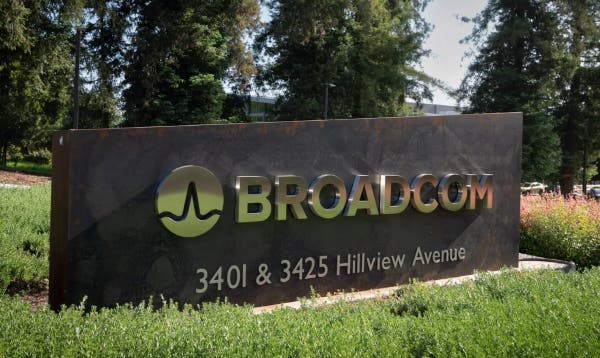
Broadcom is making huge moves in the AI market as the $77 billion tech giant signs deals with Google and Anthropic around developing and supplying Tensor Processing Units (TPUs) as well as supplying networking components.
Broadcom, Anthropic and Google signed a deal for approximately 3.5 gigawatts of next-generation TPU capacity starting in 2027.
“Anthropic, beginning in 2027, will access through Broadcom approximately 3.5 gigawatts as part of the multiple gigawatts of next-generation TPU-based AI compute capacity committed by Anthropic,” said Broadcom in a recent filing with the U.S. Securities and Exchange Commission.
[Related: The 20 Hottest AI Cloud Companies: The 2026 CRN AI 100]
The compute capacity will draw on Google’s TPUs and come online in 2027 as Anthropic’s annual run rate has more than tripled since late 2025.
“The consumption of such expanded AI compute capacity by Anthropic is dependent on Anthropic’s continued commercial success,” Broadcom said.
Anthropic On ‘Groundbreaking’ Broadcom Partnership
Anthropic said this week that the AI startup’s annual revenue run rate has now crossed $30 billion.
This represents an increase of over 300 percent compared with the roughly $9 billion Anthropic recorded at the close of 2025.
“We are making our most significant compute commitment to date to keep pace with our unprecedented growth,” said Krishna Rao, CFO of Anthropic, in a blog post.
“This groundbreaking partnership with Google and Broadcom is a continuation of our disciplined approach to scaling infrastructure: We are building the capacity necessary to serve the exponential growth we have seen in our customer base while also enabling Claude to define the frontier of AI development,” Rao said.
Claude is Anthropic’s most popular AI model family, initially released in 2023.
The vast majority of the new compute infrastructure will be built in the U.S., Anthropic said.
Broadcom’s New Google TPU And Networking Deal
Separately, Broadcom and Google also entered into a long-term agreement “for Broadcom to develop and supply custom TPUs for Google’s future generations of TPUs,” said Broadcom in its filing.
The two tech giants also entered a “Supply Assurance Agreement for Broadcom to supply networking and other components to be used in Google’s next-generation AI racks through up to 2031,” Broadcom said.
Broadcom CEO Hock Tan recently spoke about the company’s growing partnership with Google during its financial earnings report in March.
“For Google, we continue our trajectory of growth in 2026 with strong demand for the seventh-generation iNode TPU. In 2027 and beyond, we expect to see even stronger demand from next generations of TPU,” Tan said.
Broadcom Partners With OpenAI; Anthropic Explains AI Hardware Strategy
In late 2025, Broadcom also created a new partnership with Anthropic rival OpenAI around custom silicon innovation for AI.
Both AI model companies rely on GPUs from Nvidia through giant cloud providers like Google, AWS and Microsoft.
In fact, many rivals are both competing and partnering with each other as the AI market booms.
Anthropic, for its part, said customer needs are front and center when it comes to interoperability and cost optimization.
“We train and run Claude on a range of AI hardware—AWS Trainium, Google TPUs, and Nvidia GPUs—which means we can match workloads to the chips best suited for them,” said Anthropic in a statement regarding its new Broadcom and Google deal.
“This diversity of platforms translates to better performance and greater resilience for customers who depend on Claude for critical work,” said Anthropic. “Claude remains the only frontier AI model available to customers on all three of the world's largest cloud platforms: Amazon Web Services (Bedrock), Google Cloud (Vertex AI), and Microsoft Azure (Foundry).”