Google’s New Partner Leader On Key Investments, Microsoft Worry And ‘Enabling Partner Superpowers’
“My commitment over the next 100 days is to meet with 500 partners. I’m really going to take this to heart—to make sure partners of all shapes and sizes have their voice heard,” Google’s new channel chief, David Smith, tells CRN.
Google’s new global partner program leader, David Smith, wakes up in the morning “thinking about how to enable partner superpowers” within Google’s ecosystem with big investments in store as the company rolls out the new Google Cloud Partner Network.
“My commitment over the next 100 days is to meet with 500 partners. I’m really going to take this to heart—to make sure partners of all shapes and sizes have their voice heard,” Smith, Google’s new channel chief and head of partner programs, tells CRN.
“That’s just at the core of what I’ve learned of the past 30 years working in the channel. The voice of the partners is truth,” Smith said. “And what is happening on the front lines with these partners and inside the board rooms of these partners is the truth.”
Google Partners ‘Of All Dimensions’ Are ‘Extremely Important’, Smith Says
Smith is a longtime Microsoft channel leader with over 27 years working at Microsoft before being hired by Google late last year.
His last executive role at Microsoft was vice president of worldwide channel sales.
[Related: The 20 Hottest AI Cloud Companies: The 2026 CRN AI 100]
Some Google partners CRN spoke with said they were concerned that a longtime Microsoft executive would be taking over Google’s partner programs, alleging that Microsoft doesn’t necessarily invest or focus on mid-size or SMB partner companies. Microsoft did not respond for comment.
Smith addressed this concern head-on as the company launches its new Google Partner Network.
“My belief is that partners of all dimensions, including size, are extremely important to Google and I’m going to ensure that we embrace the partner ecosystem holistically,” Smith said.
“I’m going to make sure that there’s no part of the ecosystem that wants to work with Google, that doesn’t feel like their voice is being heard—that could be an existing partner or a new partner —and I’m going to bring it all together to help Google take it to the next level,” he said.
In an in-depth interview with CRN, Smith explains his key channel investments and areas of focus; his vision to drive Google partner profitability; and making Google partners “the best on the planet” around customer AI transformation.
Some Google partners expressed concerns to CRN about a longtime Microsoft executive taking over Google partner programs globally. Some think maybe Microsoft doesn’t focus or invest in mid-market or SMB partners enough and don’t want that to occur inside Google Cloud. What’s your message to those partners?
My belief is that partners of all dimensions, including size, are extremely important to Google and I’m going to ensure that we embrace the partner ecosystem holistically. I have 30 years of history in the channel embracing partners of all sizes.
I’m on the board of a medium-sized partner. I know Google cares about these partners into their partner program.
They’re adding things deliberately to support the smaller partners. For example, the advanced specialization is a great equalizer. A small partner with an advanced specialization really allows them to stand out within how we go to market and co-sell with them. It’s especially important around AI, security, data modernization.
I want to spend time with these partners to understand and listen.
I’m going to be committed to making sure that their perspective is heard and that we take a thoughtful approach to ensuring their success.
We know that, when you’re a smaller partner, changes in programs, incentives, support can have a meaningful impact on your business. It’s almost instantaneous.
I’m very sensitized to that. I want partners of all sizes and dimensions and maturities to be able to embrace the Google full-stack opportunity with their customers.
I’m going to invest equally into partners of all sizes to ensure that they have every ability to transform to this agentic opportunity. … I want these partners to hold me accountable to it.
What is your investment strategy to all Google partner types and sizes?
I wake up in the morning thinking about enabling partner superpowers within our ecosystem. I don’t wake up thinking about the partner size. This is what I’m most excited about.
I have learned more from the CEOs of a lot of these small partners over the years that have helped us implement new programs, new incentives that have led to great success. And I plan on finding ways to listen and figure out how to implement that here at Google.
For the partners that want to invest with us, we’re going to give them a great path forward.
We also embrace large partners. We also embrace partners of different, what I would call, labels.
I’m going to work hard to be the have the most proximity and be the strongest listener to any partner that wants to engage and build their practice with Google.
I’m going to listen. I’m going to act. And then I’m going to be held accountable in a transparent way. I’m going to put myself out there. It’s going to be an exciting 12 months. Google’s in a position of strength.
I’m going to make sure that there’s no part of the ecosystem that wants to work with Google, that doesn’t feel like their voice is being heard—that could be an existing partner or a new partner —and I’m going to bring it all together to help Google take it to the next level.
In a lot of ways, over the next year, I want to really reimagine what it means to be have the best partner program with the best set of investments to support our partners on the planet—all AI-enabled and AI-infused so that these partners can be their best agentic itself.
What is your partner program and overall channel vision for Google Cloud?
There’s three dimensions that I’m really going to focus in on. It’s what I’ve learned is the most important to a healthy channel.
The first is trust. This is something I’m committed to. I want to make a promise to. It comes from predictability.
These partners are making big, long-term bets. Every day they wake up having to make tough trade off decisions about how they invest in more head count, how they go to market, where they go to market, how they make decisions about their own transformation—let alone their customers transformation towards AI and this agentic feature they have.
I want them to have high confidence, high predictability, and to be able to build a durable, profitable practice with Google.
I want to ensure that they don’t feel like things are changing underneath them and they can’t have that predictability. So this trust piece is going to be front and center.
I’m going to have that ‘trust’ tattoo right on my forehead is job one every morning.
What is another big focus area and vision for you with Google?
The second focus for me and getting feedback is around making sure that we can provide our parters with a clear path to profitability.
Look, these partners that we work with have an accountability to their investors and their boards, and they have aspirations.
Some small partners want to stay small. Some small partners want to grow and expand and be acquired someday, or go public some day. They have these accountabilities that they have to drive towards.
At the center of that, in many cases, is growing and growing profitably.
So we’ve got to get deeper and really understand those levers within our Google partner ecosystem that are going to enable them to have that profitable practice with Google.
Ultimately, I believe when that’s in place, they’re going to reinvest more into the Google practice. I think that’s great for customers and great for the agentic transformation that these partners are going to lead with our customers.
What’s your third and final big focus area for Google Cloud’s partner ecosystem?
Finally, partners want to have superpowers. They want to be able to differentiate.
We’ve got a foundation with this new Google partner program now that allows multiple dementia dimensions of how they can differentiate—from Advanced Specializations to some different tiers.
In many ways, what I love about things like the Advanced Specialization, is it’s like a great equalizer for the small partner to be the mighty partner in security or data monetization.
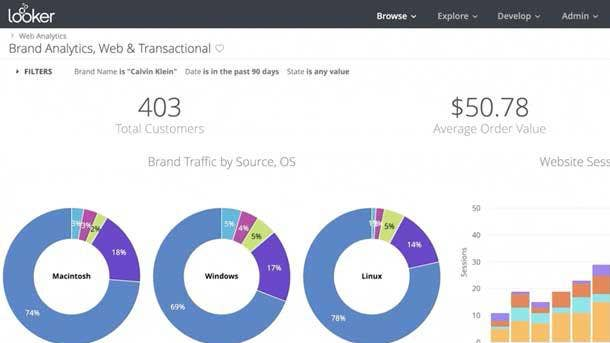
We have a Looker ecosystem that is primarily made up of what you would call smaller partners.
In this one, I aspire to find ways for every partner that wants to build an agentic practice with Google, to be able to differentiate with their own superpowers.
That could be at the vertical level, a geographic pivot—but it’s going to be really exciting how we keep investing in that differentiation.
What is your agentic AI investment strategy for Google Cloud partners?
We’re all in this shift to an agentic world and obviously I’m thinking deeply about how we position Google partners to lead it.
Job one for me is to enable this channel agentic transformation. So ultimately, Google partners can be the best on the planet to serve their customers agentic transformation.
This is really exciting in a lot of ways. We’re moving from talking about it to doing it. We’re getting into the grittier engagement around use cases, the employee change management that needs to happen to really bringing it to life.
So less talking, more doing and getting gritty with these genetic opportunities with our customers.
Is this a change for traditional services partners?
Professional services and billable rates have been a heartbeat of a lot of partners. It’s very important. It’s not going to change.
But I’ve learned firsthand how they augment that with IP services, managed services—not just working on monolithic projects—but really thinking about these use case-driven scenarios. And then the change management that goes along with it. To have this total relationship with their customer and really be engaged with the customer, almost at the persona level within that customer.
We’re going to work really hard to make sure that the Google Partner Program is the most AI-infused, AI enabling partner program on the planet, because our partners, in order to engage with us, they need simplicity and they need tools to be able to do so.
What are some AI tools partners should be using right now and how are AI partner tools driving profitbility?
There’s a couple really exciting tools that Google has landed already. One is around how they do Earnings Hub. I’ve done research on the impact that’s having.
There’s like 130,000 cases where proactively, partners have been using Earnings Hub to realize incentives they weren’t aware of.
One particular partner was able to find $19 million in incentives that they could earn. We’re going to really shift that to the second gear coming up to make it even more proactive and AI infused.
For example, when partners are getting to certain milestones in their projects, wouldn’t it be awesome if AI could enable that partner to generate a Statement of Work to help get validated for that next milestone completion?
So we’re going to really keep investing heavily here to make sure the tools and the programs support this agentic shift.
What is Google’s ‘superpower’ and how will it help the channel?
Google has a superpower and that’s this thing called the full stack—from infrastructure all the way through the Gemini models, including networking, including data, including security.
Like Google’s one-of-one in terms of the technology stack offering they can provide to the partner ecosystem today.
We’re going to leverage that partner program and all of our resources to help bring this to life for our partners.
When we’re at our best enabling the channel partners in the ecosystem, we’re supporting them on how they built the solution and how they go to market with that solution, including healthy co-sell, how they activate and deploy that solution, and how they generate amazing customer outcomes for the customers that they get their big wins with.
My commitment over the next 100 days is to meet with 500 partners. I’m really going to take this to heart—to make sure partners of all shapes and sizes have their voice heard.