AMD Hits Record One-Third Desktop CPU Market Share Against Intel
With desktop CPU shipments seeing ‘strong growth sequentially’ that was ‘lower than normal seasonal rates,’ AMD’s growth rate was more than double that of Intel’s for the third quarter, according to Mercury Research, which noted AMD’s share growth in other segments.
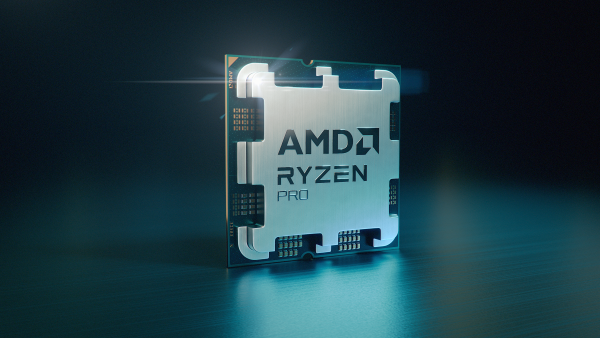
AMD has surpassed one-third share of the desktop x86 CPU market against Intel, setting a record for the chip designer as it made gains against its larger rival in other segments.
This is according to CPU-tracking firm Mercury Research, which said on Thursday that AMD reached 33.6 percent share in the desktop x86 CPU segment against Intel’s 66.4 percent in the third quarter. This represented a 1.4 point increase from the previous quarter, and it was 4.9 points higher than AMD’s segment share in the same period last year.
[Related: Analysis: AMD Puts Channel Pressure On Intel As Both Firms Revamp Partner Programs]
This, combined with quarterly share gains AMD made in laptops and servers, allowed the chip designer to grow 1.4 points sequentially and 1.6 points year over year to 25.6 percent against Intel’s 74.4 percent in the overall x86 CPU market for the third quarter, minus IoT and semi-custom products, according to the firm.
This growth happened as British chip designer Arm saw an uptick in shipments for CPUs using its competing instruction set architecture.
When including IoT and semi-custom, AMD’s overall x86 market share grew 1.5 points sequentially and 5.9 points year over year to 30.9 percent against Intel’s 69.1 percent.
Dean McCarron, president of Mercury Research, said in an email that AMD saw an “extreme increase” in system-on-chip shipments for gaming consoles in the third quarter. With shipments amounting to more than double what AMD did in the previous period, this was the main cause of the company’s sharp increase in market share year over year.
Total x86 CPU shipments from both companies in the third quarter, however, were roughly the same as the previous quarter, according to McCarron. This was “well below normal seasonal growth,” which he chalked up in part to lower shipments of IoT and semi-custom products that saw an unusually high uptick in the previous quarter.
The flatness was also the result of Intel’s entry-level mobile processors, according to McCaron. He claimed that the chipmaker’s “small-core” CPU supply faced a shortage due to it moving manufacturing capacity “over to other products, server CPUs in particular.”
Why AMD Hit Record Desktop Share
With desktop CPU shipments seeing “strong growth sequentially” that was “lower than normal seasonal rates,” AMD’s growth rate was more than double that of Intel’s for the third quarter, according to Mercury Research.
McCarron said AMD’s high-end Granite Ridge products, known as the Ryzen 9000 series, saw “strong results.” That along with an expansion of AMD’s mid-range processors allowed the company to ship a higher number of units than Intel, which also saw shipment growth in the mid-range processor category.
What Helped AMD Grow Share In Laptops
In the mobile x86 CPU segment for the third quarter, AMD’s share was 21.9 percent against Intel’s 78.1 percent, according to Mercury Research. AMD’s share was up 1.4 points sequentially but 0.4 points lower than it was the same period last year.
McCarron said the reduced shipments of small-core, entry-level mobile CPU hurt Intel’s ability to grow in this segment. But even though Intel was still able to increase shipments sequentially and above seasonal levels, AMD managed to ship more mobile CPUs.
AMD’s year-over-year decline in the mobile CPU segment was due to the company seeing a bigger dip than Intel did compared to the same period last year, according to McCarron.
Combining desktop and laptop activity, AMD’s client x86 CPU market share grew 1.5 points sequentially and 1.4 points year over year to 25.4 percent against Intel’s 75.6 percent.
Mercury Notes ‘Record High’ Of Server CPU Revenue For AMD
In the server segment, AMD grew CPU share 1.4 points sequentially and 3.5 points year over year to 27.8 percent against Intel’s 72.2 percent in the third quarter.
This happened while server CPU shipments between the two companies were “relatively flat” for the third quarter albeit a “bit better than normal seasonal growth,” McCarron said.
Against this backdrop, McCarron said the most noteworthy activity in the segment was around product mix and pricing not unit growth, with both AMD and Intel seeing growth for their newest, more expensive server CPUs: the fifth-generation EPYC “Turin” line and the Xeon 6 “Granite Rapids” line, respectively.
Thanks to AMD’s Turin shipments, the chip designer hit “another record high” in server CPU revenue, according to McCaron. But this was based on “modestly higher” shipments as Intel experienced “modestly lower’ shipments, he added.
Apple Drives Growth For Arm CPU Shipments
When combining estimates of Arm CPU shipments with the overall x86 numbers, Arm’s share, which includes servers and PCs, grew to 11.6 percent in the third quarter from 11.6 percent in the previous period, according to Mercury Research.
Arm—whose architecture is used for Apple’s Macs, certain Chromebooks and Qualcomm’s Snapdragon X Series chips—saw “modestly higher” shipment growth in the client CPU market. This was “mostly due to Apple’s growth in the third quarter and what we think was a slight increase in Arm-based Chromebook units,” McCarron said.