AMD Paid $36M On Smaller Acquisitions This Year To Boost Its Data Center Business
In addition to revealing the sum AMD paid for smaller acquisitions it made this year to boost its data center business, the company’s new regulatory filing also discussed the potential impact of Intel’s new partnership with Nvidia on its business.
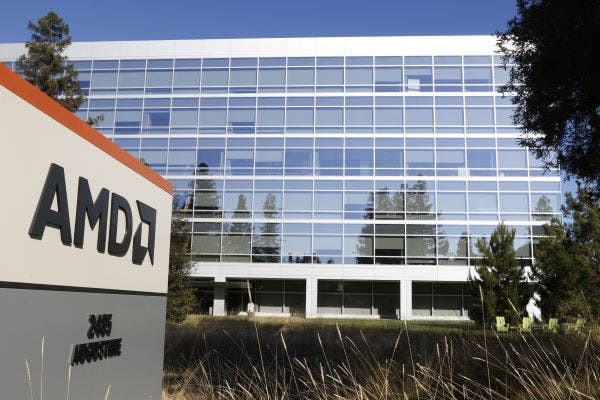
AMD said it paid $36 million on acquisitions this year outside of its blockbuster $4.9 billion ZT Systems deal to boost the chip designer’s data center business.
The Santa Clara, Calif.-based company made the disclosure Tuesday in its quarterly filing with the U.S. Securities and Exchange Commission, where it also discussed the potential impact of Intel’s new partnership with Nvidia on its business.
[Related: Analysis: AMD Puts Channel Pressure On Intel As Both Firms Revamp Partner Programs]
The regulatory filing was made as AMD reported a “sharp” jump in sales for its CPUs across the PC and server segments as well as its Instinct data center GPUs, which allowed the company to deliver record revenue of $9.2 billion for the third quarter.
The chip designer did not say in the filing which companies it acquired using the $36 million or how the money broke down between the acquisitions.
However, AMD disclosed three acquisitions it made earlier this year besides ZT Systems to boost its AI strategy, primarily on the data center side.
AMD’s 2025 Acquisitions, Big And Small
Those acquisitions consisted of silicon photonics startup Enosemi, which AMD scooped up to “support and develop a variety of photonics and co-packaged optics solutions across next-gen AI systems;” compiler startup Brium, which the company is using to provide “highly optimized AI solutions;” and the employees of AI chip startup Untether AI.
For the latter, AMD said in June that it acquired Untether AI’s hardware and software engineers to advance its “AI compiler and kernel development capabilities as well as enhancing our digital and SoC design, design verification, and product integration capabilities.”
As CRN previously reported, AMD has leaned heavily into acquisitions over the past few years to flesh out its GPU, system and software capabilities in its growing rivalry with Nvidia in the AI infrastructure market.
The company has used its largest acquisition this year, ZT Systems, to develop rack-scale AI solutions based on its Instinct GPUs, and the move has already played a key role in helping AMD win over big customers, including OpenAI.
AMD sold the manufacturing unit of ZT Systems to U.S. electronics services giant Sanmina for $3 billion in October, keeping the business’ design and customer enablement teams.
AMD: Intel-Nvidia Deal May Put ‘Pricing Pressure’ On Our Products
Elsewhere in the SEC filing, the chip designer acknowledged Intel’s partnership with Nvidia that was announced in September and will see the two rivals jointly develop “multiple generations” of PC and data center products.
AMD cited the new tie-up under the filing’s section for economic and strategic risks as an example of strategic partnerships, acquisitions and business collaborations between its rivals that could “increase competition and adversely affect our business.”
“This partnership may result in increased competition and pricing pressure for our products, which could materially adversely impact our business, financial condition and margins,” the company concluded in its discussion of the partnership.
In a September interview with CRN, AMD executive Jason Banta said his company is “very confident” about its ability to compete in response to the Nvidia-Intel deal.
“We’re very confident in our road map. We’ve done some very exciting things. You’ve seen ‘Strix Halo’ products that are really category-defining products” said Jason Banta, corporate vice president and general manager of client OEM at AMD.