Intel’s US Equity Deal: Details, Risks, Big Tech’s Support And Other Things To Know
CRN rounds up eight things to know about Intel’s U.S. equity deal with the Trump administration, including the financial details of the investment, the risks and uncertainties Intel outlined for the agreement, plus support by the CEOs of Microsoft and other big tech firms.
After President Donald Trump said on Friday that the U.S. government is taking a 10 percent equity stake in Intel, the semiconductor giant confirmed the deal later in the day with key details and then outlined a variety of risks associated with the move on Monday.
In its Friday announcement, the Santa Clara, Calif.-based company called the deal to give the U.S. government a 9.9 percent equity stake using $8.9 billion in previously allocated CHIPS and Science Act grants a “historic” agreement that will support the “continued expansion of American technology and manufacturing.”
[Related: Intel’s Earnings Bombshell: Layoffs, Foundry Warning And Other Things To Know]
“As the only semiconductor company that does leading-edge logic R&D and manufacturing in the U.S., Intel is deeply committed to ensuring the world’s most advanced technologies are American-made,” said Intel CEO Lip-Bu Tan, who faced Trump’s call to resign earlier this month until the president changed his tune days later after the two met at the White House more than two weeks ago, in a statement.
Tan, who became Intel’s CEO in March as part of the chipmaker’s latest turnaround attempt after several years of manufacturing struggles, praised Trump for his “focus on U.S. chip manufacturing” that is “driving historical investments in a vital industry that is integral to the country’s economic and national security.”
“We are grateful for the confidence the President and the Administration have placed in Intel, and we look forward to working to advance U.S. technology and manufacturing leadership,” he added.
The semiconductor giant noted that it has been investing more than $100 billion to expand its U.S. chip manufacturing capacity, with the company’s newest fabrication plant in Arizona “expected to begin high-volume production later this year.”
Wall Street gave a positive response to the development, with shares having grown by nearly 6 percent on Friday. Intel’s stock was down by more than 1 percent Tuesday.
However, Intel said in a Monday filing with the U.S. Securities and Exchange Commission that the U.S. equity deal poses several “risks and uncertainties” to itself as well as the company’s shareholders. These risks and uncertainties could, in turn, “have a material adverse effect on the company’s business, financial condition and results of operations or adversely impact the interests of our stockholders,” it added.
Trump said in a post to his Truth Social platform on Monday that his administration will pursue similar U.S. equity deals with other companies in the future.
“I will make deals like that for our Country all day long,” he wrote.
What follows are eight things to know about Intel’s U.S. equity deal with the Trump administration, including the financial details of the investment, the risks and uncertainties Intel outlined for the agreement, how the support of big tech CEOs weighs against the need for Intel to find a big foundry customer and Trump’s account of how the deal came together.
Intel Outlines Details Of U.S. Equity Deal
Intel said Friday the U.S. government will make an $8.9 billion investment using previously allocated CHIPS and Science Act grants to buy Intel common stock.
The company said the federal government is using funds, which were previously earmarked as federal grants, to purchase 433.3 million primary shares of Intel common stock at a discounted price of $20.47 per share. Intel’s stock price opened on Friday at $23.65 per share and closed at $24.8 per share by the end of the day.
Intel said this purchase of common stock will give the federal government a 9.9 percent equity stake in the chipmaker.
The company said the U.S. government has also received a five-year warrant to purchase an additional 5 percent of Intel common stock at $20 per share, but the warrant can only be executed if Intel reduces its ownership of its foundry business below 51 percent.
Intel said the government’s investment will be a “passive ownership, with no board representation or other governance or information rights.”
“The government also agrees to vote with the company’s board of directors on matters requiring shareholder approval, with limited exceptions,” it added.
The $8.9 billion the federal government is using to buy Intel common stock comes from two federal grants for which it received approvals last year from the CHIPS and Science Act.
For the first grant, Intel had been awarded $7.9 billion as part of a direct funding agreement by the Biden administration last year to support the company’s expansion of U.S. chip manufacturing and advanced packaging plants.
Since Intel had already been awarded $2.2 billion for the federal grant by meeting certain milestones, the Trump administration is using the remaining $5.7 billion to help fund its purchase of Intel common stock.
The other $3.2 billion the U.S. government is using to buy Intel common stock comes from a grant the company was awarded in the Department of Defense’s Secure Enclave program, which was created by the CHIPS and Science Act. The aim of the program is to help the U.S. military improve its capabilities and secure a domestic supply chain.
Intel said it will “continue to deliver on its Secure Enclave obligations and reaffirmed its commitment to delivering trusted and secure semiconductors” to the Pentagon.
Between the $2.2 billion in grant money it already received and the $7.9 billion equity investment using funds previously earmarked as grants, Intel said the government is making a total investment of $11.1 billion in the company.
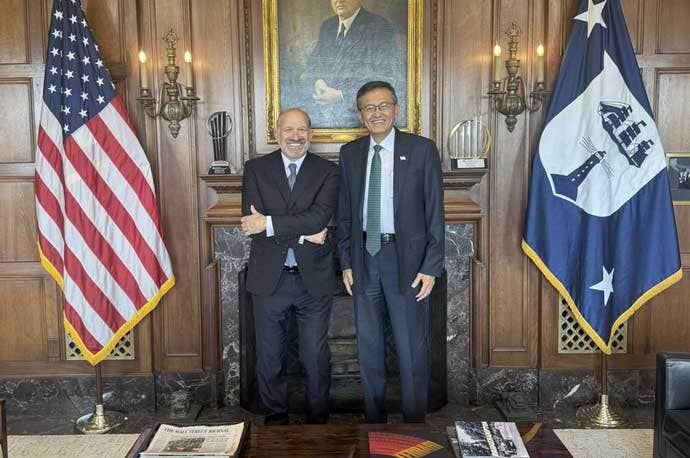
US Equity Deal Puts Commerce Secretary At Driver’s Seat
In Intel’s Monday SEC filing, the company said it entered the U.S. equity deal with the Department of Commerce, whose leader has played a key role in the development.
“Intel is excited to welcome the United States of America as a shareholder, helping to create the most advanced chips in the world,” said Secretary of Commerce Howard Lutnick, who signed the purchase agreement with Tan, said in a Friday statement.
“As more companies look to invest in America, this administration remains committed to reinforcing our country’s dominance in artificial intelligence while strengthening our national security,” he added.
With the Commerce Department responsible for the execution of the U.S. CHIPS and Science Act, Lutnick has played a key role in facilitating Intel’s relationship with the federal government under the Trump administration.
According to a Wall Street Journal report on Monday, Lutnick negotiated with Tan on the terms of the U.S. equity deal. Those discussions started after Trump backed down from his call for Intel’s CEO to resign following their Aug. 11 meeting at the White house.
Before August, Lutnick had been speaking to tech executives about how they could potentially help Intel, including the possibility of a company like TSMC, AMD or Micron entering deals with the chipmaker, the Wall Street Journal said.

The Exceptions To US Government’s Vow to Vote With Intel’s Board
While Intel said the U.S. government has agreed “to vote with the company’s board of directors on matters requiring shareholder approval,” the company spelled out some exceptions to this rule in its Monday SEC filing.
In addition to the federal government having to “vote any shares of common stock held by it in favor of the nominees of and any proposals recommended by the company’s board of directors,” the U.S. must also do so “against any other nomination or proposal not recommended by the board of directors,” Intel wrote.
The company said some exceptions apply to these conditions.
For one, Intel said, the federal government should “not be required to vote its shares of common stock inconsistent with applicable laws.”
The chipmaker also said that the U.S. “may vote any of its shares of common stock as it wishes, with respect to any vote” regarding three matters.
Intel said the U.S. may vote on its own when it comes to matters regarding “the company or its subsidiaries taking or refraining from taking any action that would be a violation” of the U.S. government’s equity purchase agreement or warrants with Intel, according to the chipmaker.
The federal government may also vote as it likes with respect to any item “seeking to reject, disclaim, unwind, terminate or otherwise materially and adversely impact the company’s or its subsidiaries’ relationship with the U.S. government,” Intel said.
The U.S. can vote how it sees fit in relation to matters that “would materially and adversely affect impact the ability of the company or any of its subsidiaries to comply with its obligations under the purchase agreement or the warrants,” the chipmaker added.

Big Tech CEOs Cheer Intel As It Looks For Big Foundry Customer
As part of the U.S. equity announcement, Intel said it’s “deeply engaged with current and potential customers and partners who share its commitment to building a strong and resilient U.S. semiconductor supply chain.”
The chipmaker made the statement—which was accompanied by comments of support by the CEOs of Microsoft, Dell Technologies, HP Inc. and Amazon Web Services—less than a month after Intel warned that it may cancel or pause development of future chip manufacturing technologies if its foundry business can’t find a large customer.
Intel, which is the only U.S.-based company with advanced logic chip manufacturing capabilities, made the warning when the company released its second-quarter earnings results in late July as part of what Tan (pictured above) called a “new financial discipline” he is instituting.
“We’re not going to put any CapEx until we see the yield performance and also our internal customer and external customer feedback and the volume commitment that we put the CapEx in,” he said on the earnings call.
While Intel has previously announced AWS and Microsoft as customers for its Intel Foundry contract chip manufacturing business, the company said in a filing with the U.S. Securities and Exchange Commission in late July that it doesn’t yet have any big foundry customers.
Tan said he hopes Intel Foundry will land big customers for the Intel 18A node, which AWS and Microsoft are expected to use in some capacity, after the company begins high-volume manufacturing of its own products later this year.
But if Intel Foundry is “unable to secure a significant external customer” by the time the company is ramping up its next-generation node, Intel 14A, the company said it “may pause or discontinue development” of that process and future leading-edge nodes.
Despite the warning, Tan said he is confident that the worst-case scenario won’t play out.
For one, he said Intel is “laser-focused on building up” the critical elements needed for Intel 14A’s success. He added that the company has “learned quite a lot” from the mistakes it made on Intel 18A and is engaged with customers on Intel 14A’s development.
“They’re going to enable us, and with clear milestone, to execute in terms of process development and with [process development kit], with all the different IP that we need to really put it together,” he said in the late July earnings call.
CEOs Of Microsoft, Dell, HP And AWS Sound Off On Deal
While the CEOs of Microsoft, Dell, HP and AWS praised the work Intel is doing with the federal government, the companies, which are major customers of Intel’s product business but not its foundry business, made no new commitments to the chipmaker.
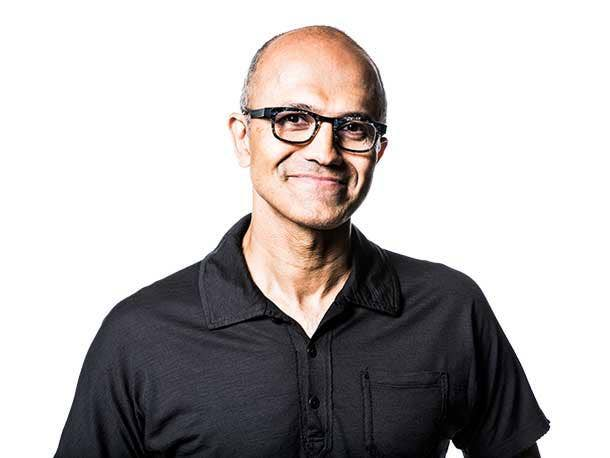
“The decades-long partnership between Microsoft and Intel has pioneered new frontiers of technology and showcased the very best of American ingenuity and innovation,” said Microsoft CEO and Chairman Satya Nadella (pictured above) in a statement.
While Microsoft is in the early years of building custom Arm-based CPUs and AI accelerator chips in competition with Intel’s product business, the company announced early last year that it had chosen Intel Foundry to manufacture a chip design on the Intel 18A node.
“Intel’s continued investment in strengthening the U.S. semiconductor supply chain, supported by President Trump’s bold strategy to rebuild this critical industry on American soil, will benefit the country and broader technology ecosystem for years to come,” Nadella added.
AWS, on the other hand, has been designing custom CPUs and AI accelerator chips for several years in competition with Intel’s product business. But late last year, it announced a deal last year for Intel to design and manufacture custom chips for AWS as part of a “multi-year, multibillion-dollar framework.”
While Intel made it clear with the late July disclosure that the Microsoft and AWS foundry deals aren’t big enough to save the contract chip manufacturing business, AWS CEO Matt Garman joined Nadella in voicing support for the U.S. investing in Intel.
“Leading-edge semiconductors are the bedrock of every AI technology and cloud platform, making U.S. investment in this critical industry one of the most important technological, economic and national security imperatives of our time,” Garman said in a statement.
He added: “Intel plays a vital role as one of the country’s leading chip manufacturers, and we applaud the Trump administration’s efforts to usher in a new era of American innovation in partnership with American companies.”
Dell CEO and Chair Michael Dell—whose company uses Intel, AMD, Nvidia and Qualcomm chips—said that “the industry needs a strong and resilient U.S. semiconductor industry, and no company is more important to this mission than Intel.”
“It’s great to see Intel and the Trump Administration working together to advance U.S. technology and manufacturing leadership,” he added. “Dell fully supports these shared priorities, and we look forward to bringing a new generation of products to market powered by American-designed and manufactured Intel chips.”
HP CEO and President Enrique Lores—whose company works with the same four chip companies—said he shares “Intel’s and the Trump administration’s deep commitment to building a strong, resilient and secure U.S. semiconductor industry.”
“Intel’s continued investment in domestic R&D and manufacturing is integral to future innovation and will strengthen the partnership between HP and Intel for years come,” he said. “This is a defining moment for great American companies to lead the world in cutting-edge technologies that will shape the future.”
Intel Spells Out Several Risks, Uncertainties Related To Deal
In its Monday SEC filing, Intel acknowledged that the “consummation of the transactions” related to the U.S. equity deal “are subject to a number of risks and uncertainties.”
The company added that the U.S. government’s “ownership of significant equity interests in the company may subject the company and its stockholders to a number of additional risks and uncertainties.”
These risks and uncertainties could, in turn, “have a material adverse effect on the company’s business, financial condition and results of operations or adversely impact the interests of our other stockholders,” according to Intel.
For one, the company said, its business outside the United States “may be adversely impacted by the U.S. government being a significant stockholder,” noting that non-US sales accounted for 76 percent of its revenue last year.
“Having the U.S. government as a significant stockholder of the company could subject the company to additional regulations, obligations or restrictions, such as foreign subsidy laws or otherwise, in other countries,” Intel wrote.
As for Intel’s existing stockholders, the company said the U.S. government’s equity position, which may result in it becoming Intel’s largest stockholder, dilutes their existing positions and reduces their voting and governance rights.
The semiconductor giant also noted that the U.S. equity deal “may limit potential future transactions that may be beneficial to stockholders” because of the federal government’s mandate to vote with the board of directors, with some exceptions, along with its “substantial additional powers with respect to the laws and regulations” impacting Intel.
Intel said one way the deal could “substantially limit the company’s ability to pursue potential future strategic transactions” is “by potentially limiting the willingness of other third parties to engage” in such activities.

Future Grants And US Equity Fund Delivery In Question
Intel listed a few other risks and uncertainties tied to the U.S. equity deal, including the potential for “changes in laws, regulations or their interpretations” as well as “shifts in federal administration and congressional priorities” to disrupt the arrangement.
“The legislative, judicial or executive branches of the U.S. government could determine in the future that all or a portion of the transactions were unauthorized, void or voidable,” Intel wrote. “In addition, the terms of the purchase agreement are subject to unilateral amendment by the DOC to comply with future changes in federal law.”
The company added that “legal challenges, administrative rulings, litigation by other parts of the U.S. government or third parties, or geopolitical developments could materially impair funding.” These things also have the potential to “alter obligations” under Intel’s direct funding or Secure Enclave agreements, according to the chipmaker.
As for other risks, Intel said the deal “may limit its ability to secure grants from government entities in the future” because the arrangement involves turning future grant funding into investments in common stock by the federal government.
The company noted that its “business will no longer benefit from reduced future operating costs made possible by such grant funding” because of the conversion.
“It is uncertain whether the transactions may cause other government entities to seek to convert their existing grant arrangements with the company into equity investments or be unwilling to support the company with future grants, either of which could limit the company's access to capital, increase the company's cost of capital, or increase the company's future operating costs,” the chipmaker wrote.
Intel also said that the U.S. government isn’t required to deliver the $5.7 billion in funds from the CHIPS and Science Act on the deal’s “closing date or by any specified date,” adding that “there can be no assurance the company will receive the funds on the timeline or in the amounts anticipated.”
The company noted that its “receipt of funds depends on the availability of appropriations from the legislative branch of the U.S. government and the ability of the executive branch of the U.S. government to obtain funding and support contemplated by the transaction.”
Lastly, the semiconductor giant said the “financial, tax and accounting impacts of the transactions are being evaluated and are uncertain.” It noted that “there could be adverse accounting or other impacts, including the recognition of additional costs or losses, that may materially impact the company’s reported financial results in future periods.”
Trump On How The Intel Deal Was Reached
Trump said the U.S. equity agreement with Intel was reached after he demanded that Tan resign for being allegedly “totally conflicted” on Aug. 7 and then met with Tan at the White House four days later to discuss the president’s concerns.
“He walked in wanting to keep his job, and he ended up giving [a] $10 billion [stake] to the United States. So we picked up $10 billion. And we do a lot of deals like that. I’ll do more of them,” Trump said on Friday before Intel published the deal’s purchase agreement on Monday, clarifying that the U.S. is investing $8.9 billion in Intel common stock.
Trump said the source of his issues with Tan was a letter sent by U.S. Sen. Tom Cotton earlier in the month to Intel Chairman Frank Yeary.
The letter raised concerns about “Intel’s operations and its potential impact on U.S. national security” in connection to Tan’s alleged investments in Chinese firms and a late July guilty plea by the previous firm Tan led, Cadence Design Systems, for selling software to a Chinese university on the U.S. Entity List.
In a letter Tan sent to Intel employees Aug. 8 after Trump’s call for him to resign, the CEO defended his integrity as a tech executive and investor and said the chipmaker was “engaging” with the Trump administration to address concerns it has.
Trump called Cotton’s letter a “pretty nasty story” on Friday and said he warmed up to Tan after meeting with the Intel CEO on Aug. 11.
“We talked for a while. I liked him a lot. I thought he was very good. I thought he was somewhat a victim, but nobody’s a total victim, I guess,” he said.
The president then said, “And I said, ‘You know what? I think the United States should be given 10 percent of Intel.’ And he said, ‘I would consider that.’ I said, ‘Well, I’d like you to do that because Intel has been left behind compared to Jensen,” referring to the ongoing success of Nvidia CEO and founder Jensen Huang’s company.